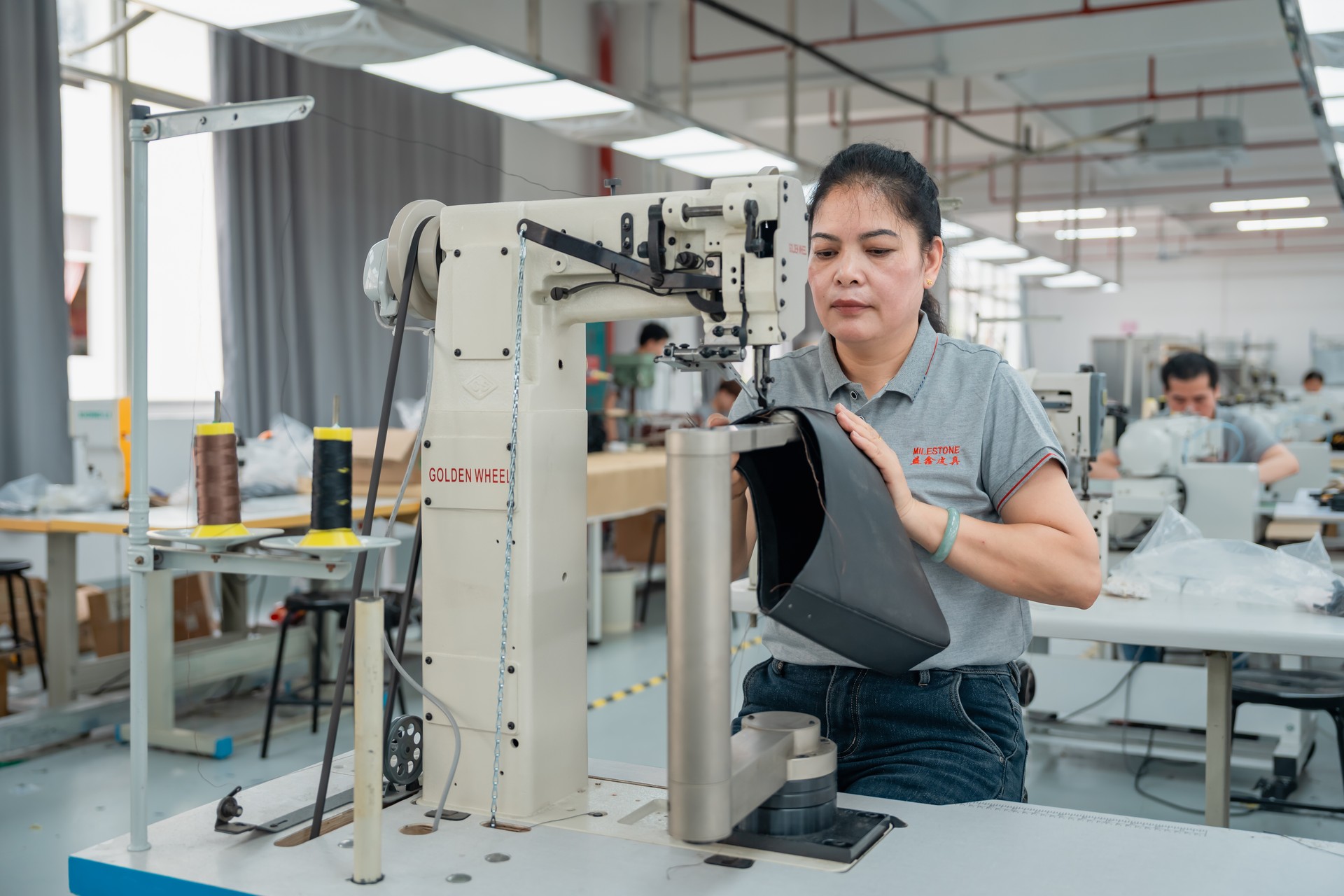
Every carry style, one complete guide.
IN THIS ARTICLE
The wrong soccer bag doesn't just frustrate — it loses shin guards in parking lots, leaves jerseys crumpled at the bottom of a pile, and turns pre-game warmups into a frantic search for a missing cleat. That's not a minor inconvenience. It directly affects how prepared a player feels before the first whistle.
The type of bag a player carries shapes everything: gear protection, transition speed from school to pitch, and overall readiness. Whether you're outfitting a youth league team or sourcing inventory for retail, the decision carries real weight.
This guide walks through every major soccer bag type. From simple drawstring sacks to structured backpacks, wheeled duffels, and options crafted from materials including full-grain leather, players, parents, and buyers will leave with a clear picture of what works and why.
Not every soccer bag is built for the same job. A goalkeeper hauling shin guards, gloves, and two pairs of boots needs something entirely different from a youth player tossing in a ball and a water bottle. Here's a breakdown of every major type — what it carries, who it suits, and where it belongs.
The workhorse of youth and amateur soccer. A soccer backpack typically holds 25–35 liters, with a dedicated ball compartment at the base, ventilated shoe pockets, and enough room for a change of clothes and a water bottle. Ideal for daily training and short commutes. Players who travel by bike, bus, or on foot tend to gravitate here. Hands-free carrying makes the difference on a long walk to the pitch.
Primary use case: training and match day.
Spacious, structured, and versatile. A well-made duffle typically runs 40–70 liters, with a wide main compartment for kit, a vented side pocket for boots, and external attachment points for a ball. The top-load opening means fast packing between sessions. This is the go-to bag for serious club players and travel squads. It sits flat in a car trunk, fits in most overhead compartments, and scales up easily for weekend tournaments.
Primary use case: match day and travel.
Purpose-built for one thing: carrying balls. Single-ball bags are essentially mesh or nylon sleeves with a drawstring — compact, cheap, and easy to clip to a larger bag. Multi-ball bags are a different animal entirely. They hold 6 to 12 balls in a wide net or duffel-style shell, often with reinforced handles and a shoulder strap. Coaches and team managers rely on these at training sessions and tournaments. Not a standalone kit bag — pair it with something bigger.
Primary use case: training and tournament.
Goalkeepers carry more gear than anyone else on the pitch, and their bags account for that reality. Extended length for full-size gloves, padded sections for bulky kneepads, and separate compartments for two sets of gloves (dry and game-ready). Capacity typically lands between 50–80 liters. These bags often include a rigid base panel to protect gloves from compression at the bottom.
Primary use case: match day and travel.
This is the bag that lives in the back of a coach's car. Large-format team kit bags — often 80 liters or more — carry cones, bibs, medical kits, spare balls, and a full set of training gear. Built for bulk, not elegance. Heavy-duty zippers, reinforced carry handles, and water-resistant base panels are non-negotiable at this scale. Common in club procurement and school sport programs.
Primary use case: training and tournament.
Lightweight and low-cost, drawstring bags serve as a secondary bag or a branded giveaway item. They hold a ball, a pair of boots, or a change of clothes — not all three. Where they shine is in custom soccer bags programs: screen-printed with a club crest or sponsor logo, they become a practical marketing asset. Capacity rarely exceeds 15–20 liters.
Primary use case: training and promotional use.
A category apart. Where synthetic bags prioritize weight savings and weather resistance, leather soccer bags trade on longevity and professional aesthetics. Full-grain or top-grain leather develops character over years of use — the surface texture deepens, the structure holds. These bags suit coaches, club directors, and players at the professional level who want something that looks as sharp in a boardroom as it does pitchside. The tradeoff: heavier, higher price point, and requiring occasional conditioning. Capacity varies, but most sit in the 40–60 liter range.
Primary use case: match day and travel.
Two bags dominate the soccer sideline, and the choice between them shapes every training session and travel day. Neither is universally better — but each has a clear home.
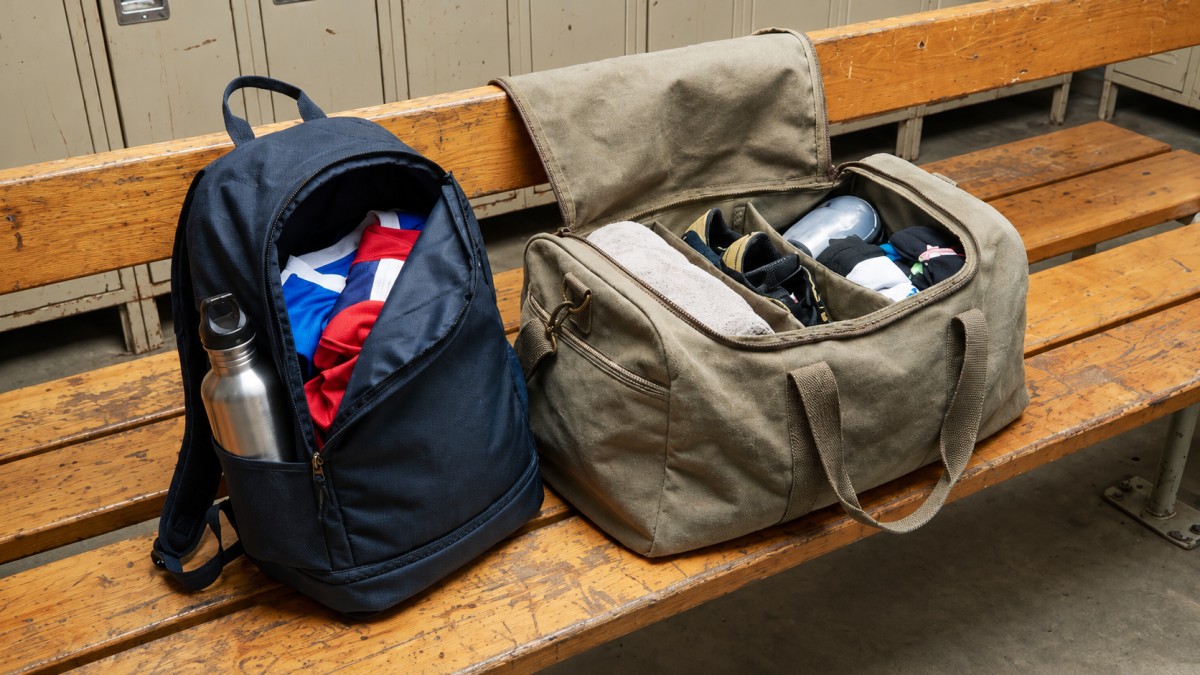
Same gear, two completely different carries.
Backpacks suit the youth commuter well. They ride hands-free on a bike or bus, keep cleats and gear separate through zippered pockets, and come in at a price point that makes parents less nervous about a muddy practice field. The trade-off? Capacity. Pack a full kit, shin guards, a change of clothes, and a water bottle, and a standard backpack starts fighting back.
Soccer duffle bags open flat and swallow gear whole. Adult travel players — the ones packing for away games or weekend tournaments — know the feeling of dropping a soggy jersey in without hunting for the right compartment. Shoulder straps help with shorter hauls. Anything over twenty minutes and that single-strap carry starts to drag.
Here's the honest middle: tournament players often need both. A duffle holds the bulk — cleats, full kit, towel, recovery gear — while a backpack covers the personal layer: phone, wallet, snacks, water. It's not about choosing sides; it's about recognizing what each bag actually does.
Use the table below as the quick check: if you need hands-free daily carry, start with a backpack; if you need maximum kit capacity for travel days, start with a duffle.
Backpack vs. Duffle: Head-to-Head Comparison
| Feature | Backpack | Soccer Duffle Bag |
|---|---|---|
| Capacity | Moderate — suits a day kit | High — handles full tournament gear |
| Organization | Multiple pockets, structured | Open main compartment, fewer dividers |
| Carry Comfort | Two-shoulder, hands-free | Single shoulder or hand carry |
| Durability | Varies; base zippers take the most wear | Stress falls on handles and straps |
| Price Range | $25–$80 typical | $35–$120 typical |
| Best For | Youth commuters, daily training | Adult travel players, multi-day trips |
The choice between full-grain leather and premium synthetics isn't just aesthetic — it shapes how a soccer bag holds up over years of muddy fields, wet gear, and constant handling.
Full-grain leather carries real weight, both literally and in reputation. It runs heavier than synthetic alternatives. Unlike nylon or polyester, it needs a break-in period before the structure softens and molds to use. Weatherproofing requires more attention too — untreated leather absorbs moisture, which means consistent conditioning is non-negotiable. But here's what synthetic simply can't match: raw longevity. A well-maintained leather bag develops character over years of use rather than fraying at the seams or losing its shape. The grain deepens, the surface takes on a worn-in richness, and the bag signals something about the person carrying it.
That last point matters enormously for club gifting and coach recognition programs. When a leather soccer bag lands on a coach's desk or in a player's hands at a season-end ceremony, it reads as considered — not just functional. Premium synthetics, by contrast, tend toward utility: lighter, water-resistant out of the box, and easier to wipe down after a rainy match. They perform well for daily training use and won't crack in cold weather the way untreated leather might.
Care makes all the difference for leather longevity. Regular conditioning with a leather balm prevents the grain from drying and cracking. A gentle wipe-down after muddy sessions keeps the surface clean without stripping natural oils. For buyers sourcing bags at scale, this is worth communicating to end users — those who actually care for the bag get something that lasts a decade or more. For bulk programs, include a simple care note with the bag—maintenance is what turns leather from "premium" into "long-lasting."
Not every player needs the same bag — and buying the wrong one means hauling gear that fights you instead of helping you. This grid maps five common player types to the bag that actually fits their routine.
| Player Profile | Recommended Bag | Key Features |
|---|---|---|
| Recreational youth | Drawstring or basic backpack | Lightweight, washable, low cost |
| Competitive youth / travel | Large soccer backpack | Separate ball compartment, cleats pocket, ventilation |
| Adult amateur | Duffel or backpack hybrid | Wet/dry separation, enough room for a full kit |
| Goalkeeper | Oversized gear bag | Fits keeper gloves, extra padding, padded back panel |
| Coach / team manager | Multi-compartment duffel or rolling bag | High capacity, organizational pockets, durable base |
Use-case overlays sharpen the picture further. For daily training, a ventilated backpack with a dedicated ball sleeve keeps things streamlined. No one wants to wrestle a full duffel out of a car twice a day. Tournament weekends demand more: a second pair of boots, extra socks, snacks, and a water bottle all need a home, which is where large-format soccer backpacks or duffels earn their keep. Long-haul travel — think multi-day tournaments or international tours — calls for rolling gear bags that protect equipment without wrecking your back through an airport.
A dedicated bag for soccer ball storage also matters here. Ball compartments that isolate mud and pressure from clean kit are worth prioritizing at every level above recreational.
For clubs and academies ready to take things further, custom soccer bags are a natural upgrade path: team branding, coordinated colors, and fitted sizing signal professionalism before a player ever steps on the pitch.
Before you lace up, it helps to know exactly what you're packing — and whether your bag is actually big enough to carry it.
A solid soccer kit covers the basics: cleats, shin guards, a change of clothes, a water bottle, and ideally a small first-aid kit with tape and blister pads. Toss in your ball for soccer practice and you've already got a reasonably heavy load. A drawstring bag handles a light session. Anything involving a full kit swap or a travel day calls for something with dedicated compartments.
Goalkeepers carry more. Gloves take up real estate and need their own zippered glove bag to stay dry and keep grip material from flaking against other gear. Wet-weather sessions mean muddy gloves and soaked jerseys — a waterproof-lined wet compartment keeps the damp stuff quarantined from everything else.
The mistake most players make is buying the bag first, then cramming gear in around the choice. Work it the other way: list out what you carry every session, add the extras you bring to matches, and then size the bag to fit that checklist. A bag for a soccer ball alone runs 12–15 inches in diameter. Add cleats, a kit, and goalkeeper gear, and you're looking at a 35L-plus bag built for all of it — not a slim backpack stretched past its limits.
Ordering soccer bags in bulk — whether for a club, academy, or retail program — comes with decisions that go well beyond picking a style. MOQ, material specifications, and branding options are the three levers that shape both your unit cost and your end product's quality.
Most manufacturers set minimum order quantities somewhere between 100 and 500 units per SKU. That floor shifts depending on construction complexity and the materials involved. A basic polyester drawstring bag sits at a different MOQ threshold than a full-grain or PU soccer holdall with reinforced base panels and ventilated compartments. When specifying materials at scale, request a physical sample and check the denier count, zipper gauge, and seam tape — specs that look identical on paper can feel entirely different in your players' hands after a season of use.
Private-label programs let you apply your branding — logos, colorways, label copy — to an existing, tested factory silhouette. That path moves faster and costs less. Fully custom manufacturing runs, by contrast, let you dictate every dimension, material weight, and hardware finish from scratch. That matters when you're building a product line rather than sourcing gear.
If you're planning a bulk order and want to move faster without reinventing the base silhouette, start with a private-label bag manufacturing program. It lets you pick a proven structure first, then customize logo placement, color, labels, and packaging around your club or retail brief.
Choosing the right soccer bag isn't just about looks — the material and structure you pick will either hold up through mud, travel, and three seasons of use, or fail you in the first rainy tournament.
Work through your use case honestly. A recreational player hauling cleats twice a week has different demands than a club coach managing gear for an entire squad. Match the bag type and construction to that reality, not to a price tag.
Premium materials do pay off. Quality nylon webbing doesn't fray. Dense polyester resists the kind of moisture that turns a soccer bag into a mildew problem by mid-season. Over time, that upfront investment costs less than replacing cheap gear every year.
Ready to start your custom project?
Expert insights on care, styling, and manufacturing.
Most soccer bags include a separate cleat compartment designed to isolate dirty or wet cleats from your clean gear. This ventilated compartment typically features water-resistant lining to contain moisture and odor. Look for bags labeled as "soccer backpacks" or "team duffels," as these almost always include dedicated shoe storage sections.
Backpack-style bags feature padded shoulder straps for hands-free carrying, making them ideal for walking or biking to practice. Duffel bags have a cylindrical shape with a top opening and side handles, offering easier access to gear and larger storage capacity. Backpacks distribute weight better for longer commutes, while duffels excel at quick packing and organization.
Most waterproof soccer bags resist light rain but struggle in heavy downpours. True waterproofing requires sealed seams and waterproof zippers, not just water-resistant fabric. Check if the bag uses genuinely waterproof materials like coated nylon with welded construction. For maximum protection during torrential weather, consider bags with roll-top closures or use additional dry bags inside.
Mesh soccer bags can handle daily practice use, but their durability depends on construction quality. Look for reinforced stitching and thicker mesh panels at stress points. They excel at ventilation and lightweight portability, though canvas or nylon alternatives offer better protection for gear with heavy zippers or sharp cleats that might snag mesh.