Author: Ethan Publish Time: 2026-08-28 Origin: Milestone

Jute fiber from plant stems.
IN THIS ARTICLE
Jute fiber is a natural plant fiber taken from the barky outer layer of the jute plant stem. In technical terms, it is a bast fiber, which means the usable strands come from the stem skin rather than from the seed, leaf, or fruit. FAO's raw-material overview identifies jute as one of the major tropical fibers, and the National Jute Board's raw jute overview describes it as a natural fiber extracted from the stem skin.
In practice, this is the material behind many familiar utility textiles: sacks, rope, coarse woven cloth, backing materials, agricultural and erosion-control textiles, and many reusable shopping bags. When people say jute material, they may mean the raw fiber itself, spun yarn, woven jute cloth, or a finished product made from that cloth. Those are related, but not identical, stages of the chain.
If you only need the short answer, here it is: jute fiber is a strong, low-cost natural bast fiber from Corchorus plants, used mainly in practical textiles and packaging rather than fine fashion fabrics. The rest of this guide explains where it comes from, how it is processed, what it does well, where it falls short, and what that means if you are developing jute-based bags or packaging products.
Jute comes from tall annual plants in the Corchorus genus, especially Corchorus capsularis and Corchorus olitorius. The important part is not the woody center of the stalk. It is the fibrous bark layer that wraps around that core. After harvest, that bark yields the long strands that are later cleaned, dried, spun, and woven.
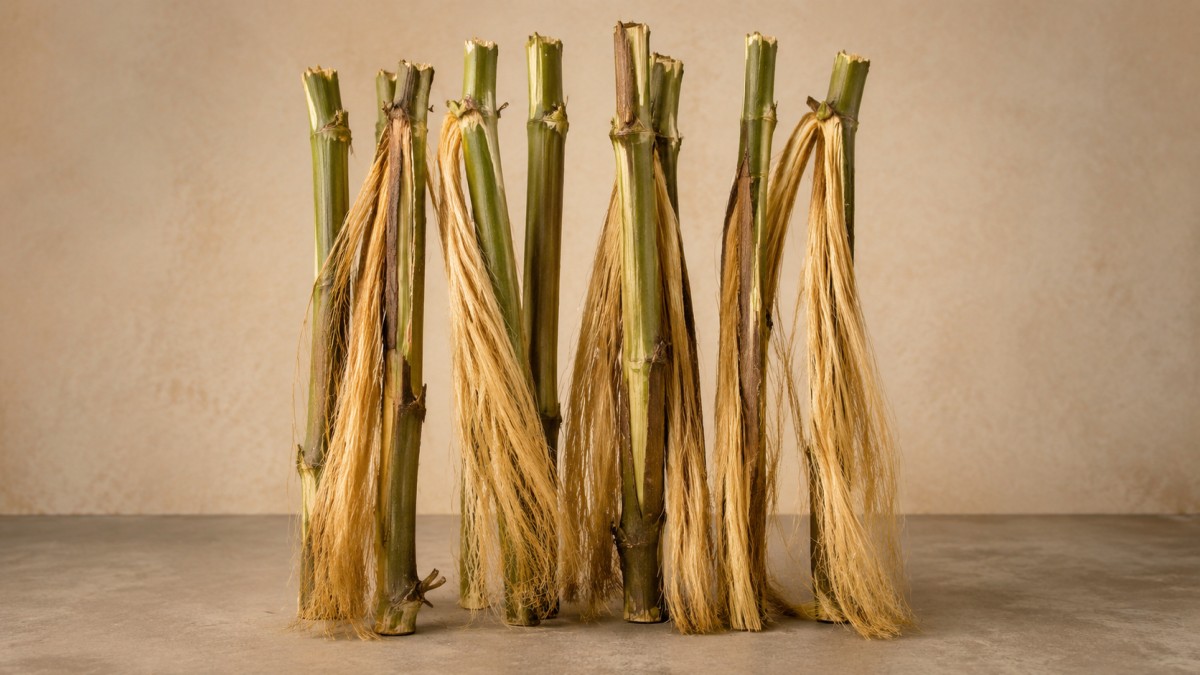
Fiber from the outer stem layer.
According to FAO's raw-material overview for jute, world jute production has historically been concentrated in Asia, with Bangladesh and India accounting for the overwhelming majority of raw jute output. That regional concentration matters because it explains why many jute supply chains begin in South Asia even when the finished goods are sold somewhere else.
From a buyer's perspective, the phrase jute fiber origin usually refers to where the plant was grown and stripped for fiber. That is different from where a finished jute tote, pouch, or promotional bag was cut and sewn. In other words, fiber origin and product manufacturing origin are related, but they are not always the same fact.
This also helps explain why jute is commonly associated with practical, volume-friendly products. The crop is grown for utility fiber, not for the kind of soft staple associated with fine shirting or knitwear. So when you evaluate jute material, you should think first about structure, texture, durability in use, and supply-chain practicality.
Official Indian jute-board materials highlight several traits again and again: luster, strength, low extensibility, and long staple length. Those terms sound technical, but they become much easier to understand when you convert them into product behavior. Jute has a dry, slightly coarse hand feel, a naturally earthy appearance, and a structure that makes it useful for sacks, utility fabrics, shopping bags, and reinforcement-oriented textiles.
It is also important to separate fiber traits from finished-fabric behavior. A woven jute bag does not behave only according to the raw fiber. Yarn twist, weave density, lamination, backing, printing, and lining can all change how the final product feels, folds, or resists moisture. That is why two bags both described as jute can perform quite differently in real use.
Here is the practical way to read the material:
| Jute trait | What it means in practice | Why it matters for products |
|---|---|---|
| Strong bast fiber | Handles load better than delicate decorative fibers | Useful for utility bags, sacks, and packaging |
| Low extensibility | Does not stretch much under ordinary use | Helps a bag keep a firm, structured feel |
| Natural luster | Has a muted sheen rather than a flat dull surface | Gives raw jute a recognizable natural look |
| Coarser texture | Feels rougher than cotton or fine linen | Better for utility use than soft next-to-skin products |
| Spinnable long fiber | Can be made into yarn and woven cloth | Enables sacks, fabric panels, rope, and web-like constructions |
| Moisture-sensitive natural fiber | Needs finishing or lining if the end use demands cleaner handling | Important for retail bags, storage, and long-term presentation |
So, is jute a natural fiber? Absolutely yes. But more specifically, it is a utility-first natural bast fiber. That distinction helps you decide when jute is the right material on its own, and when it should be blended, lined, or structurally supported inside a finished product.
The basic extraction sequence is simple to describe, even though the real work is labor-intensive. After jute plants are harvested, the stalks are bundled and placed in water for retting. FAO's report on improved retting and extraction of jute explains retting as a controlled microbial process that breaks down the non-fibrous materials holding the fiber to the bark.
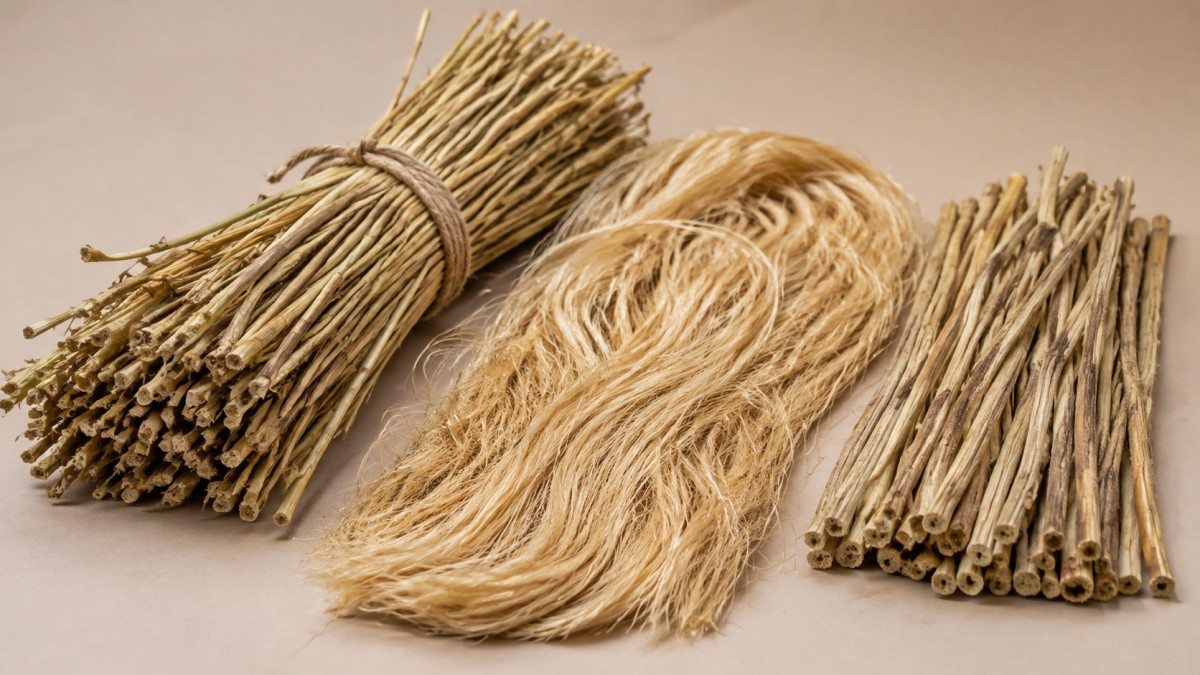
Retting separates jute fiber.
Once retting has done its job, the long fibers are stripped away from the woody core. They are then washed in clean water and sun-dried before moving into later grading and marketing stages. That sounds straightforward, but this stage is one of the biggest quality checkpoints in the whole chain. The same FAO report emphasizes that retting and extraction strongly affect fiber quality, cost, and the competitiveness of the final product.
For buyers, that point is more important than it first appears. A finished jute product is not defined only by the crop itself. It is also shaped by how cleanly the fiber was separated, how evenly it was dried, how it was spun, and how the fabric was later constructed. If the raw extraction stage is weak, no amount of clever bag styling will fully erase that weakness.
So when someone asks how jute is made, the honest short answer is: grown in the field, harvested as stalks, retted in water, stripped into fiber, washed, dried, and then converted into yarn and fabric.
Jute has long been a utility fiber first and a decorative fiber second. FAO's retting report lists uses such as cordage, sacking, carpet backing, geotextiles, nonwoven materials, industrial fabrics, and a wide range of everyday utility items. The more recent FAO overview of jute and hard fibres also shows that jute remains part of a living commodity category rather than a historical curiosity.
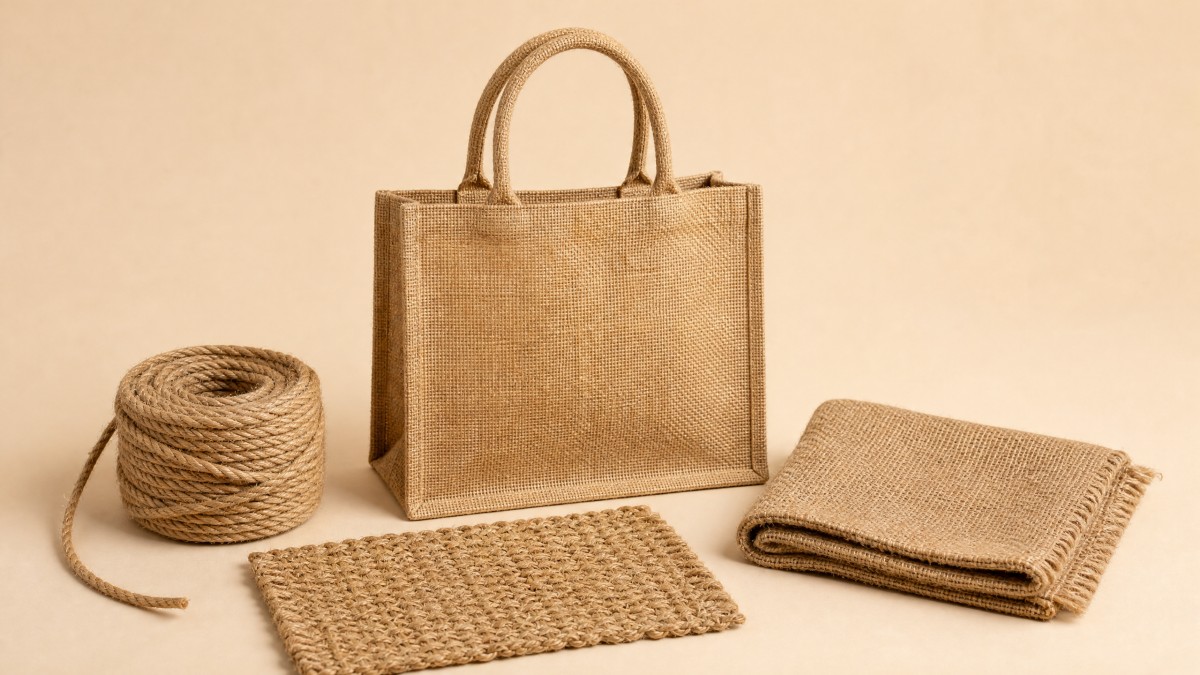
Common jute products.
For most commercial readers, the uses fall into a few practical buckets:
One useful caution: people often use the words jute, burlap, and hessian almost interchangeably, but they are not perfect synonyms in every market. Burlap or hessian usually refers to a coarse woven fabric made from jute or a similar bast fiber, while jute fiber refers to the raw fiber itself. That difference matters when you specify a product. You do not buy jute fiber and jute fabric by the same standard, even though they belong to the same material family.
The strongest reason to choose jute is not that it can do everything. It is that it does a specific group of jobs very well. It is plant-based, widely recognized, visually distinctive, and structurally useful in packaging, shopping bags, and coarse utility textiles. For brands, that combination can be attractive because the material communicates a natural, tactile look without pretending to be luxurious or delicate.
Its limitations are just as important. Jute is usually coarser than cotton, smoother bast linens, or refined synthetic fabrics. It is not naturally waterproof, and untreated jute can feel dusty, hairy, or stiff depending on yarn quality and finishing. For a premium retail bag, many buyers therefore add lamination, lining, cotton handles, piping, printing layers, or other support details instead of relying on raw jute cloth alone.
So the right question is not Is jute good or bad? The better question is good for what.
That balanced view is especially useful in B2B development. Material selection is rarely about ideology. It is about matching the fiber's real strengths and weaknesses to the product's real job.
Jute fiber is a natural bast fiber taken from the stem of Corchorus plants. Its core identity is simple: strong, practical, recognizable, and best suited to utility-focused textiles rather than ultra-soft fashion fabrics. Once you understand where it grows, how retting and extraction work, and why finished jute products behave differently depending on construction, the material becomes much easier to evaluate honestly.
That is the real value of asking what jute fiber is. You are not just learning a definition. You are learning how a raw agricultural fiber turns into fabric, packaging, rope, and structured shopping bags, and how that upstream material choice affects downstream sourcing decisions. If you are moving from material research into finished-bag planning, the next step is no longer only about jute itself, but about specifications, construction, and factory execution. Our guide to tote bag manufacturing is a practical next read if you want to carry that material knowledge into real product development.
Ready to start your custom project?
Straight answers about jute fiber, jute fabric, and practical sourcing questions.
Yes. Jute is a natural bast fiber taken from the stem of Corchorus plants. It is plant-based rather than synthetic, and it is usually used in utility textiles such as sacks, rope, coarse woven cloth, and reusable shopping bags.
Not exactly. Jute fiber is the raw plant fiber itself, while burlap or hessian usually refers to a coarse woven fabric made from jute or similar bast fibers. In casual use the terms overlap, but in sourcing they are not identical specifications.
No, not by itself. Raw jute is not naturally waterproof. If a jute bag needs better moisture resistance or cleaner surface performance, factories often add lamination, lining, coating, or other finishing steps.
Because it combines structure, recognizable natural texture, and practical utility. Jute works well in sacks, packaging, and reusable totes where softness is less important than body, load support, and an earthy material appearance.
No. The fiber may come from a major jute-growing region, while the finished bag can be cut, printed, lined, and assembled somewhere else. For B2B projects, raw-material origin and final factory location should be checked separately.