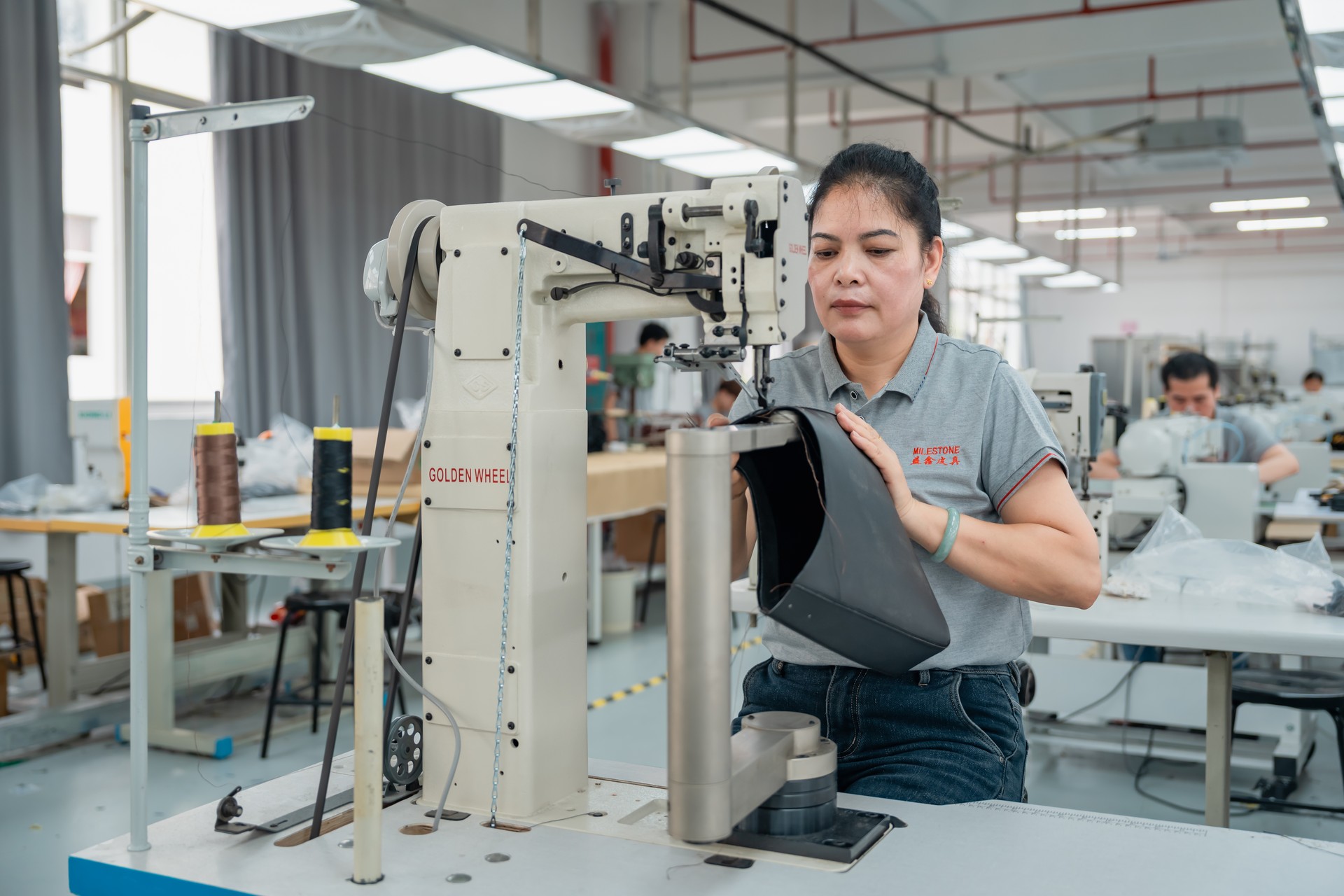
Where this classic street backpack was made.
IN THIS ARTICLE
JanSport backpacks are manufactured through VF Corporation's global sourcing network — not a single factory or country. If you're looking for a clean, one-line answer: most JanSport bags are produced in Asia, with Vietnam and Bangladesh representing the most commonly cited production origins on current product labels and import records.
VF Corporation, which owns JanSport, operates one of the largest apparel and accessories supply chains in the world. Where JanSport backpacks are manufactured at any given time reflects that scale — sourcing shifts based on capacity, cost, and compliance standards across multiple regions.
This matters for buyers. A JanSport bag purchased in the US today may carry a "Made in Vietnam" label, while a different SKU in the same product line could originate elsewhere. The brand controls the design and quality standards; the factories fulfilling those specs are spread across borders.
For businesses evaluating sourcing decisions — whether you're benchmarking competitors or exploring how backpack manufacturing works at a structural level — understanding this distributed model is the starting point. The next section breaks down the specific countries and what drives JanSport's regional production choices.
To answer where JanSport backpacks are made, you need to look one level up from the brand itself. JanSport is owned by VF Corporation, a publicly traded American apparel and footwear conglomerate that also owns Timberland, Dickies, and The North Face. That corporate structure matters. Sourcing decisions ? which factories, which countries, which compliance standards ? are made at the VF level, not inside JanSport's marketing office.
On JanSport's About Us page, the brand says it has been making packs since 1967. That origin story is real, but it does not tell you where today's bags are stitched together. Brand birthplace and current manufacturing location are two separate facts, and conflating them is one of the most common mistakes buyers make when researching a label.
VF Corporation operates a global supply chain spanning dozens of countries. Its annual reports and corporate responsibility disclosures are the authoritative source for understanding who makes JanSport products and under what conditions ? not the brand's lifestyle-focused website. For B2B buyers comparing sourcing transparency across vendors, that distinction is worth keeping sharp. The brand tells you the story. The parent company's filings tell you the factory. And that's exactly where the trail begins.
The clearest picture of where JanSport backpacks are manufactured comes from two sources with very different levels of authority ? and understanding what each one can and cannot prove matters before drawing conclusions.
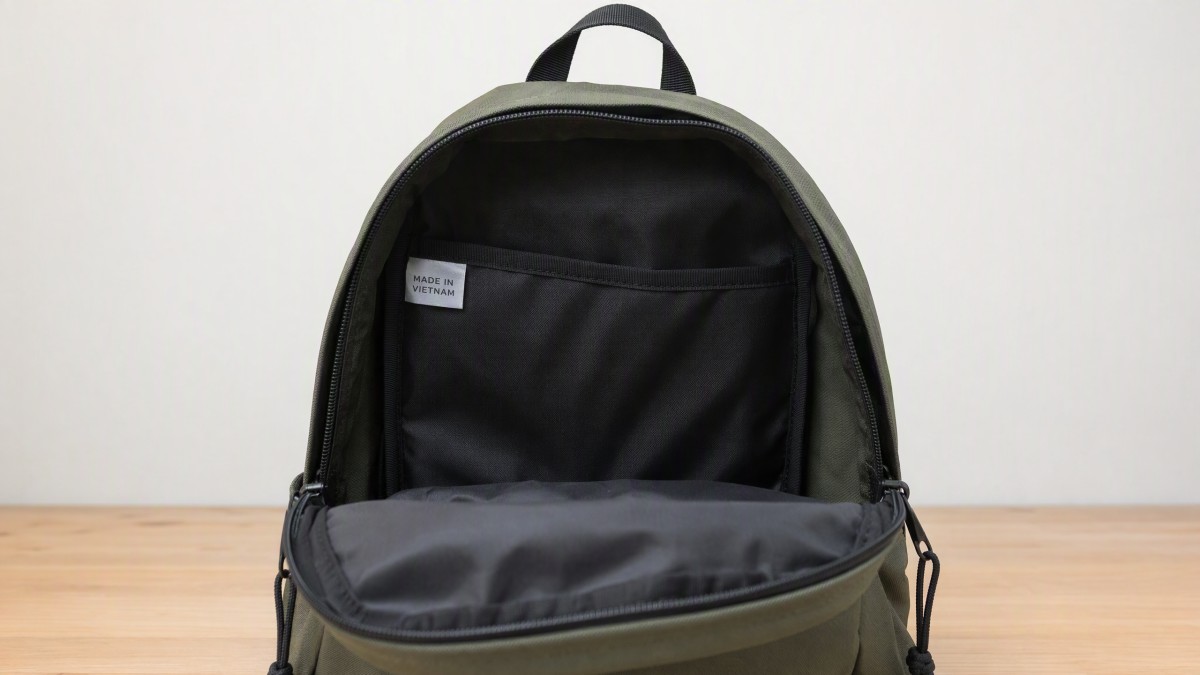
The sewn-in label is more specific than broad brand assumptions.
VF Corporation's latest annual filing is the place to start. As JanSport's parent company, VF discloses its global sourcing footprint at the corporate level. The filing confirms that VF sources finished goods from a broad network of third-party contract manufacturers, with Vietnam, Bangladesh, Cambodia, and Indonesia cited among the primary production countries. Crucially, the filing does not assign specific brands to specific factories. What it establishes is that where JanSport backpacks are made sits within that multi-country framework ? not in a single facility or a single country.
Shipment-level data from Tarifflo adds texture. Based on import records tied to VF entities, JanSport's Q1 2026 trade profile shows 97 shipments across 7 suppliers, with Indonesia, Cambodia, Bangladesh, and Vietnam making up the current source-country mix. These records function as a proxy, not a disclosure. They reflect observable trade flows, not VF's internal sourcing strategy, and they can lag real shifts in manufacturing allocation by several months.
Taken together, the two sources reinforce each other without fully closing the loop. The 10-K tells you which countries are in scope; the shipment data gives you a rough sense of volume weighting. Neither source lets you say with certainty that any single bag model was made in a specific country at a specific time.
For buyers and procurement teams thinking about supply chain exposure, that ambiguity is worth noting. If you want to go one level deeper, the next question is not just where the bags are made, but how the supply base shifts by model, season, and destination market.
The "Made in [Country]" label on a JanSport bag tells you something real — but not the whole story. It reflects where that specific unit was assembled, not a permanent policy about where JanSport backpacks are manufactured across the board.
Here's what shifts the picture: production runs change. A model sold in the US this season may carry a different origin label than the same model shipped to EU or AU markets. Retailers ordering in bulk sometimes receive units from a different facility than what consumers find on a retail shelf. Seasonal demand spikes, supplier capacity, and regional compliance requirements all push sourcing decisions in different directions throughout the year.
That's why treating any single label as a definitive answer to where are backpacks made by JanSport is tricky. The label on the bag you're holding is accurate for that bag. It's not a promise about the next shipment.
For B2B buyers placing volume orders, this distinction matters more than it might seem. If country of origin affects your import duties, landed cost calculations, or compliance documentation, confirm origin at the PO stage — not from the sample unit in your hands.
Think of any sourcing data from trade filings or brand disclosures as background context. It maps the broad manufacturing footprint: the countries that show up repeatedly, the regions with the most activity. What it cannot do is substitute for the physical label or a direct confirmation from your supplier.
When origin is a hard requirement for your order, ask specifically. Get it in writing.
The most reliable way to confirm where a JanSport backpack was made is to read the label on the bag itself — not the retailer's product page, not the brand's country of registration, and not the region a reseller happens to ship from. None of those sources are legally binding declarations of origin.
Start with the sewn-in care label. It's typically stitched into an interior seam — often near the base of the main compartment or along a side panel. That label carries the required country-of-origin statement, fabric content, and care instructions. On older bags, it may be faded or printed on a narrow woven strip, so run your fingers along the seam until you feel it. For bags still in retail packaging, the hangtag or the printed panel on the box will state the country of origin, though the sewn-in label is the more authoritative of the two.
The label tells you where that specific unit was assembled — and because JanSport sources from multiple countries depending on the product line and production run, a Vietnam-made Superbreak sitting next to a Bangladesh-made Superbreak at the same retailer is not unusual at all. The brand's official website lists Vietnam, Bangladesh, China, and Cambodia as active sourcing locations, but that broader picture can't tell you which country any individual bag came from.
If the label is missing — worn away, cut out, or simply absent on a vintage piece — contact JanSport or VF Corporation customer service directly. Have the style number and any date codes ready; they're usually printed on a separate tag or heat-stamped near the label area. With that information, their team can often trace the production origin from their records.
What to check, in order:
Country of origin is a shortcut, not a quality grade. A bag stitched in Vietnam can outlast one assembled in Germany if the specs, materials, and oversight differ. The label on the tag tells you where final assembly happened — nothing more.
What actually determines how a backpack holds up is the construction itself. Stitch density and seam type matter far more than geography. A bartack at a strap attachment point takes real stress, and sloppy execution fails regardless of the factory's address. The same logic applies to zipper hardware — a YKK pull runs smoothly because of tight tolerances, not because of where it was installed.
Seam binding, the fabric tape that reinforces raw interior edges, is one of those invisible details that separates a bag that frays within a year from one that doesn't. Padding quality and how it's anchored inside the panel is another. Poorly bonded foam compresses and shifts; well-bonded foam stays put after hundreds of drops.
Inspection consistency ties it all together. A factory running rigorous in-line checks — pulling units mid-run, not just at final pack-out — catches defects before they ship. That discipline is a management and process choice, independent of the country the facility sits in.
If you want a closer look at the components that affect durability, backpack construction explained breaks down the parts in plain terms.
When evaluating jansport manufacturing quality — or any backpack brand — ask about the construction standards, not the postcode. Because that's what actually holds up under load.
JanSport backpacks are made through a multi-country supply chain, not in one permanent country. VF's filing gives the official company-level picture, and the shipment snapshot from Tarifflo points in the same general direction.
For a dependable answer about one bag, read its sewn-in country-of-origin label and keep the model and purchase details on hand. That same label-first logic is also why China stays part of the sourcing conversation: if your own program includes Chinese production, the next step is to talk to a China backpack supplier about factory capability, sample development, compliance, and target volume before you place an order.
Ready to start your custom project?
Short answers based on JanSport's brand context and VF Corporation's current sourcing disclosure.
No. JanSport backpacks are made through VF Corporation's broader sourcing network, so the origin can vary by model and production run.
VF owns JanSport, and VF is the company that publishes the sourcing disclosure. That makes VF's filing the right source for the broad manufacturing picture.
Current public disclosures point most often to Vietnam, Bangladesh, Cambodia, and Indonesia, with shipment data showing a strong Southeast Asia concentration.
Read the sewn-in label inside the bag first. If that is missing, check the hangtag, packaging, or product details, then contact customer service with the style name and date code.
No. Country of origin is a manufacturing fact, not a quality score. Construction details, materials, stitching, and inspection matter more.