Author: Ethan Publish Time: 2026-03-25 Origin: Milestone

Understanding the parts of a backpack is more than a vocabulary exercise; it's a practical way to judge whether a bag will hold up under real use or start showing stress at the seams after a single season. Many buyers glance at the silhouette, yet the true anatomy of a backpack reveals itself in the stitching density, the structure of the straps, and the way the leather flexes instead of cracking. Milestone has spent decades refining these details, drawing on the slow, disciplined methods that give premium leather backpacks their strength. For B2B teams comparing suppliers, this knowledge becomes essential, because durability and craftsmanship aren't marketing claims— they're measurable components embedded in every panel, edge, and reinforcement point.
Understanding the anatomy of a backpack starts with recognizing the core structural components shared across casual, outdoor, and luxury designs. Most models rely on a familiar foundation: a main compartment, secondary pockets, a suspension or carry system, and reinforcement zones where stress concentrates. Even a simple daypack carries this same blueprint, which explains why so many product conversations in sourcing and development circles revolve around consistent backpack part names and standardized construction language.
Once you compare technical fabric packs to premium leather builds, the contrasts become obvious. Performance models lean on lightweight framesheets, mesh panels, and synthetic webbings that flex under load. A leather pack behaves differently. Its panels hold shape, the grain changes with movement, and the stitching must absorb tension that plastics and foams handle in mass-market designs. Because of this, the parts of a backpack cut from leather—such as the yoke, gusset, or strap anchors—demand closer attention to thickness, edge finishing, and hardware tolerances.
For B2B buyers, precise terminology isn't just trivia. It affects sampling accuracy, production costs, and the reliability of long-term supplier communication. When both sides speak the same language, discussions about reinforcements, panel layouts, or shoulder strap geometry avoid guesswork. Clear vocabulary also supports better comparisons across categories, whether someone is evaluating technical packs or premium leather backpacks designed for lifestyle markets. In short, knowing the true structure behind the anatomy of a backpack prevents confusion and helps brands specify exactly what their customers expect.
The core body of a backpack starts with its shell, the outer surface that holds the entire structure together. In premium leather construction, the shell isn't a single piece wrapped around a frame; it's a series of strategically cut panels designed to balance flexibility with load‑bearing strength. Front panels provide the visible character of the bag, while side gussets give the shape its depth and allow the body to expand without warping. Many buyers don't realize how much these individual parts of a backpack influence long‑term performance, especially when the bag is stressed by travel, daily commutes, or shifting weight.

Leather panel construction brings its own challenges. A full‑grain hide behaves differently across its surface, so experienced makers position each panel to avoid weak fibrous areas that might stretch or wrinkle under pressure. Reinforcement layers sit behind the main panels, adding backbone without making the backpack feel stiff. This is where a reliable backpack part name—such as shell, gusset, or front panel—becomes more than terminology; it's a signal of how each layer is engineered to manage weight.
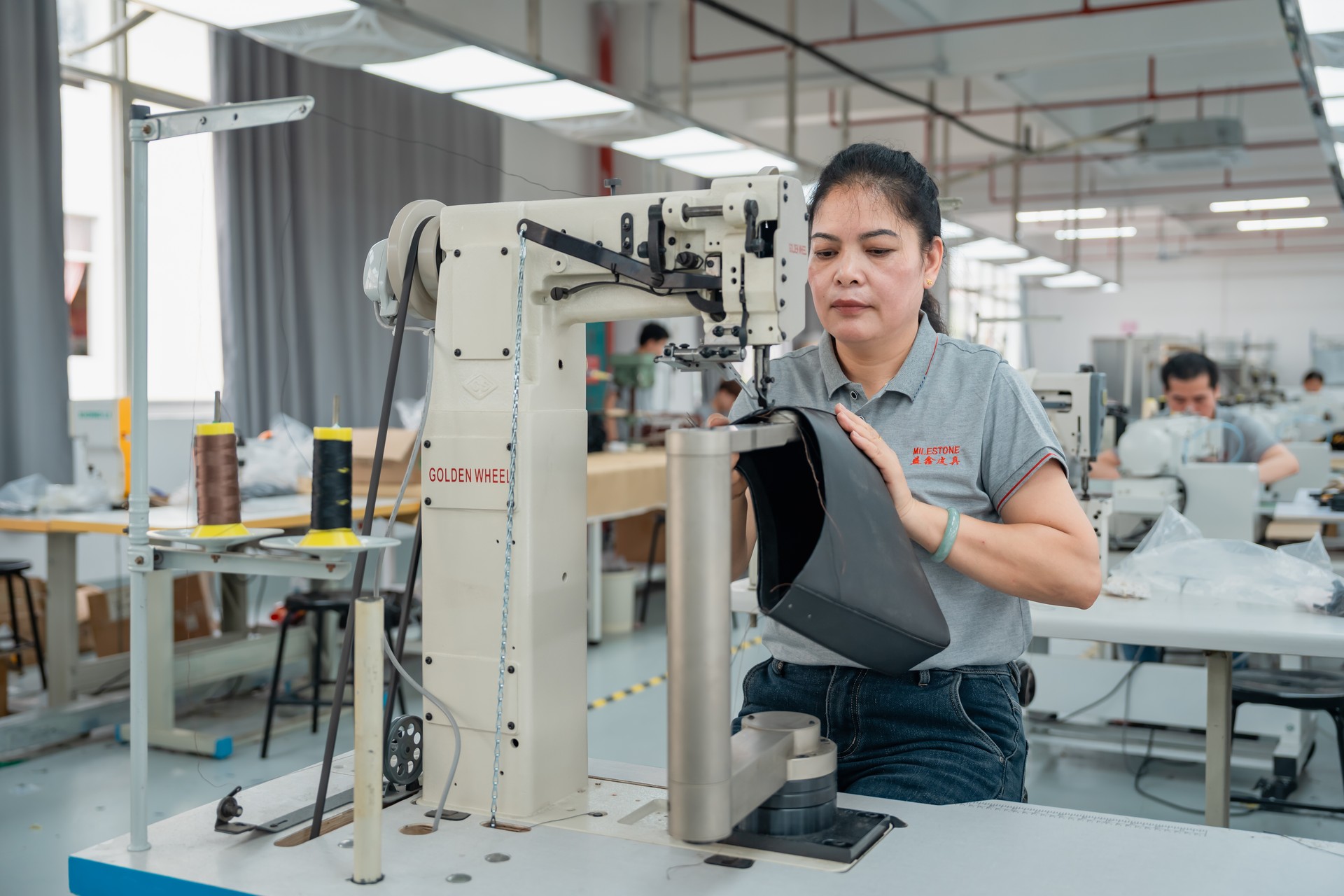
Compartments come next, forming the internal architecture. Rather than relying on floppy fabric dividers, a leather backpack uses trimmed panel sections, supportive seams, and clean edge finishing to create pockets that keep their shape even after years of use. Milestone's stitching standards hold everything together. Each stress point receives a locked, double‑run stitch, and corners are tack‑reinforced so they don't split when the leather softens with age. This combination of smart panel layout and dependable stitching gives the backpack a quiet strength you can feel the moment the shell settles in your hands.
A well‑designed strap system carries the weight long before the rest of the backpack is noticed, which is why premium makers focus heavily on shoulder‑strap construction and its interaction with the body. A quality backpack shoulder strap starts with a sculpted profile that follows the curve of the clavicle instead of digging into it. Many leather manufacturers use a layered build: a supple outer leather, a stabilizing mid‑layer, and a breathable backing that keeps the strap from feeling clammy against the skin.

Padding materials vary, but high‑density foams remain the industry standard because they compress slowly and recover reliably, reducing hot spots during longer wear. The attachment points—where the straps meet the bag—often endure the most stress, so reinforced stitching, bar‑tacks, or concealed metal anchors are common in premium production. This reinforcement prevents tearing at the root of the shoulder strap, a failure point that shows up quickly in lower‑grade packs.
Leather straps bring an undeniable advantage in longevity. They resist fraying, tolerate weight changes better over time, and age with a patina that many buyers specifically seek out. Textile‑based straps, on the other hand, offer lighter weight and greater airflow but can lose shape or develop fuzzing at the edges after repeated abrasion. Brands often combine the two materials to strike a balance between comfort and lifespan.
Load‑bearing design is not only about the straps themselves. Biomechanical research shows that using a chest belt and hip belt can reduce pressure on the lateral clavicle and trapezius while increasing shoulder load‑bearing capacity. This detail matters for B2B buyers evaluating carry comfort because it underscores the broader principle: a well‑engineered strap system distributes weight through the whole torso, not just the shoulders, improving comfort and long‑term durability.
Top-load, panel-load, clamshell, and hybrid openings each change how a backpack behaves in daily use, and the choice often determines whether a bag feels nimble or fussy. A top-load design keeps the silhouette clean and compact; it lets users reach into the main cavity quickly, though the vertical drop can hide smaller items at the bottom. Panel-load openings behave more like a suitcase lid, giving a broad view of the interior. Many buyers appreciate this layout because it reduces rummaging during commutes or travel.

Clamshell construction goes a step further by opening the pack almost flat. The format suits business travelers who need structured packing and consistent organization, especially when paired with reinforced leather panels that resist stretching. Hybrid openings combine a roll-top or flap entry with side or front zippers, creating a flexible system that adapts to different carry habits.
Premium leather backpacks demand hardware that matches the material's long lifespan. High-gauge metal zippers, solid-cast buckles, and hand-set rivets prevent stress points from widening or tearing. A zipper with too much play can grind against the leather's edge, while weak buckles can bend under load and compromise the entire structure. When these backpack parts—zippers, buckles, sliders, and closure reinforcements—are matched correctly, the result is a pack that ages smoothly instead of showing cracked edges or loose stitching. Buyers may not know every backpack part name, but they immediately sense when hardware feels dependable in the hand.
Comparison of common backpack opening mechanisms
| Opening Type | Key Advantages | Considerations |
|---|---|---|
| Top-load | Simple, compact profile | Harder to see interior |
| Panel-load | Wide visibility of contents | Slightly heavier hardware |
| Clamshell | Flat opening for structured packing | Requires strong hinge reinforcement |
| Hybrid | Flexible access points | More components to maintain |
Durable leather backpacks depend on reinforcements that go far beyond the visible parts of a backpack. Milestone uses concealed supports—edge bindings cut from dense hide, back‑panel stiffeners, and doubled‑over stress patches—to control how the leather stretches over years of wear. These reinforcements counter the natural pull that occurs where straps meet the body, a key design consideration because research from The Taylor & Francis Group notes that the pressure‑relief benefit of a belt weakens once the load nears thirty percent of body weight. Thoughtful structure matters long before a bag reaches that threshold.
Stitch selection plays a similar role. Lockstitch, prized for its clean, tight appearance, works well for the grain surfaces of a black leather backpack. For higher‑load areas, Milestone shifts to saddle stitching, which forms independent threads that keep the seam intact even if one side breaks. The company's approach to balanced stitch density—not too sparse, not so tight it cuts the leather—keeps seams from tearing through the hide over time.
A clear understanding of the parts of a backpack gives procurement teams a sharper eye for what truly drives durability, comfort, and long-term value. Once you can distinguish sturdy hardware from brittle zinc blends or recognize when leather panels are cut from strong grain rather than fibrous leftovers, sourcing stops feeling like guesswork and starts becoming a strategic decision. This is why many brands come to Milestone for premium leather construction that matches both design intent and commercial goals. Before finalizing any order, take time to study each component and the materials that shape it; a few minutes of scrutiny can prevent years of product complaints. If you're planning your next line, our team is ready to collaborate and turn precise specifications into dependable, handcrafted goods.
Ready to start your custom project?
Expert insights on care, styling, and manufacturing.
A frame sheet is the internal structure that gives a backpack rigidity, helping distribute weight and prevent objects from poking your back. The back panel is the padded exterior surface that sits against your body, designed for comfort, airflow, and moisture management. Together, they create support without sacrificing carry comfort.
Poor weight distribution and low‑density foam cause the discomfort, even when straps look thick. Padding that compresses too easily stops cushioning your shoulders, especially under heavier loads. Narrow strap shapes, incorrect curvature, or a backpack that sits too low can also concentrate pressure instead of spreading it evenly across the shoulder area.
A load lifter is working when it shifts pressure from your shoulders to your hips and creates a slight forward pull on the top of the pack. You should feel reduced shoulder strain, better posture, and stable weight transfer. If tightening the straps changes nothing, the angle isn't effective.
Too many compartments can compromise overall rigidity, especially when thin divider panels replace sturdier continuous fabric. Each added pocket introduces seams that may create weak points under heavy load. High‑quality backpacks counter this with reinforced stitching and structured back panels, so durability ultimately depends on construction rather than compartment count alone.
They flop because the "rigidity" often depends on load, body shape, and internal support rather than the belt itself. A hip belt may contain stiff foam, but without a firm frame, proper contouring, or enough tension, it collapses under weight. Incomplete sizing and overly soft padding also make supposedly rigid belts behave limp in real use.