Author: Ethan Publish Time: 2026-08-18 Origin: Milestone

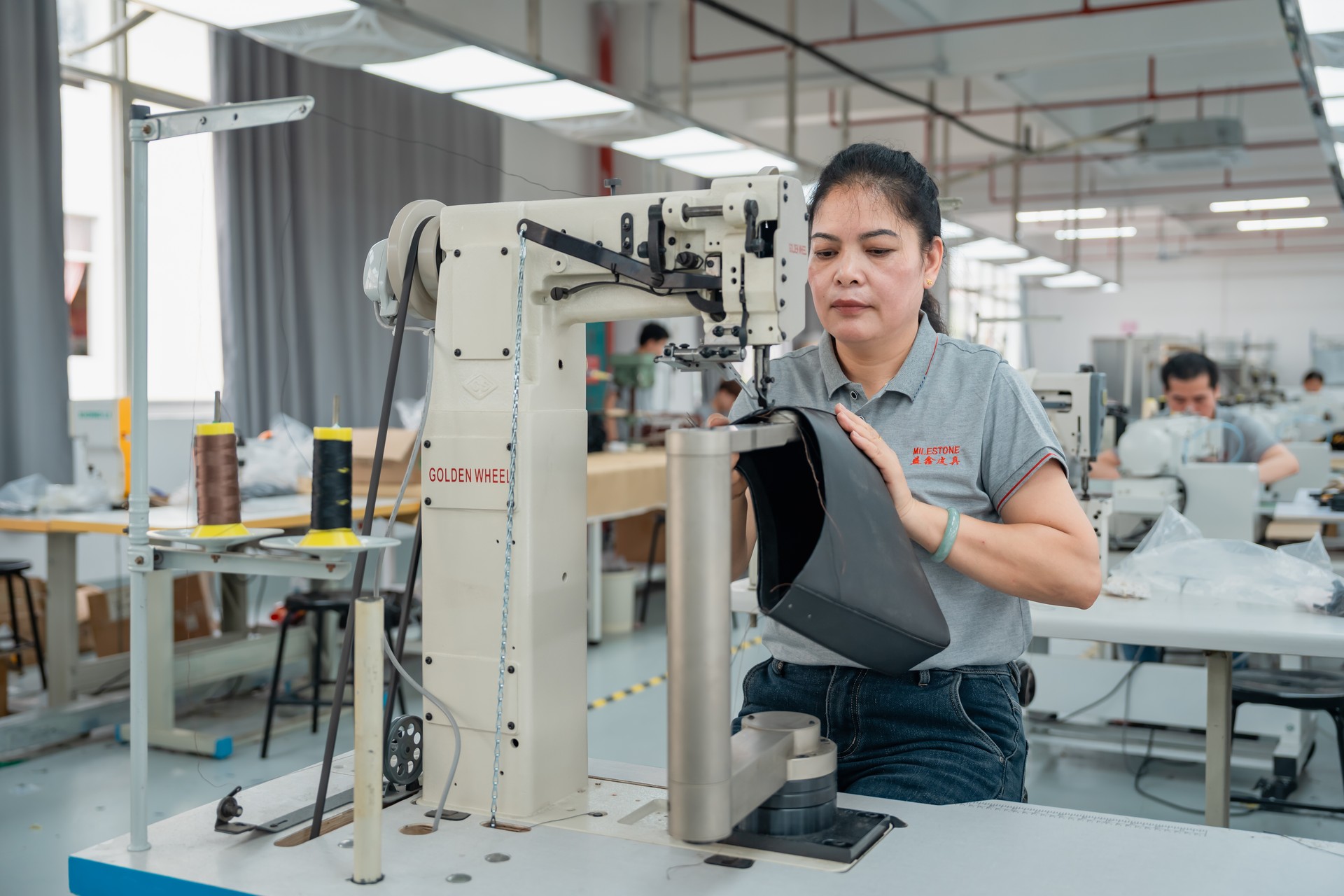
Rolled camel leather hide sample.
IN THIS ARTICLE
Camel leather is genuine leather made from camel hide. Like other animal hides, it has to be preserved, tanned, dried, and finished before it becomes a usable material for products. Research on Ethiopian camel hides has shown that camel hide can be developed into upper leather, which gives the material a credible place in leather manufacturing rather than treating it as a novelty.
The finished leather may be firm, soft, smooth, suede-like, embossed, or corrected, depending on how it is processed. For brands and sourcing teams, camel leather is most useful when it is judged as a finished product material: appearance, colour, thickness, handle, edge behaviour, and batch consistency all matter.
Camel hide becomes leather through the same broad route used for many hides: cleaning, preservation, beamhouse work, tanning, drying, and finishing. The early stage matters because poor flaying and curing can damage the hide before it reaches the tannery. Field research in northern Kenya links poor camel hide quality with poor flaying and curing methods.
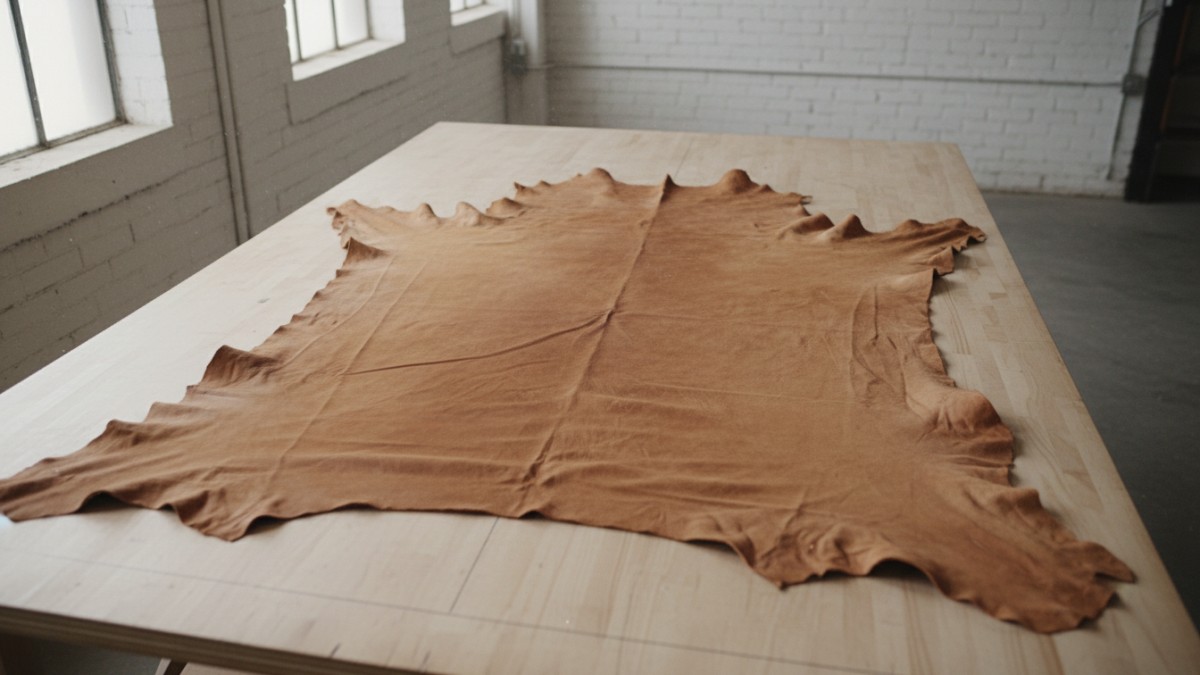
Camel leather hide prepared for processing.
After tanning, the leather may be split, shaved, dyed, softened, plated, embossed, or finished as smooth leather, nubuck, suede, corrected grain, or nappa-style leather. Research on Egyptian camel hides produced finishes including nappa, nubuck, corrected grain, and suede. Each finish changes the final look and handle, so buyers should judge the finished article rather than the raw hide name alone.
Camel leather often sits in a warm natural range: tan, honey, caramel, tobacco, chestnut, and deeper brown tones. Natural or lightly corrected pieces may show visible grain, pores, wrinkles, healed marks, and small surface variation. One of its visual appeals is that the grain can feel more organic than perfectly uniform corrected leather, with subtle lines and natural markings that give each panel a less mechanical look. Corrected grain looks cleaner and more even. Nubuck and suede look softer and more matte. Embossed finishes can create a more regular fashion surface.
In handbag retail, "camel" is also used as a colour name. A camel color leather handbag or camel color leather tote bag may simply mean a tan leather bag, not a bag made from camel hide. A Michael Kors product page shows this clearly: CAMEL is used as a colour name on a pebbled-leather crossbody bag. That colour language still matters for design because camel shades work well with black, ivory, denim, olive, navy, and seasonal brown palettes. Coach's Restored Studio Bag 20 in Light Camel gives another example of a warm camel colour on a compact structured bag with a glovetanned-leather look.
In the hand, camel leather can feel structured or flexible depending on thickness, tannage, and finish. For bag development, inspect a swatch under good light and check grain consistency, edge quality, surface marks, bend recovery, colour matching, and finish adhesion.
Documented uses for camel leather include shoe uppers, leather goods, and belting leather. An Addis Ababa University thesis describes trials that developed Ethiopian camel hides for these applications. In practical product terms, that places camel leather in footwear, belts, wallets, and selected bags.
For handbags, the most natural applications are a structured tote, a softer shoulder or crossbody bag, and smaller goods such as wallets or cardholders. Each exposes a different part of the material: a tote needs consistent panels, a crossbody needs reliable flex around the strap and flap, and a wallet needs clean splitting and edges.
Camel leather can also be used in apparel or furniture, but for a handbag collection the important question is how its surface, handle, and finish support the design.
Camel leather works best in bags when the material is matched to the silhouette. A structured tote or top-handle bag needs enough body to keep a clean shape. A softer shoulder or crossbody bag can use more drape, but still needs stable folds and strap attachments. For smaller goods, the priority shifts to thinness, clean edges, and a finish that will not crack during repeated use.
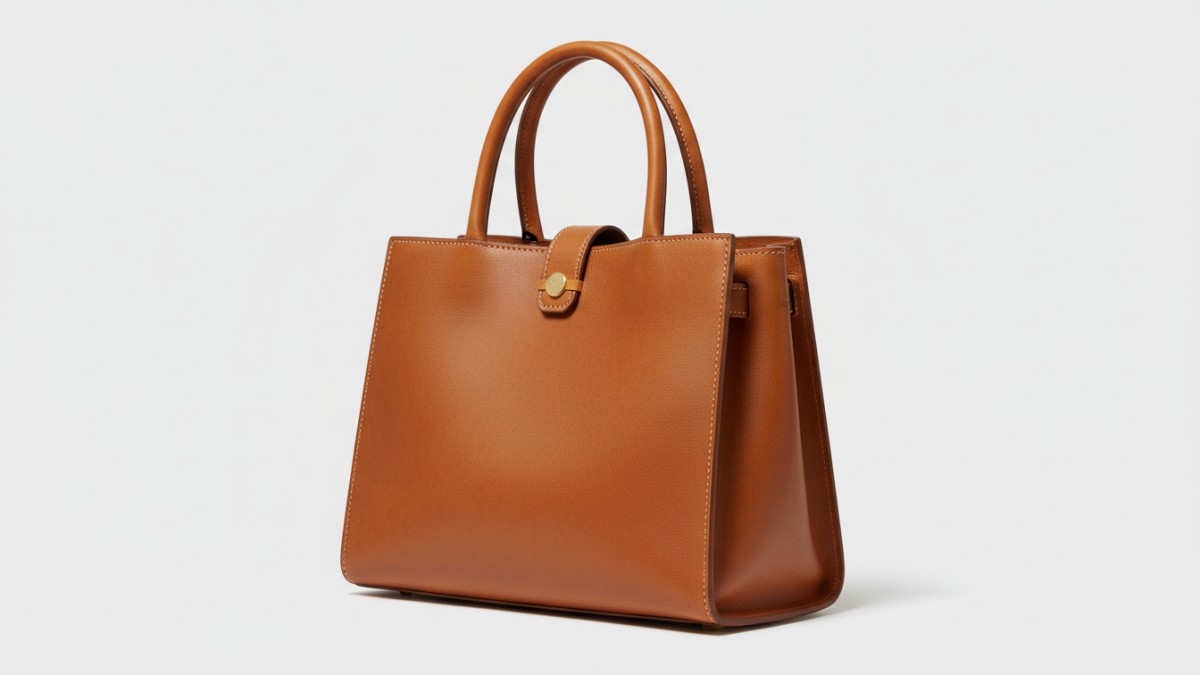
A clean, structured tote in a warm camel-brown leather tone.
Fashion-wise, camel leather suits quiet luxury, heritage, travel, and workwear-inspired collections. Smooth or corrected leather gives business bags a neat surface; natural grain, nubuck, or suede creates a softer and more tactile look. Camel tones also work easily with black, ivory, denim, olive, and other neutral colours, which makes the material suitable for both permanent core lines and seasonal capsules.
For a manufacturer, the final checks are simple but important: approve the leather on the actual bag shape, confirm panel and colour consistency, and make sure the finish, edges, and stress points can be repeated in production.
Cow leather usually has the advantage in scale. It has a longer manufacturing history, broader grade coverage, and a more mature network of tanning and finishing experience, so sourcing is often more stable for large handbag programmes. That is why a brand such as Milestone can use quality cow leather for core bag lines with more predictable repeat production.
Camel leather may still be worth considering when a brand wants a less common leather story, warmer natural character, or a distinctive surface for a focused collection. Some field research also describes camel hides as an underused resource, which helps explain why buyers may need more direct control over sorting, testing, and repeat-batch approval. The comparison should be made at the product level: same bag type, same thickness, same finish, same colour target, same test requirements, and same reorder quantity. In practice, that lets Milestone source strong cow leather for staple programmes and also source good camel leather for targeted bag styles when the brief calls for it.
Camel leather bag price depends on the finished specification. Small leather goods use less area and can work with smaller panels. A tote, laptop bag, duffle bag, or travel bag needs larger usable cuts, tighter colour matching, stronger reinforcement, and more testing. Finish also affects cost: corrected grain, nubuck, suede, embossing, lining, edge paint, hardware, strap construction, and packaging all change the final quote.
For care, treat camel leather like a natural finished leather unless the tannery gives a different instruction. Wipe dust with a soft cloth, avoid soaking, keep the bag away from harsh solvents, test conditioners on a hidden area, and store the bag with shape support away from direct sunlight. Smooth corrected grain, nubuck, and suede should not share the same care label.
Before production, ask for a finished sample and written spec. Check thickness, grain, colour tolerance, flex recovery, edge quality, finish adhesion, colour fastness, odour, lining compatibility, hardware pull points, and repeat-batch consistency. For B2B orders, also confirm minimum order quantity, lead time, defect allowance, replacement policy, and whether the supplier can match the same shade and finish in future production.
Camel leather is real leather made from camel hide, and it can be developed for leather goods when the finished specification is right. For handbags, the material should be judged by appearance, handle, panel quality, edge finish, colour consistency, and repeat production control.
If you are developing camel leather handbags, totes, crossbody bags, belts, wallets, or travel accessories, define the product first and approve the material around that construction. If you want a factory-ready path from material approval to repeatable production, see our leather bag manufacturing capabilities and share your requirements with our team.
Ready to start your custom project?
Practical answers about camel hide, quality, uses, and sourcing.
Yes. Camel leather is genuine animal leather made from camel hide and then tanned and finished for a specific use.
It often appears in tan, honey, caramel, tobacco, and brown tones, with a natural grain that may show pores, wrinkles, healed marks, or a smoother corrected finish.
Common applications include shoe uppers, belts, wallets, trims, small leather goods, and selected bags such as totes, crossbody bags, shoulder bags, satchels, and travel bags.
Yes, but the finished leather should be approved by bag type. Totes, crossbody bags, shoulder bags, laptop bags, and wallets each need different thickness, handle, and reinforcement.
Wipe dust with a soft cloth, avoid soaking or harsh solvents, test conditioners on a hidden area, and follow the care method for the exact finish, especially for nubuck or suede.