Author: Ethan Publish Time: 2026-04-03 Origin: Milestone

Sourcing leather isn't only about color or finish; thickness and weight quietly determine whether a product holds its shape, resists strain, or begins to sag after a season of use. B2B buyers know these details can influence everything from production time to customer complaints, which is why many rely on a clear leather thickness chart to keep orders consistent across batches and suppliers. A slight shift in leather weight can stiffen a belt, soften a tote, or change how a structured handbag carries along its seams. When these measurements are chosen with intention, they give manufacturers the confidence that every cut, fold, and stitch will behave exactly as the design demands.
Leather thickness and leather weight shape how a finished product behaves long after it leaves the production line. Thicker hides naturally resist abrasion and hold their form, which is essential for structured handbags or work-ready briefcases that face daily pressure points. Slimmer cuts flex more easily; they drape, fold, and contour to the body, giving soft totes and small accessories their relaxed feel. A study on material drapability confirmed that flexural rigidity and thickness have a considerable influence on the drape coefficient—a reminder that these physical traits directly affect how leather moves in real-world use. According to a published finding on this effect, that relationship is statistically significant.
These characteristics influence not just a single item but the rhythm of large-scale manufacturing. When hides arrive with inconsistent thickness profiles, machines struggle to cut evenly, adhesives bond unpredictably, and stitching tension shifts from panel to panel. Production teams compensate, but every adjustment costs time and erodes quality uniformity. Consistent specifications allow factories to set blade depths, skive patterns, and reinforcement placements with confidence, improving throughput without putting strain on the material or the workforce.
Buyers who prioritize precise measurements end up with products that behave the same in every batch. A strap won't stretch on one order and stiffen on the next. Corner panels won't slump in some cartons while standing upright in others. Reliable leather thickness and weight give brands the repeatable performance they need, especially when scaling a hero SKU across multiple regions or fulfilling long-term B2B partnerships.
Leather has been traded by weight for centuries, and the familiar ounce system grew out of that marketplace reality. Merchants once sized hides by how many ounces a square foot weighed, a rough but effective shorthand that let tanners judge density without any modern tools. That historical habit still lingers today, which is why many buyers check a leather thickness chart or compare leather ounces to mm when deciding if a material suits belts, upholstery, or lighter goods.

Modern production, of course, calls for something far more exact. Today's tanneries typically use calibrated calipers or digital gauges that press gently against the surface and capture the material's true thickness in millimeters. These instruments follow well‑established testing protocols; one example is the official method for measuring leather thickness outlined in this International Standard, which defines how pressure and contact points should be controlled. That level of precision matters, especially when a design depends on consistent edge‑skiving or uniform stitching tension.
Even with advanced equipment, hides remain natural materials, and they rarely behave like machine‑cut sheets. The shoulder tends to feel slightly firmer, the belly a bit looser, and the back section often yields the most stable results. A single hide can shift by several tenths of a millimeter from one area to another, so skilled cutters learn to match each panel to its best region. Recognizing that built‑in variability helps buyers avoid surprises and sets more realistic expectations when reviewing specifications from different suppliers.
Accurate leather thickness often starts with understanding how ounces convert to millimeters, because one ounce represents the thickness of a stacked square foot of leather. Modern conversion tables rely on fixed measurement standards; for instance, the international agreement defining 1 foot as exactly 0.3048 meters—documented in an explanation of the precise metric standard—helps keep ounce‑to‑millimeter ranges consistent across markets. For B2B buyers sourcing from multiple regions, that precision matters more than it might seem.

Most hides fall into predictable bands. Lightweight leathers, around 1–2 oz (roughly 0.4–0.8 mm), suit small goods that need clean folding edges, such as card sleeves or delicate linings. These cuts feel almost paper-thin in the hand, and while beautiful, they leave no room for sloppy tolerances. Moving up to 3–4 oz (1.2–1.6 mm) introduces enough body for handbags, wallets, and structured accessories without creating bulky seams that fight your stitching machinery. Brands commissioning retail-ready goods often settle in this middle territory because it balances form, durability, and cost.
At the heavier end, 6–7 oz (2.4–2.8 mm) and above is common for straps or rugged outdoor gear. Leather in this range resists stretching, but its fibrous edges reveal every mistake, whether from over‑skiving or uneven compression during splitting.
Manufacturers typically work within ±0.2–0.3 mm tolerances, depending on hide type and finishing method. Any tighter, and yields drop sharply; any looser, and batch consistency suffers. B2B teams should always verify which tolerance a supplier commits to, particularly when multiple production runs must match the feel and rigidity of earlier shipments.
Standard ounce‑to‑millimeter leather thickness ranges
| Ounces | Approx. mm | Common Uses |
|---|---|---|
| 1–2 oz | 0.4–0.8 mm | Linings, small accessories, delicate goods, card slot |
| 3–4 oz | 1.2–1.6 mm | Soft handbags, wallet exteriors, mid‑weight goods |
| 5–6 oz | 2.0–2.4 mm | Structured bags, belts, cases |
| 6–7+ oz | 2.4–2.8+ mm | Straps, holsters, saddlery, pet collars, rugged outdoor gear |
Leather thickness shapes how a finished product behaves the moment it's handled. Thin hides, especially those in the 1.0–1.2 mm range, bend easily and follow the motion of a shoulder strap or folded wallet without pushing back. Thick cuts feel different. The grain resists movement, and a bag panel made from a 2.2–2.5 mm hide holds its stance the way a well‑built briefcase should. That contrast in flexibility becomes the first performance marker buyers notice, and it often determines whether a material fits a soft, draped silhouette or a sharply defined profile.
Compressibility adds another layer of complexity. When a hide is squeezed in a caliper, softer fibers compact, and the reading shifts by tenths of a millimeter depending on humidity, temper, and fat content. This is why two leathers with the same listed thickness can behave nothing alike once stitched. What matters is how the leather rebounds, because that rebound dictates long‑term shape retention and how edges burnish or round off with use.
For structured goods—briefcases, travel trunks, rigid totes—manufacturers gravitate toward thicker hides because the internal fiber network refuses to collapse under weight. A panel cut from denser stock keeps corners sharp and prevents the sagging that erodes a premium look. Soft goods follow an opposite logic. A slouchy hobo bag or glove‑tanned accessory lives or dies by its ability to drape, so a thinner leather thickness allows the material to fall naturally and avoid that awkward, cardboard‑like stiffness that customers reject instantly.
Choosing the right leather thickness often determines whether a product feels sturdy in the hand or wears out before its time. For premium belts, most buyers settle into a familiar range because it consistently performs: 3.5 to 4.5 mm usually delivers the firm body, clean edge burnish, and long-term stretch resistance expected in quality belt leather thickness. A thinner cut may bend too easily and begin to ripple near the buckle, while anything heavier can feel bulky for everyday use.
Bags are a different story. Soft, draping silhouettes such as a relaxed tote or a slouchy black leather bag usually work best in the 1.2 to 1.6 mm range, where the hide still has structure but folds without cracking. Structured pieces—briefcases, camera bags, or small goods that must hold a crisp outline—tend to perform well between 1.8 and 2.2 mm, especially when paired with reinforcements or a good lining. Brands building a mixed portfolio of leather for belts and bags often refine these numbers through wear tests rather than guesswork, because even a fractional change affects hand feel and weight.
Thickness is not only a technical choice; it signals your brand's durability standards. A belt that keeps its shape after years of tension or a handbag that doesn't sag at the base tells customers you care about performance, not just surface appearance. Many teams use sample rounds or small pilot runs to confirm that stitch tension, edge finishing, and hardware placement match the density of the hide. If you're mapping out your next collection, a quick review of the processes described in this guide to high‑quality handbag production—can help align design and durability goals: the complete workflow.
Milestone keeps thickness accuracy tightly controlled, starting with how we select each hide. Our team measures incoming leather before it ever enters production, checking for inconsistent grain or swollen areas that can throw off the numbers in a leather thickness chart. Any hide that shows unusual density or fibrous pockets is set aside, ensuring only stable material reaches the splitting room.
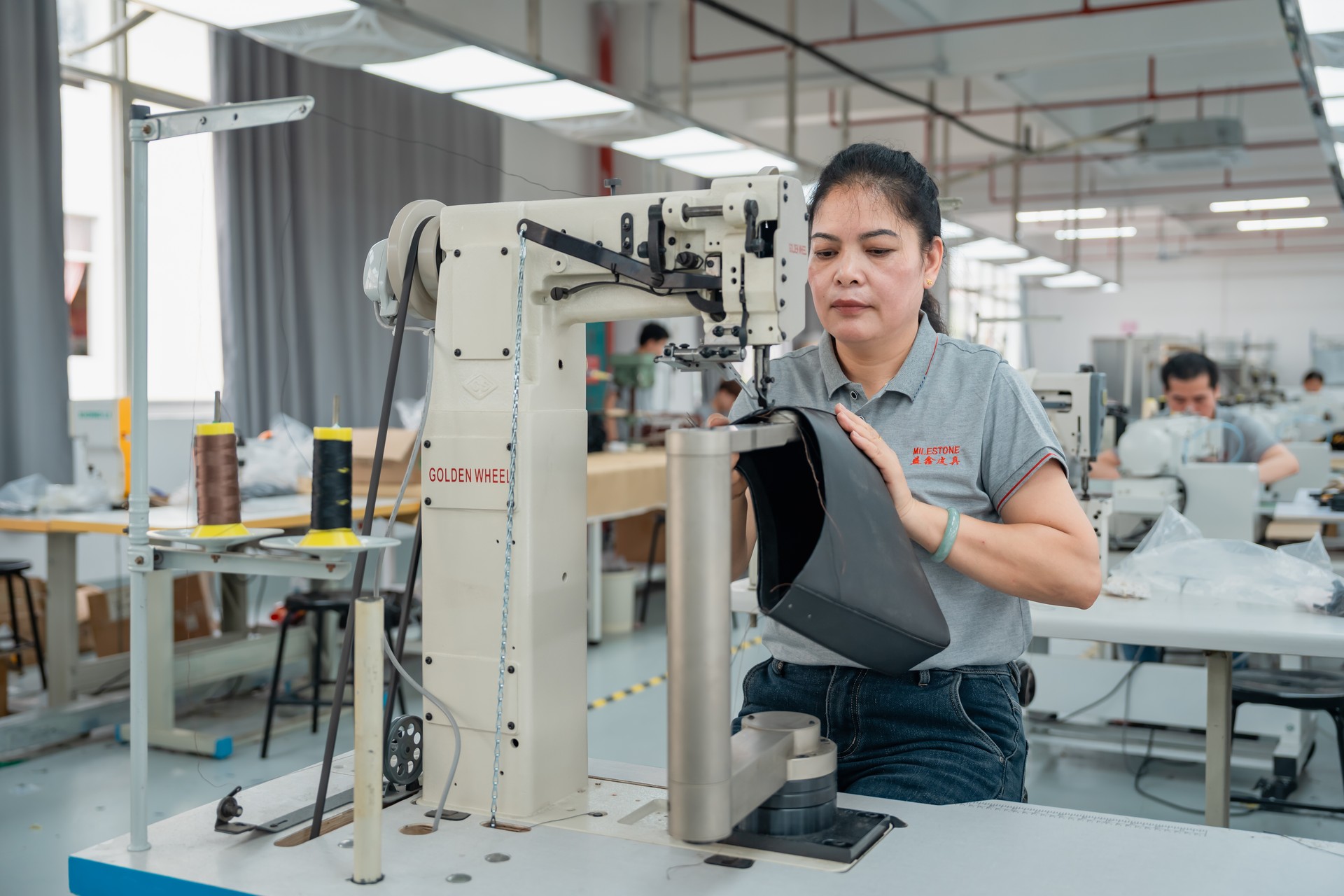
Precision matters even more once bulk orders begin. Industrial splitters are calibrated at the start of every shift, but the real difference comes from human oversight: technicians run their fingertips along freshly split panels, feeling for subtle dips that machines can miss. This blend of mechanical accuracy and hands-on inspection gives B2B partners dependable uniformity whether they order a few hundred units or several thousand. More details about how these processes evolved can be found in our long-standing production practices at Milestone factory and history.
For buyers who need exact tolerances—perhaps a slightly firmer body for structured totes or a thinner cut for lightweight travel pieces—we support custom thickness specifications across most leather categories. B2B teams can request tailored measurements to match their product lines, and our technicians will verify those specs throughout the run.
Leather thickness and leather weight sit at the heart of how a product behaves in real use, whether it needs to resist abrasion on a warehouse floor or keep a soft hand for a luxury carry piece. A clear thickness chart cuts through guesswork and keeps projects anchored to measurable standards, especially when development cycles get tight and small deviations can affect fit, drape, or long-term durability. When specifications matter and you need materials aligned with your exact tolerances, Milestone's team is ready to review your requirements, compare options, and support you through every stage of procurement.
Ready to start your custom project?
Expert insights on care, styling, and manufacturing.
Differences in stiffness come from how each hide is tanned, treated, and finished, even when they share the same ounce rating. Fiber density, oils and waxes added during finishing, and the animal's age or breed all affect rigidity. Variations in cut locations—like shoulder versus belly—also change how firm the leather feels.
Leather around 6–7 oz (2.4–2.8 mm) becomes too bulky for wallets but remains ideal for sturdy belts. This range is thick enough to offer the rigidity and durability belts need, yet it's generally uncomfortable and impractical for wallet construction, where slimmer cuts allow cleaner folds and better pocket fit.
Expect around 10–20% thickness variation across a single hide, especially near the belly and edges. Most patterns don't need major changes, but small adjustments help with precision work. Prioritize cutting structural pieces from the firmest areas and reserve softer sections for flex points or less load‑bearing components.
Splitting generally reduces strength, but professionally thinning a quality hide doesn't compromise it as much as over‑splitting a lower‑grade one. The outcome depends on the original hide's density and whether the tannery removes material evenly. Well‑finished, full‑grain leather retains far better durability even when thinned.
Leather thicker than 6–7 oz (2.4–2.8 mm) commonly strains domestic sewing machines and standard needles. At 8–10 oz, many machines struggle with penetration and feed consistency unless upgraded to heavy‑duty models. Using larger needles—size 18/110 or 20/125—helps, but extreme thicknesses still require industrial equipment.