Author: Ethan Publish Time: 2026-03-30 Origin: Milestone

Choosing the right custom handbag manufacturer can shape a startup's entire future, especially when early production runs leave little room for costly missteps. Some founders look for partners who can turn sketches into samples with steady, dependable craftsmanship, while others lean on an original design manufacturer that offers ready-made concepts they can adapt. Both paths can work, but each demands clear expectations and a solid grasp of how sourcing actually unfolds at the ground level. This guide walks you through what to look for, what to question, and how to avoid the traps that often catch first‑time buyers staring at mismatched swatches or off‑spec stitching. It's built for startups that need practical direction, not vague theory.
Before approaching any factory, a startup needs a clear picture of what kind of manufacturing relationship it's actually looking for. Many first‑time founders hear the terms OEM and ODM tossed around without understanding how these models shape cost, creative control, and production timelines.

An OEM partner focuses on producing items that another company will brand and sell. According to a widely referenced explanation of this model, an original equipment manufacturer is essentially the behind‑the‑scenes producer, allowing a young label to lean on the factory's technical expertise while controlling the branding and overall direction. For handbag startups that already have sketches, materials in mind, and a defined construction style, OEM suppliers offer a practical way to maintain creative ownership without needing an in‑house workshop.
ODM works differently. Here, the manufacturer provides pre‑developed designs that can be lightly adjusted—changing hardware, tweaking silhouettes, swapping materials. This route suits founders who have a strong brand vision but aren't ready to engineer every pattern piece from scratch. You gain speed and lower development costs, but you trade off some exclusivity, since those base designs often exist for other buyers too.
Understanding OEM vs ODM early will shape your sampling schedule, budget planning, and even how you pitch the product to investors. If your brand needs a deeply custom build, OEM is usually the better fit. If you want to test the market quickly with reliable, modifiable designs, ODM can be a smart entry point. Many startups blend both, especially when exploring options for custom handbag manufacturing, but the key is deciding which model supports your first collection rather than letting the factory decide it for you.
Finding a dependable custom handbag manufacturer often starts with knowing where professionals in the industry actually gather. Many startup founders begin with well‑known sourcing directories—platforms that let you filter by material capability, production scale, certifications, and whether a factory operates as an original design manufacturer, which is especially helpful when you need both production support and ready‑made design options. These databases save hours by narrowing the field to suppliers who already understand the technical demands of structured silhouettes, reinforced seams, and boutique‑level finishing.

Trade shows add another layer of clarity. Walking a floor at major events lets you handle samples, assess craftsmanship up close, and gauge how a factory communicates under pressure. In those brief conversations, you can often sense whether a supplier will be able to support your long‑term growth or if they're better suited for one‑off runs. Many founders who read guides such as this deeper look at choosing the right handbag manufacturer use trade shows as their turning point, because nothing replaces the feel of real materials—clean edge paint, firm handles, or the texture of corrected‑grain leather—when you're evaluating potential partners.
Online sourcing isn't limited to directories. Social media has become a surprisingly effective scouting tool, particularly when manufacturers share behind‑the‑scenes workshop footage or sample development clips. You can spot whether a factory truly produces its own work or simply reposts stock images. Industry communities—LinkedIn groups, sourcing forums, and designer networks—also play a role, offering unfiltered feedback about lead times, communication habits, and reliability during peak seasons.
Blend these channels together and you get a fuller picture. Directories give structure, trade shows add the tactile proof, and social communities reveal reputation. Used together, they help startups avoid guesswork and connect with manufacturers capable of supporting both early growth and long‑term brand identity.
Before you commit to a new production partner, it's worth treating legitimacy checks as seriously as you would treat material sampling or prototype reviews. A reliable manufacturer should never hesitate to share business licenses, registration certificates, and export permits, and you'll notice well‑established factories keep these documents ready because buyers ask for them constantly. Review them closely; mismatched names, expired seals, or unclear stamps are early signs that something isn't right.
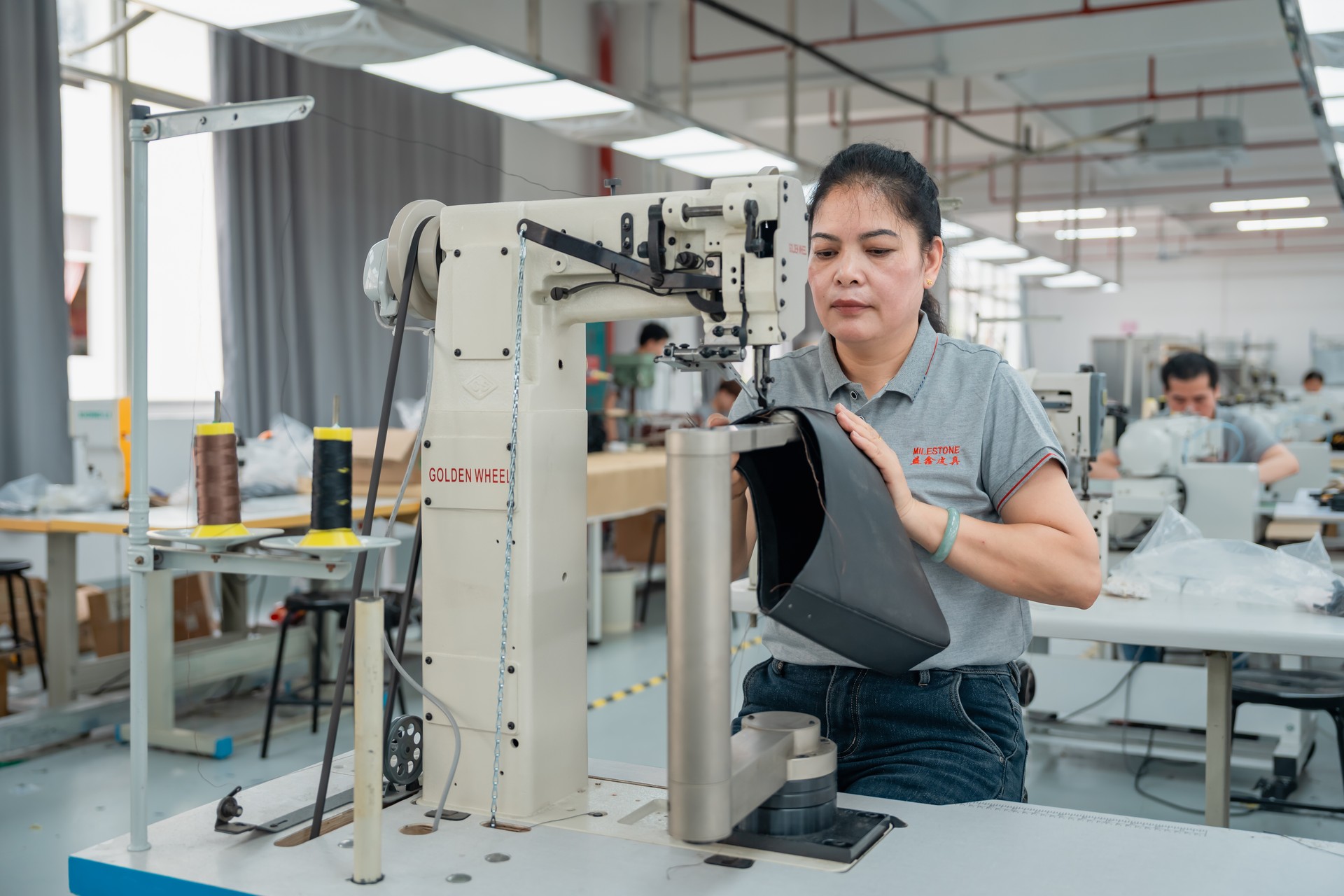
Many startups add a second safety layer by commissioning a third‑party factory audit. These independent firms walk the production floor, photograph equipment, and verify that the factory can actually produce the handbags they claim to make. An audit doesn't just expose nonexistent facilities; it also reveals whether the factory uses the stitching machines, edge‑painting tools, and material‑handling processes required for consistent bag manufacturing. For founders who haven't stepped into many workshops yet, this outside perspective prevents costly misjudgments.
When dealing with suppliers in China, it helps to consult the country's official public database. You can check a manufacturer's status through a government‑run enterprise information system, which confirms whether the business is legally registered and active. This source notes that you can search the company's records through China's National Enterprise Credit Information Publicity System, a vital step for any overseas buyer trying to avoid shell companies or middlemen.
Finally, legitimacy is rarely proven on paper alone. Ask for client references—ideally from brands with similar order volumes or materials. Speaking directly with past customers often reveals how the factory handles delays, quality issues, and communication. A legitimate bag producer will welcome these conversations because satisfied clients are their strongest proof of credibility.
A clear RFQ helps manufacturers respond with accurate quotes instead of vague estimates, and it prevents the back‑and‑forth that slows early development. Startups should begin with core specifications: item type, dimensions, construction method, hardware preferences, and any defining features that separate the concept from a standard tote or crossbody. This is also where you note planned quantities for sampling and your first production run. The goal is to give suppliers a shared measuring stick; even in other industries, a measurable RFQ that eliminates guesswork and forces comparable responses is considered best practice, as shown in a procurement‑focused claim.

Founders developing custom leather handbags should attach sketches, mockups, or even rough pencil drawings. These visuals reduce interpretation errors, and they pair well with a small material package that lists leather types, lining fabrics, trims, and color direction. A manufacturer can work around rough art, but unclear material intent—whether you want a tight‑grain top grain leather or a softer corrected grain—can stall sampling for weeks.
RFQs should also include target timelines for sampling and production, with enough breathing room for revisions. Adding a budget range is equally useful. It does not lock you into a final number; instead, it signals the manufacturing tier you are aiming for and keeps conversations grounded in what's financially realistic.
Key RFQ Fields for Startup Handbag Brands
| Field | Purpose |
|---|---|
| Specifications | Defines dimensions, construction, hardware, and special features. |
| Quantities | Separates sample needs from first production run volumes. |
| Sketches & Materials | Gives manufacturers visual and material guidance for custom leather handbags. |
| Timelines | Clarifies sampling and production expectations. |
| Budget Range | Aligns the project with the appropriate manufacturing tier. |
A manufacturer's capabilities become clear the moment you study the samples on your desk. Stiff edges, uneven stitching, or hardware that rattles when tapped with a fingernail hint at deeper production issues; by contrast, a clean stitch line and leather that bends without cracking show that the team knows its craft. Many startups request multiple prototypes because the sampling phase exposes how a partner handles pressure, detail changes, and tight timelines, which often mirrors the experience you'll have once full production begins. If you need a refresher on what high‑caliber construction actually looks like, the guide on creating a quality bag from design to production can help set that benchmark: this detailed breakdown of the making process.
Material sourcing is just as important as the stitching itself. Ask where the hides, linings, and zippers come from, and notice whether the response is crisp and specific or vague and circular. Long-term partners usually maintain transparent relationships with tanneries and hardware suppliers because they rely on predictable lead times and consistent batches. When a factory can trace a zipper back to the exact metalworks supplier—or explain why one tannery's finish resists humidity better than another—you gain confidence that your production run won't stall because a key component suddenly went missing.
Some factories go a step further by acting as an original design manufacturer, offering in‑house design support, technical drawings, and pattern development. This capability can be invaluable for a startup still refining its product vision, though it also requires trust in the factory's discretion and understanding of your brand identity. The goal is not to hand over creative control, but to work with a partner whose design team can translate early sketches into manufacturable pieces without stripping away the character that sets your bag apart.
A practical way to compare shortlisted partners is to build a simple scorecard that forces each manufacturer to compete on the same criteria. Most startups track MOQs, pricing, lead times, and quality control steps, but the scorecard becomes far more useful when you assign weight to each factor. For example, a supplier with a higher MOQ might still score well if they offer steady lead times and a transparent QC routine that catches issues before a single strap is stitched. Teams building their first collection—especially those sourcing materials through a dedicated leather bag manufacturing partner—often find that this structured comparison prevents decisions driven by emotion or a persuasive sales pitch.
As you score vendors, take note of the subtle risks that rarely show up in polished presentations. Slow replies during sampling usually foreshadow longer production pauses later. Unclear costing sheets can hide surcharge surprises once you move into bulk quantities, and vague commitments around defect thresholds leave you exposed when a batch arrives with uneven edges or fibrous scraps on the lining. Flag these gaps early, because they often indicate operational habits rather than one-off slipups.
Once the numbers are tallied, many brands discover that the right partner isn't always the cheapest or the fastest. A strong long-term fit matters more, especially if you expect to scale SKUs or introduce new materials. When a manufacturer grows with you, understands your brand's texture preferences, and communicates cleanly under pressure, the relationship becomes an asset rather than another variable you need to control.
Choosing the right manufacturing partner comes down to a few deliberate steps: confirm production capabilities, review material standards up close, and study how a potential partner communicates when timelines tighten. Each checkpoint helps you understand whether an original design manufacturer can support the kind of growth a startup often faces in its first volatile seasons. A quick look at a partner's background, especially their craftsmanship lineage, can reveal how they handle pressure and precision; our own story is outlined within the factory and history overview.
For founders weighing their next move, it often helps to speak with someone who has navigated the grind of prototypes, sampling rounds, and early scaling. Milestone offers guidance rooted in practical production experience, and we're ready to help you map out a manufacturing plan that feels grounded, realistic, and built for long-term momentum.
Ready to start your custom project?
Expert insights on care, styling, and manufacturing.
Small-batch leather workshops, boutique factories, and artisan studios are the best sources for ultra‑low MOQs. Many operate through platforms like Alibaba, Maker's Row, or independent sourcing networks. Some specialized workshops, including Milestone, offer flexible volumes, making them ideal for startup testing runs.
Request material samples, inspect past work, and confirm the factory's supply chain for cactus leather or cork before moving forward. Ask for prototype swatches, production photos, and references from brands using similar textiles.
Working with a freight forwarder who provides landed‑cost estimates is the most reliable way to avoid surprise charges. They break down duties, VAT, and brokerage fees before production begins. Request a full tariff classification from your manufacturer and confirm rates through tools like your government's customs calculator to prevent unexpected import costs.
Strong legal agreements and controlled information sharing offer the best protection. Startups typically use NDAs, clear ownership clauses in manufacturing contracts, and limit the release of full design files until trust is built. Adding watermarked tech packs, staged sampling, and registered design rights further reduces the risk of design misuse by small workshops.
It's completely feasible to find manufacturers that handle both prototyping and small‑batch production, especially those specializing in startup support or boutique handbag lines. These partners streamline development, reduce miscommunication, and shorten lead times. Many small ateliers and full‑service factories now offer integrated design, sampling, and low‑MOQ runs to make early-stage production smoother.