Author: Ethan Publish Time: 2026-03-26 Origin: Milestone

Have you ever looked at a classic JanSport and wondered about the actual factory dollars behind that iconic silhouette? The cost to manufacture a backpack rarely lands in a single predictable range; it shifts with every choice a brand makes, from the feel of the fabric to the number of pockets stitched into the shell. A simple canvas daypack carries a very different price profile than a technical design built with molded panels and reinforced webbing, which is why relying on the average backpack cost alone can mislead both new and established labels. Brands that want to protect margins—and avoid surprises once production begins—need clear calculations that reflect real factory conditions. At Milestone, our team studies these variables daily, pulling data from the backpack factory floor to give partners precise, grounded cost insights they can actually use.
The core cost of backpack manufacturing is shaped long before the first stitch lands. Everything starts with the design itself. A simple daypack with a clean silhouette requires fewer pattern pieces and less hardware, while a technical build might demand articulated panels, reinforced stress points, and specialized trims. When those details multiply, so does the cost. To understand these shifts, one must consider the internal anatomy of a backpack, as the complexity of hidden reinforcements and specialized trims often dictates the final quote.
Materials sit at the center of the pricing equation. Basic polyester behaves predictably and comes at a modest price, but shift to recycled nylon, full‑grain leather touchpoints, or custom‑dyed webbing and you'll feel the cost climb. Beyond standard synthetics, the industry is shifting toward sustainable biotechnological pigments and fibers that reduce energy use by half, though these early-stage innovations currently command a premium on the factory floor. Even the type of foam used in straps or back panels can swing the budget; high‑density foams resist compression and improve comfort but aren't priced like commodity fillers.
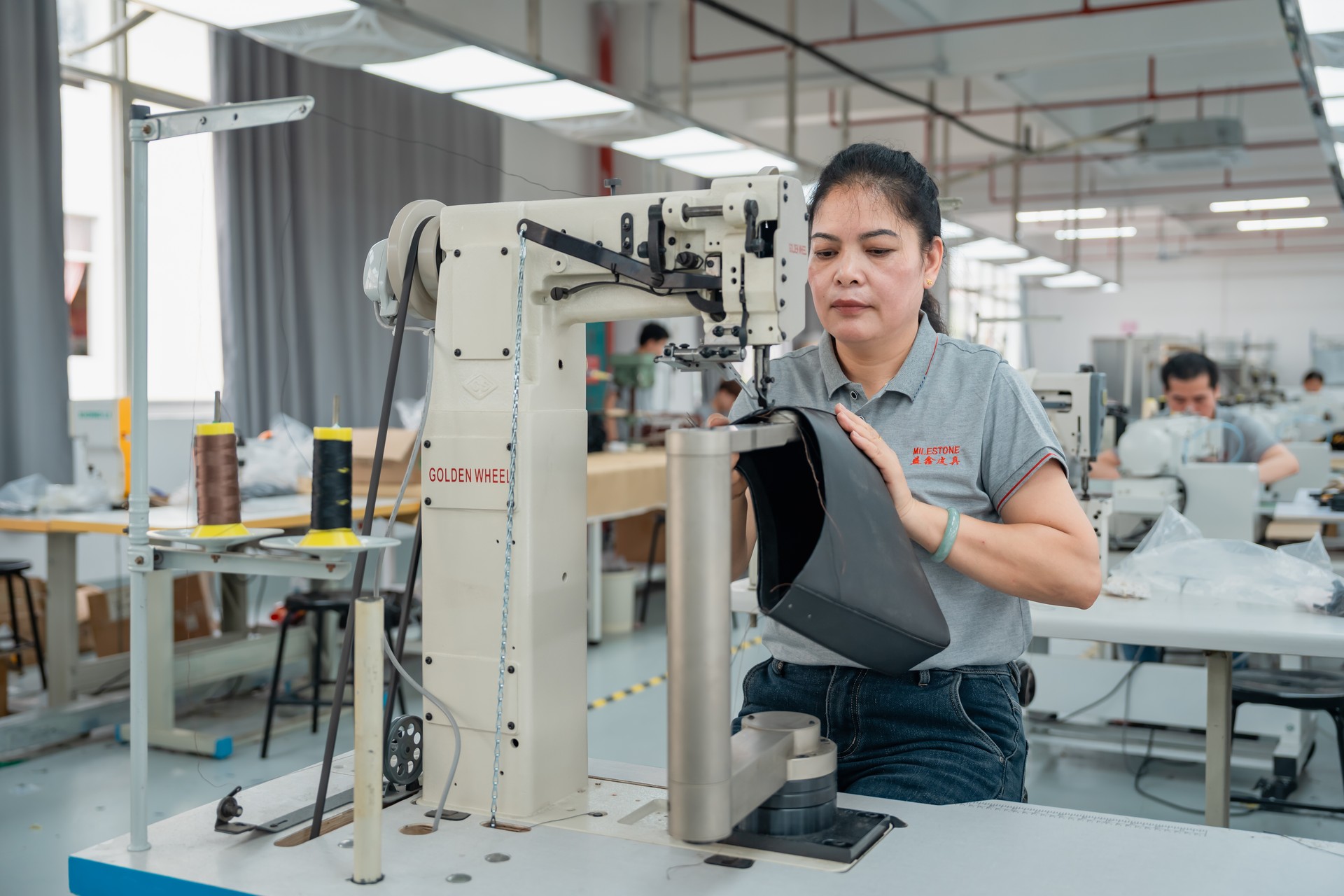
Labor and factory overhead are just as influential. Skilled sewing operators move through complex assemblies smoothly, while inexperienced hands may struggle with curved seams or heavy fabrics. That difference affects the workflow, and any slowdown raises labor hours. Efficient production lines—supported by well‑planned tech packs and clear quality markers—keep the process tight and predictable. To see how these efficiencies affect your delivery, you can estimate your production timeline for both sampling and mass production phases with our online lead time calculator.
MOQs often surprise first‑time buyers. A factory can produce a small run, but the unit cost increases because raw material suppliers price rolls, sheets, and hardware in bulk. Spreading those expenses across a larger order creates a meaningful per‑unit drop.
Contrast a low‑end backpack with a premium build and the gap becomes obvious. One relies on thin fabrics, minimal reinforcement, and fast assembly; the other demands sturdier textiles, tighter tolerances, and far more hands‑on time, all of which answer the question of how much a backpack costs to produce.
A low‑end polyester backpack starts with straightforward math. Manufacturers often choose 600D or 900D polyester, priced around $1.50–$2.00 per yard, and a basic pack uses roughly one yard. Add simple foam panels, zippers, and webbing, and the total material load lands between $3.00–$4.00. Labor is equally lean: a streamlined pattern with few pockets takes 12–18 minutes on the line, costing $1.50–$2.00 depending on region. By the time finishing touches like bar‑tacks, logo patches, and packing are added, the average backpack cost for low‑end builds sits near $5.00–$7.00 ex‑factory, which is why these models dominate promotional orders and mass retail. Please note that as MOQs decrease, these unit prices inevitably rise to account for the loss of material efficiency and increased setup time per batch.

A high‑end leather backpack follows a very different cost curve. Genuine full‑grain hides arrive with natural scars, uneven edges, and fibrous sections that cannot be used, creating trimming loss that pushes real consumption well above the pattern requirement. A design needing 10 square feet may require 12–14 square feet of raw hide, and at $4–$6 per square foot, material alone climbs to $50–$70. Hardware is heavier, linings are smoother, and zippers shift from generic coils to premium metal. Labor jumps sharply too; complex panels and edge‑painting can stretch total production time past an hour. This meticulous handling is why luxury brands prioritize value-driven manufacturing over sheer volume, ensuring every detail justifies a higher price point.
When you line these builds side by side, the contrast becomes clear. Low‑end backpacks rely on inexpensive synthetics, fast cycle times, and simple finishing, while high‑end models absorb larger material waste, skilled labor, and meticulous surface treatment. These choices shape the final cost more than any single component in the backpack manufacturing process.
If you're currently budgeting for a new collection, you can submit an early inquiry to get a preliminary cost assessment from our factory team.
Leather pricing rarely follows a straight line, especially when brands step into genuine hide selection. The grade of the hide, the tanning method, and how much usable area survives the cutting table all interact in ways newcomers often underestimate. A full‑grain hide, with its tight fibers and natural markings, offers superior durability but tends to suffer more visible surface variation, which reduces yield. Corrected‑grain leather costs less because sanding and pigment can mask imperfections, yet that same processing changes the way the material flexes when shaping a black leather backpack or any structured style.

Tanning compounds the picture. Chrome tanning gives consistent color and a smooth temper but demands careful batching to avoid waste. Vegetable tanning brings a richer smell and a firmer hand, though its slower process pushes the per‑unit cost higher. When a backpack factory works with these leathers, every nick, wrinkle, or scar affects how many panels can be cut from a single hide, and even an additional 3–5 percent drop in yield translates into meaningful cost differences across a production run.
Labor is another hidden lever. Hand‑finishing—edge painting, burnishing, conditioning—adds hours that synthetic materials simply don't require. The craft can turn a simple silhouette into something refined, yet it raises labor intensity significantly. Brands moving toward premium materials often find it helpful to review a detailed workflow with a partner experienced in leather construction, such as those covered in discussions of specialized leather bag manufacturing, to avoid surprises before sampling begins.
Cost expectations shift quickly as you move from a simple school backpack to travel-ready builds or premium fashion pieces. A basic school bag often sits at the lowest end of the spectrum because it relies on lighter polyester shells, minimal foam, and straightforward stitching. When buyers ask how much does a backpack cost in this category, the answer is usually modest, but structure changes fast once brands add reinforced panels, denser foams, and heavier zippers. Travel and commuter packs climb further since they introduce laptop compartments, stowable harness elements, and longer sewing minutes; the extra hardware alone can nudge a factory quote well above an entry model. Anyone comparing sizes and structure will find it helpful to look at a practical guide such as the discussion on standard backpack dimensions in the link on manufacturing insight: common backpack sizing considerations.

B2C retail prices widen these gaps even more. Retailers often mark up two to five times above ex‑works cost to cover overhead and channel margins, while B2B buyers see a leaner figure tied directly to pattern complexity and order volume. Luxury builds break away entirely, driven less by construction and more by the price of leather, metal fittings, and brand positioning.
Cost Ranges for Backpack Categories
| Category | Typical Retail Price Band (USD) | Key Construction Notes |
|---|---|---|
| School / Entry | < $50 | Basic polyester shells, minimal structure, simple trims |
| Mainstream Daypack / Commuter | $50–$150 | Higher-density foams, stronger zippers, improved organization |
| Travel Packs | $150–$300 | Larger pattern sets, laptop sleeves, stowable harness options |
| Technical Backpacking | $200–$350+ | Frame integration, load lifters, advanced suspension |
| High-End Technical | Up to ~$700 | Premium materials, specialty suspension systems |
| Luxury Fashion | ~$2,000–$6,000+ | Luxury materials, brand-driven pricing |
A seasoned backpack factory keeps costs in check long before the first panel is stitched. Standardized patterns and repeatable tooling prevent the tiny inconsistencies that can turn into wasted yards of fabric or slowdowns at the cutting table. When dies and templates fit together cleanly, workers spend less time correcting misalignments and more time creating pieces that feel uniform to the touch, which protects both efficiency and the premium look buyers expect.
Cost control also depends on how labor moves through the line. An optimized sequence—where one station preps edges, another reinforces stress points, and a third closes the body—cuts out the stop‑and‑start rhythm that often drains productivity in backpack manufacturing. The workflow feels almost like a clean current: steady, predictable, and resistant to bottlenecks.
Where Milestone helps most is in scaling that consistency. Brands that start with modest runs can grow into larger volumes without sacrificing the firmness of a strap fold or the crisp alignment of a zipper track. By pairing disciplined production methods with material insight, Milestone becomes a practical partner for teams that want premium builds without unpredictable cost swings.
Understanding what shapes the average backpack cost — from fabric quality to hardware choices and labor intensity — helps teams plan with fewer surprises and tighter control. As a specialized custom handbag manufacturer, we've seen how brands that take time to map these elements early usually move through development faster because they can anticipate how each decision pushes the quote up or down. If you're weighing different constructions or debating which features justify the spend, our team can build detailed cost models that show the trade-offs clearly.
Sourcing teams ready for firmer numbers can send their specs or tech packs through our OEM inquiry channel to receive a custom quotation grounded in real production methods, not guesswork.
Ready to start your custom project?
Expert insights on care, styling, and manufacturing.
Expect an added cost of about $1–$3 per unit when opting for recycled nylon, depending on yarn quality, MOQ, and the mill's processing methods. The premium comes from extra sorting and regeneration steps, though larger production runs can reduce the markup and bring pricing closer to standard nylon.
A noticeable price increase is common, because manufacturers spread setup, labor, and material sourcing costs across a much smaller batch. With only 100 units, you often face higher per‑unit pricing, limited customization options, and possible surcharges. Larger MOQs typically unlock better efficiency, bulk material rates, and stronger negotiation power.
Import tariffs increase the overall cost by adding mandatory government fees to each unit, which manufacturers often absorb or pass on to buyers. These charges vary by country, material type, and trade agreements, influencing both pricing strategy and profit margins. Higher duties typically mean more expensive production and retail prices.
Waterproof zippers are rarely the biggest cost driver; premium materials like high‑denier nylon, specialty foams, molded hardware, and skilled labor typically add far more to the budget. Branding elements, complex construction, and small production runs can also push costs higher than any single zipper upgrade.
Producing in Vietnam typically costs 10–20% less than China due to lower labor rates and increasingly efficient factories. However, China often offers broader material sourcing and faster turnaround. These pricing dynamics mirror patterns seen in regional manufacturing comparisons, where labor and supply-chain maturity drive most cost gaps.