Author: Ethan Publish Time: 2026-03-31 Origin: Milestone

Choosing handbag manufacturers in the USA gives brands a tighter grip on quality control and product safety, especially when every stitch and edge finish must meet strict federal and state standards. Many emerging labels now request small-batch luxury runs—sometimes fewer than 50 units—because they want to test shapes, study how the leather wears, or validate pricing before scaling. This shift has fueled a noticeable surge in demand for reliable American handbag manufacturers that can handle premium materials without leaving rough, fibrous scraps or uneven hardware in the final sample. As more designers prioritize traceability and predictable lead times, they're looking for partners who can deliver craftsmanship without the guesswork.
The landscape of handbag manufacturers in the USA spans heritage leather shops, tech-enabled ateliers, and small workshops willing to cut patterns one by one. For buyers studying both domestic and global options, it helps to compare these names alongside broader industry insights such as those found in resources like the top handbag manufacturers worldwide guide.
While many "Top 10" lists found on search engines are often consumer-facing clickbait that misleads designers, our research focuses strictly on entities that offer genuine B2B manufacturing services—including private label, custom OEM, and technical sampling.
1.
Portchester USA (Port Chester, NY) – A premier destination for high-end technical design and precision leather goods manufacturing. - https://www.portchesterusa.com/
2.
Clutch Made (New York, NY) – A dedicated design and sourcing hub providing "Made in USA" sampling and full-scale production. - https://www.clutchmade.com/
3.
GFG Bag Manufacturer (Los Angeles, CA) – Specializes in large-capacity manufacturing for versatile bag styles and accessories. - https://www.gfgbagmanufacturer.com/
4.
Cut and Stitch (New York, NY) – A vertically integrated partner offering everything from material sourcing to final product assembly. - https://www.cutandstitch.com/
5.
Softline Brand Partners (Minneapolis, MN) – An industry leader in soft goods development, known for robust supply chain management. - https://softlinebrandpartners.com/
6.
BAIKAL Ltd (New York, NY) – Focuses on artisan-level craftsmanship for luxury handbags and high-end leather accessories. - https://baikalhandbags.com/
7.
HBI Textiles (Kettle River, MN) – Experts in heavy-duty textile and technical bag construction for industrial and lifestyle brands. - https://www.hbitextiles.com/
8.
Lefty Production Co. (Los Angeles, CA) – A comprehensive atelier supporting emerging designers with small-batch production and pattern making. - https://www.leftyproductionco.com/
9.
Jack Georges (Passaic, NJ) – A heritage manufacturer specializing in professional business cases and fine leather goods. - https://www.jackgeorges.com/
10.
Bag Manufacturer USA (Los Angeles, CA) – An agile producer focused on custom private label solutions with a wide range of material capabilities. - https://www.bagmanufacturerusa.com/
These manufacturers cover the spectrum from rugged leather specialists to agile small-batch partners, giving both new and established brands room to grow.
Working with American handbag manufacturers offers a mix of reliable craftsmanship and strict material oversight that's hard to replicate overseas. Domestic producers operate under well‑defined standards for material sourcing and product claims, including the Federal Trade Commission's requirement that any unqualified "Made in USA" label must be "all or virtually all" produced domestically—a clarification detailed in this federal guideline. For brands that care about traceability, those guardrails reduce guesswork and help maintain cleaner supply chains.
Clear communication is another advantage. Time zones align, samples move quickly, and design revisions don't disappear into long production queues. This kind of pace is especially useful if your line involves more specialized work such as premium leather bag production, where small tweaks matter.
That said, many teams still hit a wall when trying to decode why U.S. luxury production carries higher pricing, since cost structures aren't always transparent. Recognizing these gaps early can help brands plan budgets with fewer surprises.
Budgeting for handbag development becomes far easier once you understand how each stage is priced in the U.S. market, especially if you're comparing domestic partners with established handbag manufacturers in the USA. Sampling usually starts with a tech pack and early prototypes; most studios charge per round of refinement, so teams often set aside a modest buffer to cover two or three tweaks. Tooling is its own line item—dies for precise cuts or hardware molds—costs that are amortized only when you produce steady volumes. Unit pricing varies sharply at low MOQs: small batches carry a noticeable premium, while mid-volume orders settle into more predictable brackets. A clear view of these figures helps brands forecast margins before committing to a production schedule.
Typical U.S. Handbag Production Costs
| Cost Category | Price Range | Notes |
|---|---|---|
| Tech packs & CAD design | $500–$2,000 per style | Charged upfront |
| Die-cutting tools | $200–$500 per die | Amortized across 300–500 units |
| Laser-cut prototypes | $50–$150 each | First samples |
| Pilot sample runs | $2,000–$8,000 | 50–100 units |
| Mid-volume production | $15–$30 per bag | Lower MOQs increase cost by 20–50% |
Choosing the right US partner starts with a clear look at their capabilities and material sourcing. Ask where hides, hardware, and linings come from, and request proof that the materials you're shown are the same ones used in production. Many brands also check how to find a handbag manufacturer that can support both small-batch runs and scale if demand grows, and this is where a practical guide such as the one in our handbag manufacturer selection resource becomes useful.

Because some suppliers only assemble overseas components, request documentation that confirms real domestic production, along with any compliance records. US regulations like 16 CFR Part 303, which sets federal labeling requirements for textile goods, underline why proper certification matters.
Quality markers reveal even more. A trustworthy factory provides clean stitching samples, consistent edge paint, and a sample timeline that mirrors real lead times rather than a rushed showpiece.
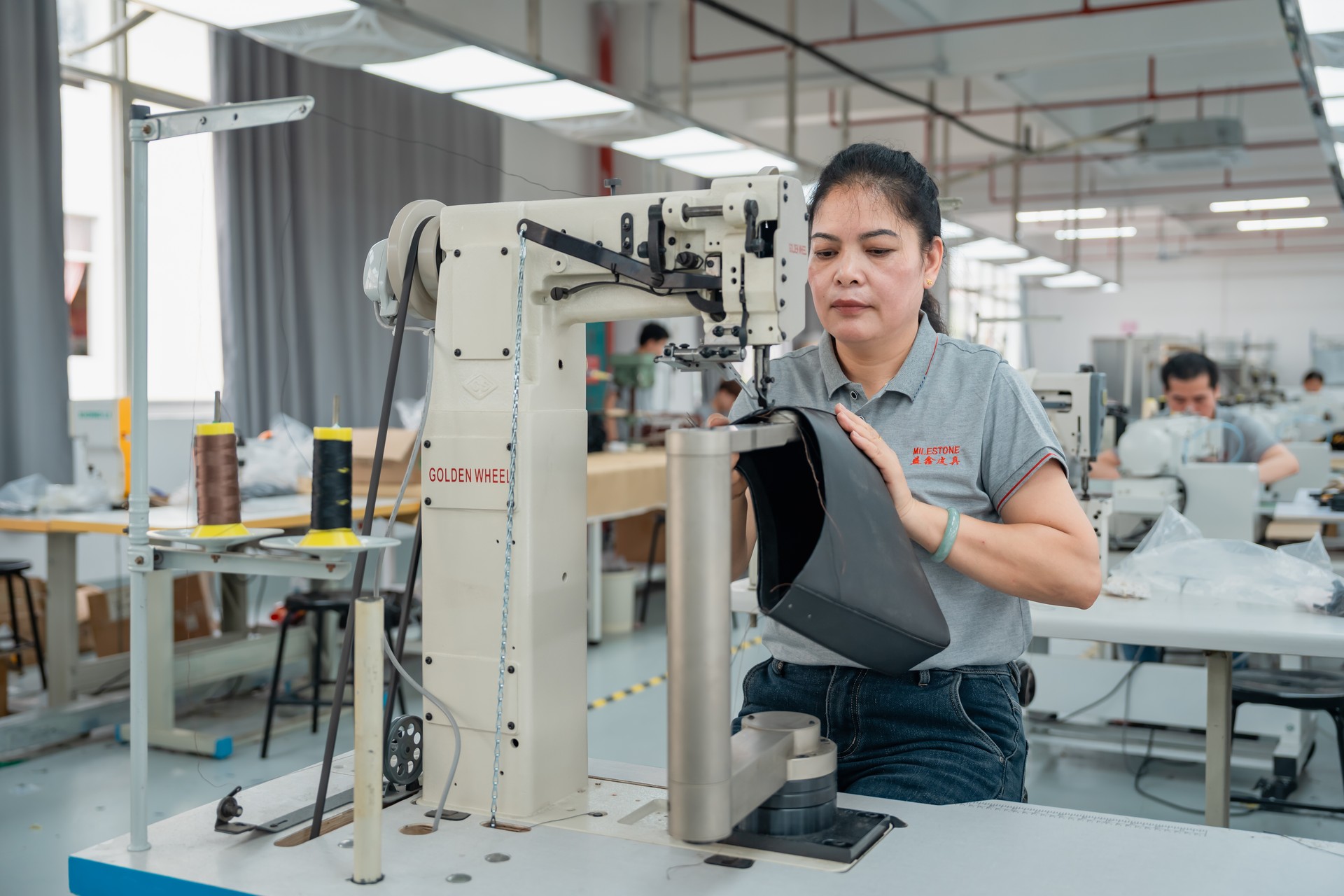
Milestone offers small-batch luxury runs that give brands room to experiment without committing to oversized volumes, and each piece moves through a workshop where domestic artisans shape hides, check grain by hand, and trim edges until they sit clean against the stitching. This approach appeals to teams searching for reliable custom handbag manufacturers in the USA because it bridges precision work with manageable MOQ structures. Our focus on premium materials—sourced from trusted U.S. tanneries and select global mills—also supports brands seeking leather handbag manufacturers in the USA that maintain traceable quality. If you're planning a new line and want a partner skilled in early-stage development, our team can guide you through custom handbag manufacturing and arrange a B2B consultation.
Choosing to work with American handbag manufacturers gives brands tighter communication, shorter freight routes, and partners who understand the expectations of buyers who inspect every stitch. The right fit depends on how much you plan to produce, what you're willing to spend, and how quickly you need a line to move from sketch to workable sample, so weigh each option with a clear budget in hand. And when you need a team that can translate your vision into small‑batch or premium runs, Milestone is ready to build a plan around your exact specs.
Ready to start your custom project?
Expert insights on care, styling, and manufacturing.
Several U.S. manufacturers do offer low MOQs, especially those supporting emerging designers and small-batch production. Companies like Portland Leather Goods–affiliated workshops and boutique factories in Los Angeles or New York often accept orders starting from a few dozen units. These makers focus on flexibility, sampling services, and hands-on collaboration to help new brands launch affordably.
Brands like Graf Lantz, Elvis & Kresse, and American leather ateliers specializing in small‑batch production excel with materials such as cork, recycled leather, and upcycled textiles. Many U.S. boutique manufacturers also offer custom runs using unconventional substrates, making them ideal partners for eco‑focused or experimental handbag designs.
Several U.S. handbag factories do provide both production and custom hardware sourcing. Many full‑service makers—such as Portland Leather–aligned workshops or Los Angeles–based private‑label manufacturers—maintain relationships with domestic and overseas hardware suppliers, helping brands secure custom zippers, clasps, and metal accents while keeping all prototyping and assembly done in the United States.
They offset costs by tightening sourcing strategies and optimizing production schedules. Many shift to domestic materials, consolidate supplier orders, or use modular manufacturing to reduce waste. Some negotiate short-term contracts, adjust minimums, or introduce limited‑edition runs that justify higher price points while keeping small‑batch flexibility during tariff fluctuations.
Many leading U.S. handbag manufacturers offer rapid prototyping through in‑house sample rooms and digital pattern‑making tools, allowing quick adjustments before production. Smaller studios specializing in custom work often move even faster, and insights on evaluating these partners can be found through resources that discuss selecting a suitable manufacturing partner.