Author: Ethan Publish Time: 2026-09-21 Origin: Milestone

The right tote starts with knowing exactly what you need from it.
IN THIS ARTICLE
You fall for a tote bag because it looks right — structured silhouette, clean stitching, a finish that photographs well. Then it splits at the gusset after three months of daily commute weight. Or the lining pills from laptop friction. Or a retail buyer returns a wholesale order because the hardware tarnished in transit.
The real cost isn't the bag. It's the decision made without the right criteria.
This guide cuts past surface aesthetics to the functional checkpoints that actually determine whether a tote bag delivers — for daily carry, retail shelves, or branded corporate gifting. Material knowledge runs through every recommendation, because leather construction shapes more of these decisions than most buyers expect.
Before you browse a single product page, run through these five questions. They work as a decision filter — each answer narrows the field and points you toward the section of this guide that matters most.
Answer these honestly. Your answers will make the next section — on structure and bag type — considerably easier to navigate.
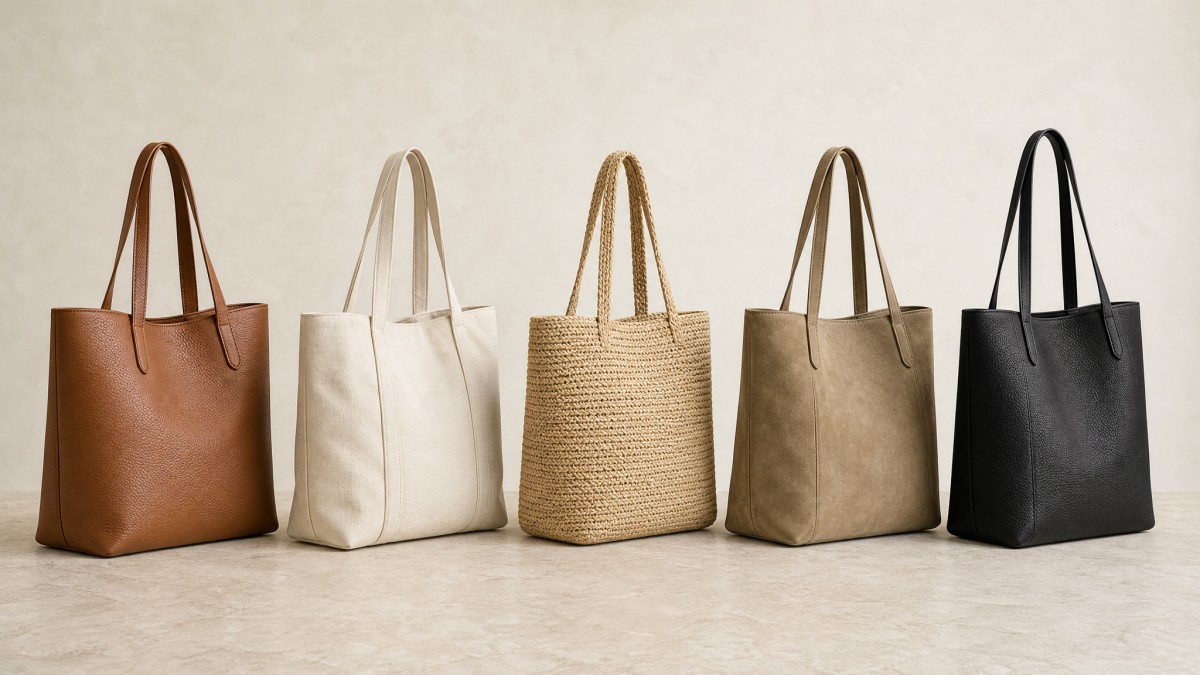
Structure is the first decision — everything else follows from it.
A rigid or semi-rigid frame keeps the bag upright on its own. Interior organization stays predictable — pockets hold their position, and heavier items sit flat at the base. Best for: office use, client meetings, or any setting where a polished silhouette matters.
Soft, unlined construction that collapses when empty. The load shifts freely inside, so loose items can migrate. That flexibility makes it comfortable for light daily carry. Best for: weekend errands, farmers markets, casual outings.
Wide mouth, reinforced base, often made from canvas or coated fabric. Built to absorb volume, not curate it. Interior organization is minimal by design. Best for: grocery runs, beach days, trade show swag bags.
A full zipper closure secures the entire opening. Load stability improves considerably — nothing spills during a commute. The trade-off is slightly slower access. Best for: travel, daily commuting, gym-to-office transitions.
Lightweight shell that compresses into a pouch or flat panel. Structure is nearly nonexistent; interior organization depends entirely on what you pack. Best for: backup shopping bags, travel day-packs, promotional giveaways.
The core distinction: fashion-forward builds prioritize silhouette and material feel — sculpted handles, polished hardware. Workload-oriented builds prioritize base width, strap reinforcement, and seam durability under real weight. Structure isn't cosmetic. It determines how a bag performs. Once you know the structure you need, the next variable is physical fit — and that comes down to dimensions.
Getting the fit right starts with knowing what you're actually carrying — and how much room it takes up.
| Size | Typical Dimensions | Capacity | Best For |
|---|---|---|---|
| Small | 12" W × 10" H × 4" D | ~8–12L | Essentials-only days, commutes, light travel |
| Medium | 15" W × 13" H × 5" D | ~15–20L | Laptop + daily gear, errands, client meetings |
| Large | 18" W × 15" H × 6" D | ~25–30L | Full work setups, gym clothes, weekend trips |
Strap drop changes how a bag sits against your body — and it's worth paying attention to. A 10-inch drop rests in the hand or crook of the elbow, keeping the bag close and controlled. At 14 inches, it shifts to the shoulder with a comfortable, natural hang — the sweet spot for most everyday carry. Push to 18 inches, and the bag drops toward the hip, which suits layered or bulky outerwear.
For a deeper look at how professionals weigh size against function, see this guide on leather handbag sizing for professionals.
Before committing to a size, pack your actual daily carry — laptop, charger, water bottle, wallet — into a similarly sized bag you already own. What looks "large enough" on a spec sheet often surprises you in practice.
Lightweight and breathable, canvas handles daily abuse without complaint. It's the go-to for reusable grocery runs, beach days, and branded promotional totes — affordable to produce, easy to screen-print, and machine washable. The tradeoff? It softens and fades over time, and heavy loads will eventually stress the seams.
Nylon punches above its weight class. Water-resistant, tear-resistant, and almost insultingly light, it's a smart pick for commuters and travelers who need function over form. Maintenance is minimal — a damp cloth handles most spills. Aesthetically, though, nylon reads as utilitarian. Fine for a gym bag; less convincing in a boardroom.
Faux leather looks the part at first glance. It costs less than genuine leather and sidesteps animal-sourcing concerns, which matters to certain buyers. The honest catch: most faux leather peels, cracks, and flakes within two to three years of regular use. It's a valid short-term choice, not a long-term investment.
Leather ages differently than every other material on this list — it improves. The grain develops a patina, the structure holds, and a well-made leather tote can outlast a decade of daily use. For professional buyers or anyone sourcing a bag they won't replace every season, the math shifts decisively toward leather.
But not all leather performs the same way. The grade matters — and that distinction has real consequences for longevity.
Cut from the hide's outermost layer, full-grain leather keeps every natural marking intact — tight fiber structure, faint scars, the occasional brand. That's exactly what makes it durable. The surface develops a patina over years of handling, not in spite of use, but because of it. Oil from your hands, friction from daily carry, even humidity — these deepen the color and harden the surface rather than degrade it. For a tote bag meant to last a decade, this is the grade worth the premium price tag.
A light sanding removes the top surface, correcting imperfections and producing a cleaner, more uniform look. You trade some long-term character for immediate aesthetic consistency. Top-grain is softer out of the box, easier to dye evenly, and still genuinely durable — the workhorse of mid-range professional totes.
The name sounds reassuring. It shouldn't. Genuine leather sits two rungs below full-grain — it's real leather, but processed from lower hide layers, then embossed to mimic a grain pattern. Expect it to scuff early and soften unevenly within a year.
This is where budget totes hide their risk. Bonded leather is essentially fibrous scraps and dust, glued to a backing and coated with polyurethane. It peels, flakes, and deteriorates faster than most synthetic alternatives. For bulk corporate gifting or branded giveaways, it's a liability dressed as a bargain.
Leather Grade Comparison: Durability, Aging & Price Range
| Grade | Durability | Aging Behavior | Price Range |
|---|---|---|---|
| Full-Grain | Highest | Develops rich patina; improves with use | Premium |
| Top-Grain | High | Wears evenly; minimal patina development | Mid-range |
| Genuine Leather | Moderate | Scuffs and softens unevenly over time | Budget–Mid |
| Bonded Leather | Low | Peels and flakes; degrades rapidly | Budget |
Choosing the right leather grade is only part of the equation. Even premium leather fails prematurely when paired with weak hardware or poor construction — and that gap is worth examining closely.
Small details separate a bag that lasts three years from one that fails at the seam after three months. Hardware is where that gap lives — and it's often where corners get cut invisibly.
Start with zippers. YKK zippers are the industry benchmark — consistent tolerances, smooth pull under repeated stress, and reliable performance across tens of thousands of open-close cycles. Generic zipper stock can feel identical out of the box, but at volume, variance creeps in: sticky tracks, split teeth, or pulls that snap off under cold-weather tension. For any bag built to carry real weight, the zipper brand isn't a luxury spec — it's a risk-management decision.
Handle attachment deserves equal scrutiny. Riveted handles distribute load mechanically across a metal point, making them far more reliable for heavy everyday use. Stitched-only handles depend entirely on thread integrity, which degrades with moisture and abrasion over time.
Two more checkpoints worth your attention:
The right tote depends on context — structure, capacity, and material all shift based on where you're headed and what you're carrying.
| Use Case | Recommended Structure | Ideal Size | Best Material |
|---|---|---|---|
| Work / Office | Rigid or semi-structured with interior dividers | Medium–Large (13–15L) | Full-grain leather — professional, holds shape |
| Travel | Lightweight with a flat base and exterior zip pocket | Large (18–25L) | Coated canvas or nylon; leather adds polish but isn't essential |
| Errands | Unstructured, foldable, easy to open wide | Medium (10–14L) | Canvas or recycled fabric — leather here is overkill |
| Gym | Open-top or wide-mouth with a wipeable lining | Large (15–20L) | Nylon or vegan leather; genuine leather won't handle moisture well |
| Casual Daily | Soft-sided with enough structure to stand upright | Small–Medium (8–12L) | Pebbled leather or canvas both work |
A leather tote is a long-term asset — and like any investment, it rewards consistent attention.
Condition the leather every three to four months using a lanolin- or beeswax-based conditioner. Avoid petroleum-based products; they can darken grain over time and clog the pores that keep leather supple. Apply with a soft cloth in small, circular motions, then let it absorb fully before use.
Wet leather needs immediate action. Blot — never rub — with a dry cloth to lift surface moisture. Keep it away from direct heat sources like radiators or hairdryers, which cause the grain to stiffen and crack. Let it air-dry at room temperature, then condition once fully dry.
Storage matters just as much. Stuff the bag with tissue paper to hold its shape, slip it into a breathable dust bag, and keep it in a cool, low-humidity environment. Plastic covers trap moisture and accelerate mildew — skip them entirely.
Retail buyers, brand managers, and wholesale partners all face the same pressure: consistent quality at volume, delivered on time. That's where Milestone fits in.
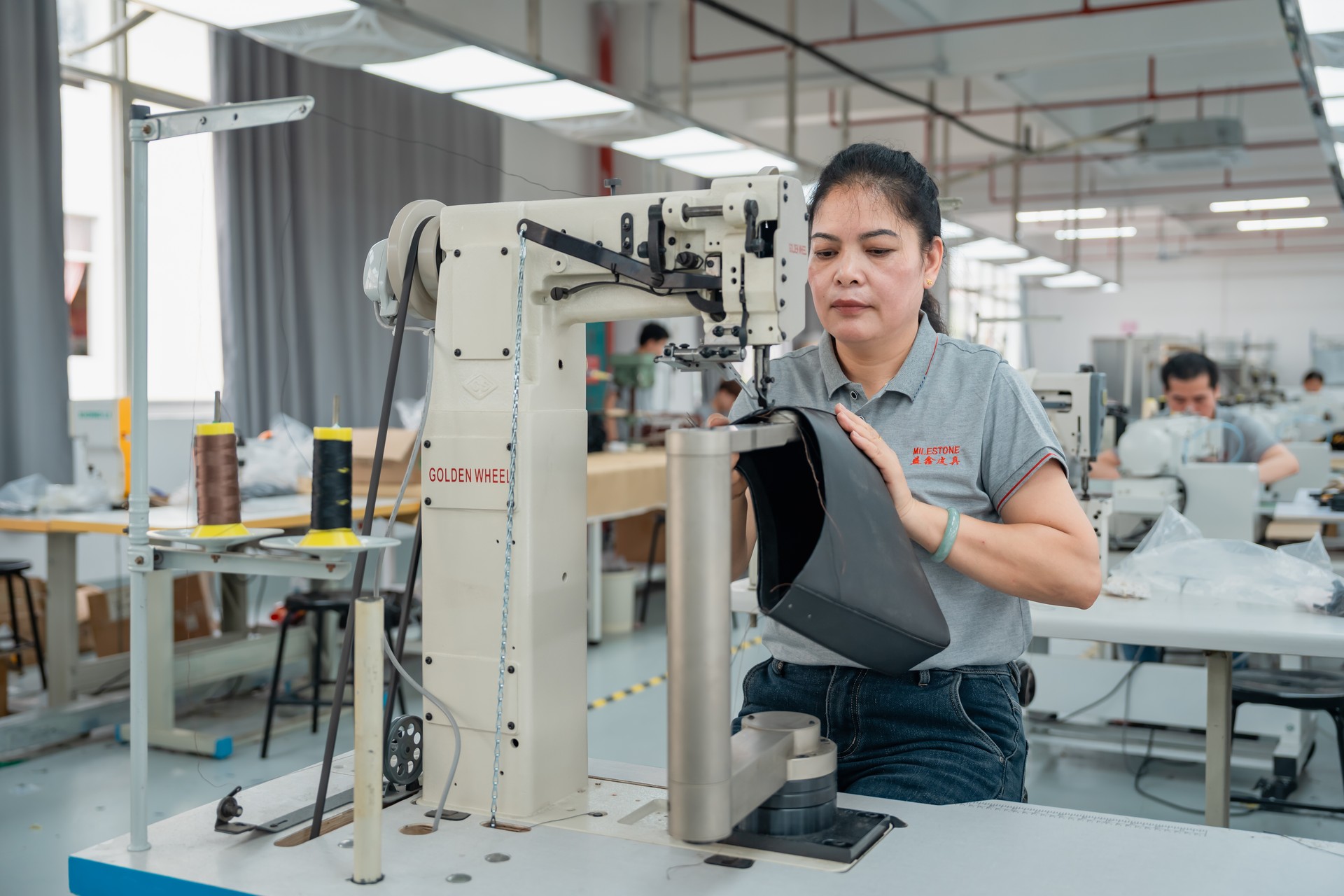
We work with businesses that need more than an off-the-shelf bag. Our leather production background means we understand material behavior from the hide up — grain selection, stitching tension, hardware weight. When you're ordering hundreds or thousands of units, those details compound fast. A poor lining choice or weak handle attachment becomes a return rate problem, not just an aesthetic one.
Milestone offers custom tote bag sourcing across a range of leathers, sizes, and finishes, with private label options available.
Ready to discuss volumes or request a catalog? Contact our B2B sourcing team directly.
Ready to start your custom project?
Expert insights on care, styling, and manufacturing.
Size matters more than most people realize for grocery runs. A bag that's too small forces multiple trips, while an oversized one becomes unwieldy when loaded with heavy items. Aim for a medium-to-large tote (around 15" wide) with reinforced handles — your shoulders will thank you after a full shop.
Canvas holds up better for everyday use. It resists moisture, handles heavier loads, and maintains its shape over time — as explored in canvas bag durability research. Jute looks earthy and stylish but degrades faster when wet. For longevity, canvas wins; choose jute if aesthetics and occasional light use are your priority.
For light commutes, a roomy tote bag works as a solid backpack alternative, especially if you carry a laptop, wallet, and a few essentials. However, it lacks back support and even weight distribution, which matters on longer commutes.
Reinforced handles are genuinely worth it for bags you'll use regularly or load heavily. Stitched or riveted handles prevent the most common tote failure point. If you're carrying laptops, groceries, or gym gear, the durability payoff outweighs the small price difference. For occasional light use, standard handles are fine.
Tight, even stitching with no loose threads or skipped seams is your baseline standard. Check stress points like handles and corners — these bear the most weight. Double or reinforced stitching here signals durability. Pull gently on the seams; quality construction won't budge or pucker under light pressure.