Author: Ethan Publish Time: 2026-10-09 Origin: Milestone

Where occasion, material, and craftsmanship meet in a single silhouette.
IN THIS ARTICLE
A clutch isn't just where you stash your phone and credit card—it's the final stroke that either completes your look or quietly undermines it. The right one whispers polish at a wedding, radiates edge at a gallery opening, or signals meticulous taste across a boardroom table. Get it wrong, and you're fumbling with a stiff clasp or watching a cheap lining fray after two wears.
This guide approaches clutch selection through two lenses: the consumer seeking elegance that lasts, and the buyer sourcing inventory that won't trigger returns. We'll walk through occasion alignment (cocktail versus gala), size logic (phone-only versus essentials-plus), material honesty (genuine leather versus coated canvas), craft signals (stitching, hardware, lining), carry comfort (wristlet versus frame grip), and care realities that separate heirloom pieces from landfill candidates. Whether you're choosing one clutch or stocking fifty, the principles remain the same: intentionality wins, and shortcuts show. This intentionality begins with a clear assessment of the environment where the bag must perform.
An event's environment dictates every design requirement, making the occasion your primary compass. A black-tie gala isn't the place for a straw raffia pouch, no matter how chic it looked at brunch. Match the formality tier to the design: structured satin or lacquered minaudières for evening, sleek envelope clutches in patent or smooth leather for cocktail hour, and soft, understated pouches or wristlets for daytime or work events.
Lighting matters more than most people realize. Metallic finishes—gold, silver, gunmetal—catch chandeliers and flash photography beautifully, making them ideal for evening functions. Matte surfaces, on the other hand, recede under dim lighting but hold their own in natural daylight or office fluorescents, where they won't compete with your outfit or distract in meetings.
Dress codes offer subtler cues. A strict corporate environment calls for minimal embellishment and structured silhouettes; think streamlined, palm-sized clutches in navy, black, or taupe. Festive events open the door to embroidery, beading, or bold hardware. Size follows function: if you're expected to carry business cards or a phone, skip the micro minaudière. And if the invite mentions "creative attire" or seasonal themes, that's your green light to explore clutch etiquette and trends that balance novelty with appropriateness. While aesthetic trends dictate the exterior, practical utility begins with physical dimensions.
Achieving this balance requires an honest evaluation of what you actually need to carry. Slide your phone flat into the clutch, add a slim cardholder, one lipstick, and your keys. If the zipper strains or the silhouette bulges, you've crossed the line from elegance to overstuffed liability. A properly sized clutch holds the essentials without telegraphing its contents through taut fabric.
Body proportion matters as much as capacity. Petite frames risk being overwhelmed by an oversized envelope that spans shoulder to hip—it reads more like a portfolio than an accessory. Conversely, a tall silhouette can carry a larger clutch with ease, using the extra visual weight to anchor an outfit rather than compete with it. The clutch should complement your frame, not dwarf or disappear against it.
Dimensional sweet spots break down predictably. Mini clutches (roughly 6×4 inches) handle a phone, cards, and lip color—perfect for cocktail events where you're holding it all night. Standard clutches (10×6 inches) accommodate the essentials test comfortably, plus a compact mirror or small perfume vial. Oversized styles (12+ inches wide) venture into day-to-night territory, swallowing a tablet or travel documents, but demand confident styling to avoid looking like you grabbed the wrong bag on your way out. Match capacity to occasion, and let your frame guide the final scale. Once you lock in the right proportions, the next critical step is evaluating the raw materials that define the bag's lifespan.
From the factory floor, leather grading isn't about marketing romance—it's about fiber density, cut location, and how the hide will age under stress. When sourcing clutches at scale, understanding these distinctions separates durable inventory from costly returns.
The unaltered top layer of the hide, showing natural grain and imperfections. Premium clutches use full-grain because its dense fiber structure resists stretching and develops a rich patina over years. Vegetable-tanned full-grain darkens beautifully; chrome-tanned versions stay colorfast but won't develop the same depth. Sourcing is tight—only 20-30% of a hide qualifies, which drives the price premium.
The surface is lightly buffed to remove blemishes, then embossed with a uniform texture. This grade offers consistency across production runs—critical for B2B orders requiring color and texture matching. Chrome tanning dominates here for speed and water resistance, though leather bag manufacturers increasingly offer vegetable-tanned variants for clients targeting the conscious consumer segment.
Cut from the fibrous lower layers after top-grain removal, then coated heavily. The trade name "genuine leather" misleads—it's the lowest durable grade. Clutches made from splits crack at stress points within 18-24 months. Cost savings evaporate in warranty claims.
Python, ostrich, and stingray require specialized tanneries and CITES documentation. For metal-sensitive buyers, note that the metal-free leather standard caps total tanning metals (aluminum, chromium, iron, titanium, zirconium) at under 1,000 mg/kg per NF EN 15987:2015—a gatekeeper benchmark when evaluating sustainable exotics.
Chrome tanning delivers uniform results in 24 hours; vegetable tanning takes 30-60 days but yields patina-rich leather that ages rather than deteriorates. While material choices establish durability, the physical silhouette dictates how the clutch behaves in hand and coordinates with an outfit.
Leather Grades at a Glance: Durability, Patina, and Sourcing Notes
| Grade | Durability | Patina Development | Sourcing Notes |
|---|---|---|---|
| Full-Grain | Excellent (10+ years) | Rich, distinctive aging | 20-30% of hide; premium pricing |
| Top-Grain | Good (5-8 years) | Minimal (chrome) to moderate (veg-tan) | Consistent supply; uniform batches |
| Genuine/Split | Fair (1-2 years) | None; coating cracks | Budget tier; high failure rate |
| Exotic Skins | Varies by species | Unique texture aging | CITES compliance required |
The physical silhouette dictates how the clutch behaves in hand and coordinates with an outfit, transforming raw material into a functional statement.
The classic rectangular fold-over—think sleek diagonal flap—is the cocktail hour workhorse. It slips under your arm, holds a phone and lipstick, and pairs equally well with a sheath dress or tailored blazer. Women with broader shoulders often favor the horizontal emphasis; it balances proportions without adding visual weight.
Hard-case structured clutches, often metal or acrylic, bring architectural drama. These rigid silhouettes shine at formal galas or destination weddings where you want a conversation piece. The boxy profile can overwhelm petite frames—if you're under 5'4", opt for a smaller scale (under 6 inches wide) to keep the statement refined rather than overpowering.
Metal-kissed or jeweled clasp tops define this vintage-inspired shape. The rigid frame clutch offers satisfying closure and a nod to mid-century elegance. It works beautifully for daytime events—garden parties, daytime weddings—where a touch of old-world charm feels intentional, not costume-y. Curvier body types appreciate how the structured frame creates clean lines without clinging or draping awkwardly.
Attach a slim chain or leather loop and suddenly you have hands-free freedom. Wristlets bridge the gap between clutch and mini crossbody, making them ideal for outdoor receptions, travel, or any scenario where you're juggling a champagne flute and introductions. The silhouette stays compact but functional—perfect for the multitasker.
No frame, no fuss—just supple leather or fabric gathered at the top, sometimes cinched with a drawstring. This relaxed silhouette suits bohemian or resort settings where rigid formality feels out of place. Taller figures can carry oversized pouches without looking swallowed; petite wearers should keep it palm-sized to maintain proportion. Whether you choose a structured box or a relaxed pouch, maintaining that perfect silhouette requires structural integrity, which brings us to the subtle indicators of high-end manufacturing.
Spotting high-end manufacturing requires looking past the brand name to evaluate the physical assembly. Edge painting quality separates factory-floor clutches from investment pieces. Run your fingernail along the seam where leather meets lining—a well-finished edge should feel smooth and uniform, not tacky or ridged. Premium makers apply multiple coats of acrylic or resin-based edge paint, sanding between layers to achieve that glassy finish. Uneven application or visible brush strokes indicate rushed production.
Stitch density matters more than stitch size. Count the stitches per inch along the gusset: luxury clutches typically run 8–10 SPI, while mass-market pieces hover around 5–6. Tighter stitching distributes stress more evenly, preventing seam failure when the bag is packed full. Check that stitches follow a straight line without wobbling—machine lockstitch should look almost robotic in its precision.
Flip the clutch open and examine the lining fabric. Silk twill, grosgrain, or suede indicate thoughtful material choices; flimsy polyester taffeta that snags on jewelry is a cost-cutting red flag. The lining should lie flat without puckering, and its edges should be cleanly bound or turned under, never raw.
Hardware plating degrades fast on poorly made pieces. Zippers, clasps, and chain attachments should carry a uniform finish—whether brushed gold, polished nickel, or gunmetal—with no flaking or discoloration around stress points. Test the closure tension: magnetic snaps should engage firmly without requiring excessive force, and frame closures should click shut with a satisfying mechanical precision.
Finally, assess symmetry. Lay the clutch flat and check that both halves mirror each other exactly—no warping, no misaligned corners. Asymmetry signals either poor pattern cutting or inadequate quality control, neither of which you want when sourcing at scale or investing in a statement piece. Even the most structurally flawless piece, however, will fall flat without the right visual styling.
Visual styling hinges on the strategic interplay of color and hardware. Neutral tones—black, navy, taupe, bone—anchor a working wardrobe because they travel across seasons and contexts without friction. But a statement color clutch in jewel burgundy, forest green, or burnt sienna can distinguish an outfit from polished to memorable, especially when worn with intention rather than as an afterthought. The strategy isn't either-or; it's calibration. A small clutch in a bold hue costs less than a coat but delivers comparable visual weight.
Hardware finish should mirror your jewelry metals to avoid visual dissonance. Gold-tone clasps and chain straps pair naturally with warm-toned jewelry, while silver or gunmetal hardware reads cooler and sharper. If you wear rose gold, look for brushed brass or antique bronze finishes that share that middle ground. This coherence matters more in close-range business settings—lunches, gallery openings, client dinners—where details register.
Skin tone harmony applies to both the leather and metal. Cool undertones (pink, blue) often harmonize with silver hardware and jewel-toned bags, while warm undertones (golden, peachy) favor brass accents and earth-based leathers. Yet, an investment is only as good as its usability; a beautiful bag that is painful to carry will ultimately sit in the closet.
Usability is defined by clutch ergonomics, which shift dramatically based on how you actually hold the bag. Underarm styles—those slim, elongated frames—work well for cocktail hours but demand constant arm pressure, which becomes uncomfortable after 90 minutes. Wrist straps distribute weight more evenly and free up your hand, though they can dig in if the bag is heavy or the strap is too narrow. Detachable chains offer the most versatility: wear them crossbody for longer events, loop them as a wrist strap for photos, or tuck them away entirely when you want the clean silhouette of a handheld clutch.
Rigid constructions—metal frames, acrylic boxes—hold their shape beautifully but add weight and offer no give. If you're carrying a clutch for more than two hours, a soft leather or suede body will mold to your hand and feel less fatiguing. Closure types matter more than most buyers expect. Magnetic snaps allow one-handed access, critical when you're holding a drink or a phone. Kiss-lock frames and turn-lock clasps look elegant but require two hands, which can be awkward mid-conversation or while navigating crowded venues. These operational details directly influence production costs and, ultimately, wholesale and retail pricing.
These operational details directly influence production costs and, ultimately, wholesale and retail pricing. Entry-level clutches ($20–$80) typically use bonded or corrected-grain leather with basic metal hardware and simple stitching—functional pieces suitable for event giveaways or promotional bundles. Mid-tier options ($80–$300) step up to full-grain or vegetable-tanned leather, requiring 4–6 hours of hand assembly and featuring YKK zippers or brass magnetic closures. Premium clutches ($300–$800) demand top-grain hides with minimal surface correction, hand-burnished edges, and custom-dyed linings; here, labor alone can account for 40% of the cost. Luxury pieces ($800+) often incorporate exotic skins, hand-carved hardware, and finishing protocols that meet stringent compliance thresholds.
Avoiding these premature failures requires a systematic approach to product selection. Choosing the right clutch comes down to aligning five core variables: the occasion that dictates formality, the size that balances capacity with silhouette, the material that affects durability and tactile appeal, the craft quality that ensures longevity, and the carry method that suits your hands-free needs. When those factors converge, you're left with a piece that works hard and looks effortless.
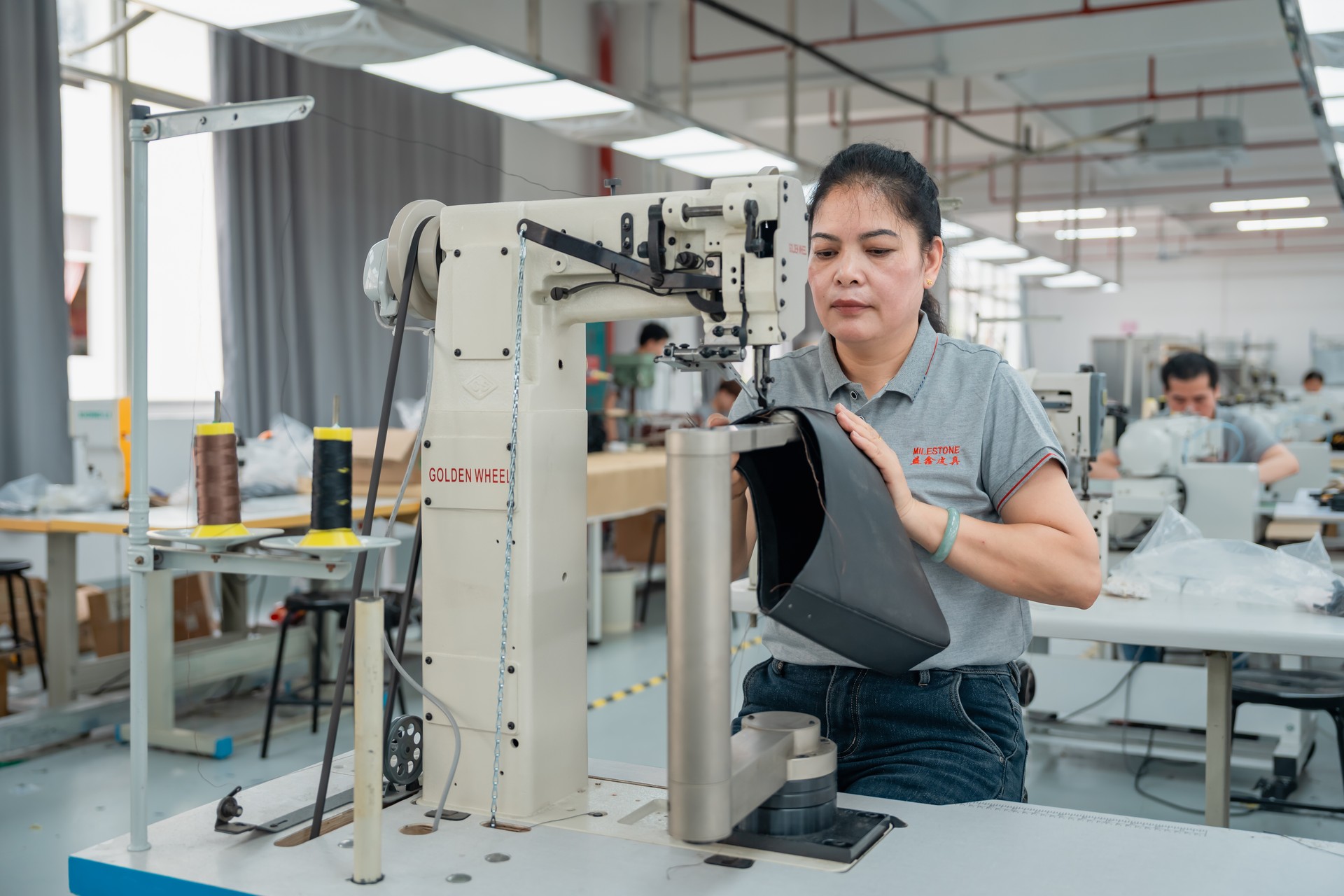
If you're sourcing leather clutches at scale—whether for a retail line, a private label launch, or a wholesale partnership—Milestone specializes in premium leather handbag manufacturing with full customization capability. We maintain rigorous compliance with international standards, including the REACH chromium(VI) threshold critical for skin-contact accessories, and our production lines handle everything from sampling to repeat orders with documented consistency.
Ready to discuss your clutch program? Reach out to our team for wholesale inquiries, OEM development, or sampling support. We work with brands at every stage, from concept sketches to container-ready shipments.
Ready to start your custom project?
Expert insights on care, styling, and manufacturing.
It will fit safely only if you choose a clutch with expanding side gussets or rigid framing. Soft envelope pouches will visibly stretch and bulge awkwardly around larger devices. Always look for structured box silhouettes with interior dimensions at least one to two inches wider than your device to maintain a sleek profile.
A hidden chain strap is a smart priority for cocktail parties, gallery openings, and mixers where you will be on your feet. It offers the sleek, elevated aesthetic of a handheld clutch while providing the hands-free flexibility needed to seamlessly hold a drink, greet guests, and enjoy appetizers comfortably.
Intricate beadwork and crystal prongs pose a high risk of snagging delicate silk dresses through continuous friction while walking. To protect fine fabrics, choose a clutch with a smooth satin, polished metallic, or soft leather exterior, or carry an embellished style by a delicate top handle held away from your dress.
Two-tone hardware, champagne gold, or gunmetal finishes offer the best versatility for balancing mixed jewelry. These options naturally bridge contrasting warm and cool tones, making your styling feel intentional rather than mismatched. Alternatively, choosing a clutch with concealed or zero visible hardware effortlessly prevents clashing while keeping the focus on your accessories.