Author: Ethan Publish Time: 2026-09-22 Origin: Milestone

Texture and finish differences across five strap materials
IN THIS ARTICLE
Ask any product developer where a handbag project quietly bleeds margin, and the answer is rarely the shell. It's the strap. That single component shapes the silhouette on the shelf, decides whether a wearer reaches for the bag on a Monday commute, and often swings cost per unit by 8–15% once hardware and stitching are tallied.
This guide walks through the full anatomy: strap styles, materials, hardware, and the attachment logic that ties them to the body of the bag.
For shoppers, it's a plain-English map to picking a bag strap that actually feels good after hour three. For sourcing teams, buyers, and product managers, it's a working reference for spec sheets, supplier conversations, and the small engineering choices that separate a returnable SKU from a reorder.
Nine strap styles dominate today's handbag catalogs, each solving a specific carrying problem and signaling a different price tier. Below is the working list our design team uses when planning seasonal SKUs, with typical dimensions and best-fit silhouettes. For backpack-specific formats, our premium backpack strap guide covers the load-bearing side of the category.
The classic single or paired handle, usually 4 to 6 inches in drop and 0.5 to 1 inch wide. Built from rolled leather or rigid tubing over a metal core, it suits structured satchels, doctor bags, and Kelly-style totes where posture and formality matter most.
A fixed or lightly adjustable strap running 22 to 30 inches end-to-end, typically 0.75 to 1.5 inches wide. Best on hobos, medium totes, and flap bags carried under the arm. Padded versions appear on heavier leather styles above 800 grams.
Long, adjustable leather or webbing running 45 to 55 inches at full extension, usually 0.5 to 1 inch wide. Ideal for camera bags, small saddles, and everyday sling styles worn hands-free. Detachable snap hooks let one bag serve two carry modes.
A short loop measuring 6 to 10 inches, most often 0.25 to 0.5 inches wide, anchored by a lobster clasp. Reserved for clutches, phone pouches, and pochettes where the wearer wants a light grip rather than shoulder support. Common across evening and travel lines.
Either a bare metal link (3 to 8 mm gauge, 45 to 52 inches long) or the woven chain-and-leather combo. A chain strap for crossbody bags reads instantly upscale, working well on quilted flaps, mini shoulder bags, and party styles.
A wide jacquard-woven band, 1.5 to 3 inches across and 40 to 50 inches long, borrowed straight from music gear. The guitar strap bag strap turns a plain satchel into a statement piece and lets brands refresh core SKUs each season with new patterns.
Three or four thin leather cords plaited into a rope-like handle, usually 0.5 to 0.75 inches thick and 20 to 45 inches long. Signals artisanal craft on bucket bags, market totes, and boho shoulder styles at mid-to-premium price points.
A printed silk band, 35 to 45 inches long and 2 to 3 inches wide, wrapped over a leather base or tied directly to hardware rings. Adds color without extra tooling, popular for spring drops on top-handle satchels and micro totes.
A rigid natural handle: bamboo curves around 5 to 7 inches in span, marine rope runs 12 to 20 inches. Both sit on structured totes and beach bags, giving a resort or heritage cue without carrying heavy hardware costs.
B2B note: Rotating three or four of these strap styles across a single silhouette can double perceived range in a lookbook, with minimal tooling changes to the base pattern. Buyers read variety as depth.
Material choice sets the tone for hand-feel, retail price, and reorder rhythm. Here is how the five workhorses stack up on the sourcing floor:
So when does a leather bag strap out-earn webbing? On price positioning above roughly $80 retail, where buyers expect a hide that ages rather than a strap that frays. Leather also holds resale value and repair economics, while webbing wins on kids' bags, technical packs, and promotional runs where MOQ pressure and unit cost trump longevity. For a deeper look at hide grades and lining choices, see this complete guide to handbag materials before locking in a spec sheet.
Sizing a strap is less about fashion instinct and more about matching numbers to real bodies and real bags. Get the length wrong, and a beautiful piece ends up in a drawer.
Length is the first dial to turn. A wristlet typically runs 6 to 10 inches, long enough to loop the hand without dangling. Short shoulder straps sit in the 22 to 30 inch range, dropping the bag just under the armpit for that classic top-handle-adjacent look. Crossbody straps stretch further, generally 45 to 55 inches, allowing the bag to rest at the hip on most adult frames.
Width plays a quieter but equally important role. A 0.5 inch strap reads delicate and dressy, suited to evening clutches and thin chain-and-leather hybrids. The 1 to 1.5 inch range handles everyday totes and satchels, balancing comfort against visual weight. Anything 2 inches and above enters guitar-strap territory, often padded, jacquard-woven, or embroidered as a statement piece.
Here is the rule of thumb worth taping to your design board: match strap width to bag scale and weight capacity. A pebbled leather weekender needs shoulder-friendly heft. A silk pouch does not. When width, length, and payload agree, the bag simply feels right.
Hardware is where a strap earns its keep. The right components turn a decorative accessory into a load-bearing part that survives daily commutes, airport handling, and years of shoulder wear against a wool coat.
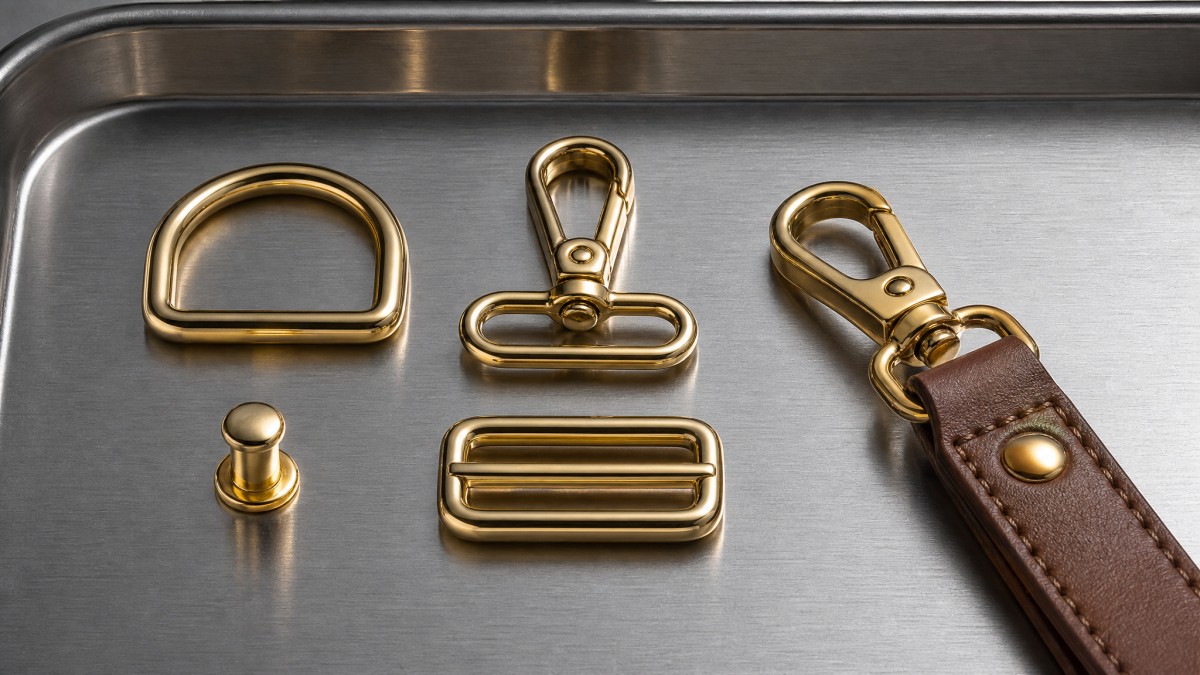
Five hardware pieces that define strap durability and modularity
Five components carry most of the load in modern bag construction:
The attachment method decides how those parts hold together. Fixed-stitched straps are sewn straight into the seam, giving clean lines and low failure rates but zero swap-ability. Riveted joins add mechanical backup where thread alone would fatigue under weight. Screw-in Chicago posts sit flush and let repair teams service worn edges without ripping the lining. Clip-on setups snap onto exposed D-rings for quick styling changes. A full detachable bag strap system pairs lobster clasps or swivel hooks on both ends, so one body can carry a slim chain, a woven cotton web, or a wide guitar strap depending on the outfit.
For brands, modular hardware is a quiet stock lever. One bag body plus three interchangeable straps yields three SKUs from shared cutting patterns, which trims leather waste and simplifies forecasting. It also reshapes returns handling: a shopper who dislikes only the strap can swap that part alone, sparing the retailer a full refund cycle and keeping the core product in circulation.
Choosing a strap comes down to a simple question: do you want the strap to disappear into the bag, or do you want it to speak up? That's the consistency vs. contrast framework, and it drives nearly every styling decision worth making.
Consistency plays it safe. A black leather bag strap on a structured tote in matching calfskin reads clean, corporate, uniform. Nothing fights for attention. The eye moves smoothly across the silhouette. This is the pairing your wholesale buyers will pick 80% of the time because it photographs well and sells across seasons.
Contrast, on the other hand, creates the drama. Slip a polished gold chain onto an evening mini in matte satin, and suddenly the bag has a pulse. Braided rope on a canvas beach tote does the same trick, just in a lower register. The rule is loose but real: pick one element to break the palette, not three.
Then there's the physics. Weight-to-width ratio matters more than most designers admit. A bag over 1.5 kg needs a strap at least 3–4 cm wide, or it will carve into the shoulder within an hour. Slim spaghetti straps belong on featherweight minis. Match the load to the shoulder footprint, and comfort follows.
Once the styling logic is settled, sourcing becomes an exercise in precision, and the first place teams slip is measurement. End-to-end length runs from tip to tip along the full strap, while drop length measures from the shoulder point to the top of the bag when worn. Confusing the two is the single most common reason a sample gets sent back. Lay the strap flat, pull it taut without stretching, and note both figures in centimeters and inches.
Care depends on material. Leather wants a light conditioner every three to six months to keep the grain supple and prevent cracking, especially in dry cabin air or humid coastal storage. Webbing and nylon fray at the cut ends, so seal them with a quick pass of a heat sealer or a dab of fray glue, and rotate high-wear pieces to spread the stress. Chain straps need a soft cloth polish and occasional dry-lubrication at the links to stop micro-scratches and tarnish, particularly on plated brass.
For buyers scaling beyond stock hardware, we build custom straps end-to-end, from pattern cutting and edge painting to plating specs and MOQ-friendly runs. Explore our full-service leather bag manufacturing programs, or reach out to start an OEM strap development brief with the Milestone team.
Ready to start your custom project?
Expert insights on care, styling, and manufacturing.
End-to-end length runs from tip to tip along the full strap laid flat, while drop length measures from the shoulder point down to the top of the bag when worn. Mixing up the two is a frequent cause of sampling rework, so lay the strap flat, pull it taut without stretching, and record both figures in centimeters and inches on the spec sheet so the factory and buyer are reading the same number.
YKK buckles typically cost about 2 to 4 times more than unbranded alternatives, running roughly $0.80 to $2.50 per piece at common 3/4-inch to 1-inch bag sizes versus $0.20 to $0.60 for generic equivalents at similar volumes. That premium buys tighter tolerances, corrosion resistance, and consistent load ratings, which translates to fewer failures, smoother operation, and longer strap lifespan on daily-use bags.
Condition leather every three to six months with a pH-balanced conditioner to replenish natural oils that humidity can strip away. Store bags in breathable cotton dust covers with silica gel packets, never plastic, and keep them away from direct sunlight. Wipe surface dust off the strap weekly and follow proper maintenance routines for fine leather goods to prevent moisture damage.
Choose a detachable strap when you want one bag body to serve multiple styling moods or carry positions, since lobster clasps or swivel hooks on both ends let a shopper swap a chain, a woven web, or a wide guitar strap on the same bag. Fixed-stitched straps are the right call when clean lines, top structural strength, and a lower failure rate at the anchor point matter more than swap-ability, which is why they still dominate structured satchels and top-handle silhouettes.