Author: Ethan Publish Time: 2026-10-16 Origin: Milestone

Leather used for bags can come from several animal sources, each with its own natural character.
IN THIS ARTICLE
Different animal hides give a bag a different starting character. They affect the grain you see, the way the leather feels in the hand, how much structure it can offer, and how the bag may wear over time. Thickness, tanning, finish, and construction then refine those qualities.
This guide starts with the animal leathers most often used for bags, so it is easier to connect each one with a particular look and silhouette. Synthetic materials, leather grades, and finishes come later because they answer different questions.
Cowhide is the everyday workhorse of bag leather. It can be made firm enough for a crisp tote or briefcase, or softened for a satchel, backpack, or casual shoulder bag. That range is why it appears across so many price points and styles.
It also takes many looks well: smooth, pebbled, pull-up, embossed, or coated. For a brand, cowhide is often the easiest place to begin when the brief calls for a bag with some body and a familiar leather feel.
The trade-off is that a thick cowhide can add noticeable weight, especially on a large bag. A lighter or softer version may feel very different from a firm one, so it is useful to compare the actual leather in the intended bag shape rather than thinking of all cowhide as the same material.
Calfskin is usually chosen when a bag needs to look clean, fine, and polished. Its grain is often smoother and less pronounced than adult cowhide, which suits refined handbags, flap bags, compact crossbodies, and top-handle styles.
A soft calfskin can give a relaxed bag a graceful surface, while a firmer one can keep edges and folds neat. Its smoothness also means that color, sheen, small scratches, and water marks tend to be easier to notice than on a heavily pebbled leather.
This is a good choice when the collection values a controlled, elegant appearance and can support the higher material cost and more considered care that often come with it.
Lambskin is often the choice for a bag that should feel soft the moment it is picked up. Its fine grain and fluid drape work especially well in quilted bags, gathered clutches, pouches, and relaxed shoulder shapes. Sheepskin can serve similar uses, although the exact look and feel vary between leathers.
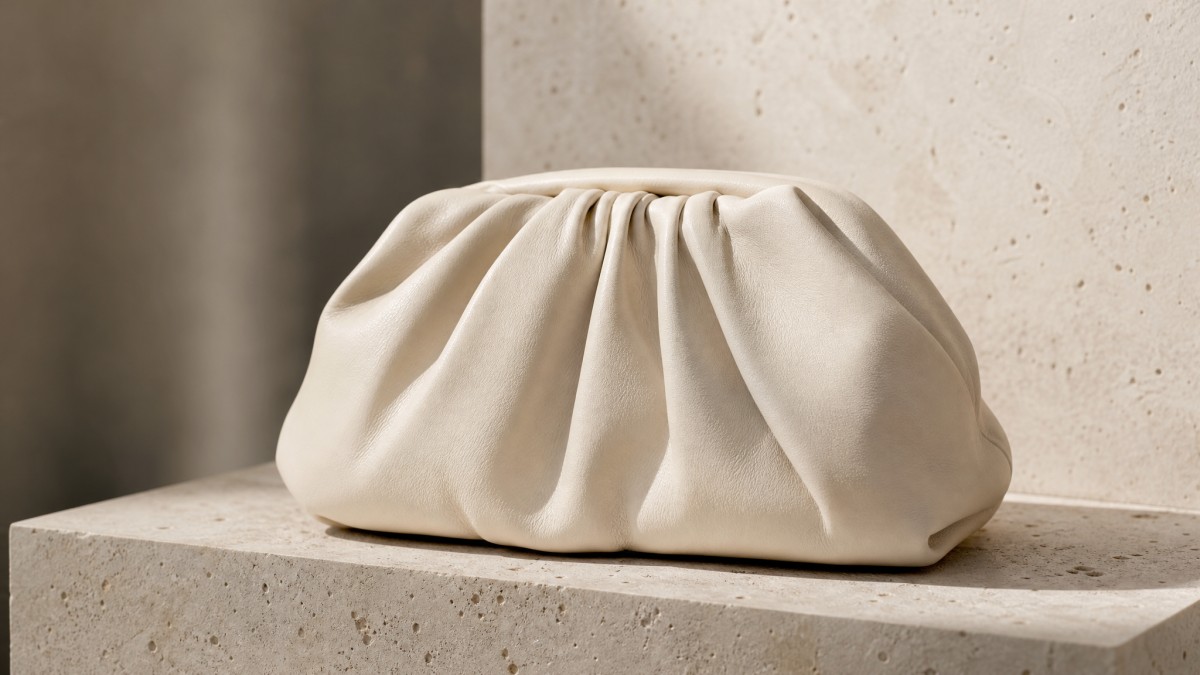
A soft leather pouch shows the relaxed drape that lambskin can bring to an unstructured silhouette.
The attraction is easy to see in a soft silhouette: the leather forms rounded folds without making the bag look bulky. It gives a design a more tactile, fashion-led character than a firm bovine leather.
That same softness calls for realistic expectations. Smooth lambskin can show scuffs, pressure marks, and stretching sooner than a firmer, more protected leather. A bag designed to carry more weight may need added support at the base, handles, and strap anchors.
Goatskin, often called chevre, is easy to recognize by its lively, visible grain. It tends to feel lighter and more textured than a substantial cowhide, giving compact crossbodies, small leather goods, linings, and relaxed handbags a little more character.
Its pebbled surface can make minor handling marks less obvious than they are on smooth calfskin. This makes goatskin a useful middle ground for a bag that should feel refined but not overly precious.
The exact feel still varies. Some goatskins are crisp and dry, while others are soft and flexible. What stays consistent is the visual appeal of the grain; the final decision should rest on whether the sample has the weight and softness the bag needs.
Buffalo leather makes a stronger visual statement than most bovine leathers. Its pronounced grain and substantial feel suit travel bags, backpacks, work bags, and casual styles where a more rugged surface is part of the appeal.
It can give a larger bag the body it needs, but it is not automatically heavy or stiff; softer and thinner versions also exist. The defining point is its bold texture.
For a compact bag or a highly polished look, that texture may take attention away from the design. Buffalo works best when the bag benefits from looking robust rather than delicate.
These less-common hides are not interchangeable alternatives to cowhide. Each brings a different visual and tactile character to a bag.
Pigskin is recognizable by its small, grouped hair follicles. It is often used for linings, pockets, suede components, and practical leather goods. The pore pattern is distinctive, so an exterior panel needs to suit a brand that wants that character to be visible.
Deerskin is valued for a soft, flexible feel and an easy, relaxed look. It suits pouches, slouchy bags, and heritage-inspired accessories. As with other soft hides, a design that carries weight should account for stretch at handles and other stressed areas.
Camel leather is another less-common option for bags and leather goods. Its appearance can vary widely, so it is best considered through the sample in hand rather than as a direct substitute for cowhide. Look first at its grain, weight, softness, and the kind of bag it needs to become.
Crocodile and alligator leather are chosen above all for their distinctive scale patterns. They are often used in premium structured bags, clutches, and small leather goods where the surface itself is the focal point. Crocodile commonly shows small sensory pores within its scales, while alligator generally does not.
Ostrich leather is known for its raised quill follicles. It brings a softer, more rounded texture to handbags, duffels, and accessories, especially when the design leaves the pattern visible. Different areas of the skin can look quite different, which matters when a consistent appearance is important.
Lizard leather has a finer scale pattern and is often used for compact bags, wallets, trims, or smaller panels. It creates a more delicate visual effect than the bolder pattern of crocodilian leather.
These materials are as much about appearance as function. Trade requirements also differ by species and source; for American alligator, CITES tagging and export documentation are part of lawful international trade. Confirm the current requirements before committing to a source.
The easiest way to narrow the options is to begin with the kind of bag you want to create. The table gives starting points rather than fixed rules, since the same hide can feel quite different after tanning and finishing.
Choosing Animal Leather by Bag Style
| Hide | Best When You Want | Keep in Mind | Common Bag Uses |
|---|---|---|---|
| Cowhide | A versatile balance of body and everyday practicality | Thick versions can add weight | Totes, backpacks, briefcases, travel bags |
| Calfskin | A fine, polished surface | Smooth finishes may show marks | Refined satchels, flap bags, top handles |
| Lambskin / Sheepskin | Softness and fluid folds | Needs more care around friction and load | Quilted bags, pouches, soft shoulder bags |
| Goatskin | Visible grain without a heavy feel | Softness varies between finishes | Crossbodies, small leather goods, linings |
| Buffalo | Bold texture and a rugged character | Can overpower small, delicate styles | Work bags, backpacks, weekenders |
| Pigskin | A light, practical lining or component | The pore pattern is easy to recognize | Linings, pockets, suede components |
| Deerskin | A soft, relaxed silhouette | Stretch may need attention | Slouchy bags, pouches, heritage styles |
| Camel | A less-common material with individual character | Judge the actual sample rather than the name | Niche bags and leather goods |
| Crocodilian | A bold scale pattern and premium statement | Sourcing and documentation need care | Structured bags, clutches, small goods |
| Ostrich | A tactile quill pattern | Texture varies across the skin | Handbags, duffels, accessories |
| Lizard | A fine scale detail on a smaller area | Larger panels may require matching | Mini bags, wallets, trims |
For a structured design, cowhide or calfskin is a sensible place to start. Goatskin works well when everyday practicality needs more texture, while lambskin and deerskin better suit soft silhouettes. Buffalo gives a larger casual bag a rugged presence, and exotic leathers work best when their pattern is intended to lead the design.
Synthetic and bio-based materials are a separate category from animal hides. PVC is often selected for price and surface consistency, while PU can offer a softer feel and a wider choice of finishes. Microfiber leather can provide good consistency and strength, although its performance still varies by construction and supplier.
Names such as cactus, apple, or mycelium leather usually describe an ingredient or source rather than the complete material. The finished sheet may also contain coatings, binders, or a textile backing, so the composition deserves a closer look.
These alternatives can offer consistent color, efficient cutting, and simple care. They also age differently from animal leather, particularly as the surface coating wears. Composition, intended use, and tested performance are therefore useful starting points for vegan leather sourcing.
Animal source, leather grade, and surface finish describe different aspects of the same material. Full-grain leather retains the natural grain surface without sanding away its visible character. Top-grain leather also comes from the upper hide layer but may be corrected or refinished. Split leather comes from lower fibrous layers, while bonded leather combines leather fibers with binders.
This distinction also explains why genuine leather and real leather are not useful as simple quality opposites. Neither phrase identifies the animal, exact layer, finish, or expected performance on its own.
Saffiano, pebbling, suede, and nubuck add another layer of description. Some refer to an embossed pattern, some to a natural or created texture, and others to a sanded surface. They should not be confused with animal species.
The right leather begins with the bag itself: should it feel polished or relaxed, light or substantial, smooth or visibly textured? Cowhide and calfskin are strong starting points for structure, while lambskin, deerskin, and softer hides suit more fluid shapes.
The animal name narrows the field, but the actual leather decides the result. Compare swatches in the intended color and review a finished sample before production. Milestone can help carry that material choice into a practical leather bag manufacturing plan for the collection.
Ready to start your custom project?
Practical answers for comparing leather materials used in bags.
Cowhide and goatskin are common starting points because both are available in specifications suited to regular handling. The better choice depends on the bag's weight, structure, finish, and expected care, so compare finished samples rather than choosing by animal name alone.
Calfskin generally offers a finer, more controlled surface and can range from supple to structured. Lambskin is usually selected for a softer hand and more fluid drape, but smooth versions may show handling marks sooner.
Firmer cowhide or calfskin can be a useful starting point for a structured bag. Leather thickness, lining, reinforcement, and construction also affect how well the finished bag keeps its shape.
No. Species influences the natural grain and feel, but leather grade, tanning, thickness, finish, cutting, and workmanship all shape the quality of the finished bag.
The decision depends on the desired look, target price, care expectations, material composition, and how the bag should age. Both categories cover a wide range of quality, so compare suitable samples rather than relying on the category name alone.