Author: Ethan Publish Time: 2026-08-03 Origin: Milestone

The right method starts before you touch the fabric.
IN THIS ARTICLE
Most people approach a dirty canvas bag the same way: grab a damp cloth, scrub, and hope for the best. That's the mistake. Canvas spans a wide family of materials — waxed, coated, printed, raw — and each type responds differently to water, soap, and friction.
Get it wrong, and the consequences are visible. Colors bleed or fade unevenly. Coated surfaces crack under harsh cleaners. Raw cotton fibers fray or stiffen after improper drying. Knowing how to clean a canvas handbag isn't just about removing a stain — it's about not creating a new problem in the process.
The good news: a reliable framework exists. Two variables determine the correct method — the canvas type and a quick colorfastness test before any liquid touches the surface. Nail both, and you can clean canvas confidently, without guesswork.
Before reaching for a cloth or cleanser, you need to know exactly what you're working with. Canvas is not a single material — it's a family of fabrics with fundamentally different surface behaviors, and misidentifying your canvas type is the fastest route to permanent damage.
Coated canvas features a PVC or resin layer bonded directly to the woven base. Run your fingers across it and you'll feel a smooth, almost plastic-like surface. That coating acts as a barrier: liquids bead up rather than soak in, and surface grime sits on top rather than embedding into the fibers. Brands producing structured totes and everyday carry bags often favor this construction precisely because it's forgiving. A coated canvas tote bag can typically handle a damp wipe-down without drama.
Uncoated canvas is a different story entirely. Raw woven cotton or linen — no surface treatment, no protective layer. The texture is noticeably coarser, slightly fibrous to the touch. Spill coffee on it and the liquid disappears into the weave within seconds. That porosity is what makes uncoated canvas both breathable and genuinely difficult to clean properly — the wrong method drives stains deeper rather than lifting them out.
The distinction isn't cosmetic. It dictates water tolerance, product compatibility, drying time, and scrubbing pressure. Every cleaning decision downstream flows from this single identification step. For broader context, understanding canvas among common handbag fabrics puts this choice in sharper perspective.
Knowing your canvas type is step one. Step two is non-negotiable: testing for colorfastness before any liquid touches the surface. Skip it, and you risk pulling the dye right out of the fabric.
Colorfastness refers to a textile's ability to retain its dye when exposed to moisture or friction. Canvas — especially hand-painted or garment-dyed varieties — can look perfectly stable until water touches it. Then the color bleeds. That's not a defect you can reverse.
The test itself takes under a minute. Dampen a white cotton swab with plain water — not soaking wet, just moist. Press it firmly against a hidden area of the bag: the inside of a seam allowance, the base gusset, or any spot that won't show. Hold steady for 30 seconds. Don't rub. Lift the swab and examine it under good light.
What you see next determines your entire cleaning approach.
It's a small test with outsized consequences. Two minutes of patience here protects weeks — or years — of use. No shortcut is worth a ruined bag.
| Factor | Coated Canvas | Uncoated Canvas |
|---|---|---|
| Recommended Cleaner | Mild soap diluted in water; pH-neutral wipe | Gentle liquid detergent or canvas-safe soap |
| Tools | Soft microfiber cloth or cotton pad | Soft-bristle brush or clean sponge |
| Water Temperature | Cool to lukewarm only | Cool to lukewarm only |
| Scrubbing Pressure | Light — surface wipe only | Gentle circular strokes; no aggressive rubbing |
| Drying Method | Air dry; never direct heat or sunlight | Lay flat to air dry; reshape while damp |
| Cleaning Frequency | Spot-clean as needed; full wipe monthly | As needed; full hand wash every few months |
The differences between these two canvas types aren't subtle — they demand genuinely different hands-on approaches.
Coated canvas has a polymer or resin layer sitting on top of the woven base. That surface repels moisture reasonably well, which is exactly why a damp microfiber cloth is usually all you need. Pushing harder or using abrasive tools risks micro-scratching the coating, dulling the finish over time. When you're figuring out how to clean a canvas tote bag made from coated material, think of it less as washing and more as wiping down a sealed countertop — controlled, light, deliberate.
Uncoated canvas is a different animal. The fibers are exposed and absorbent, so dirt works its way deeper into the weave. A surface wipe rarely cuts it. Gentle hand washing — cool water, minimal detergent, soft brush — is often necessary to lift embedded grime without distorting the fabric structure. Knowing how to clean a canvas tote bag in this category means accepting that the process takes a few extra minutes and a careful drying step afterward.
One rule applies to both: skip the washing machine entirely. Agitation cycles stress seams, warp handles, and can cause shrinkage that no reshaping trick will fully fix.
Not all stains respond to the same treatment — and using the wrong agent can set a stain permanently or degrade the canvas surface. Start with a pH-neutral cleaner whenever you're uncertain; it's the safest universal entry point before escalating to anything stronger.
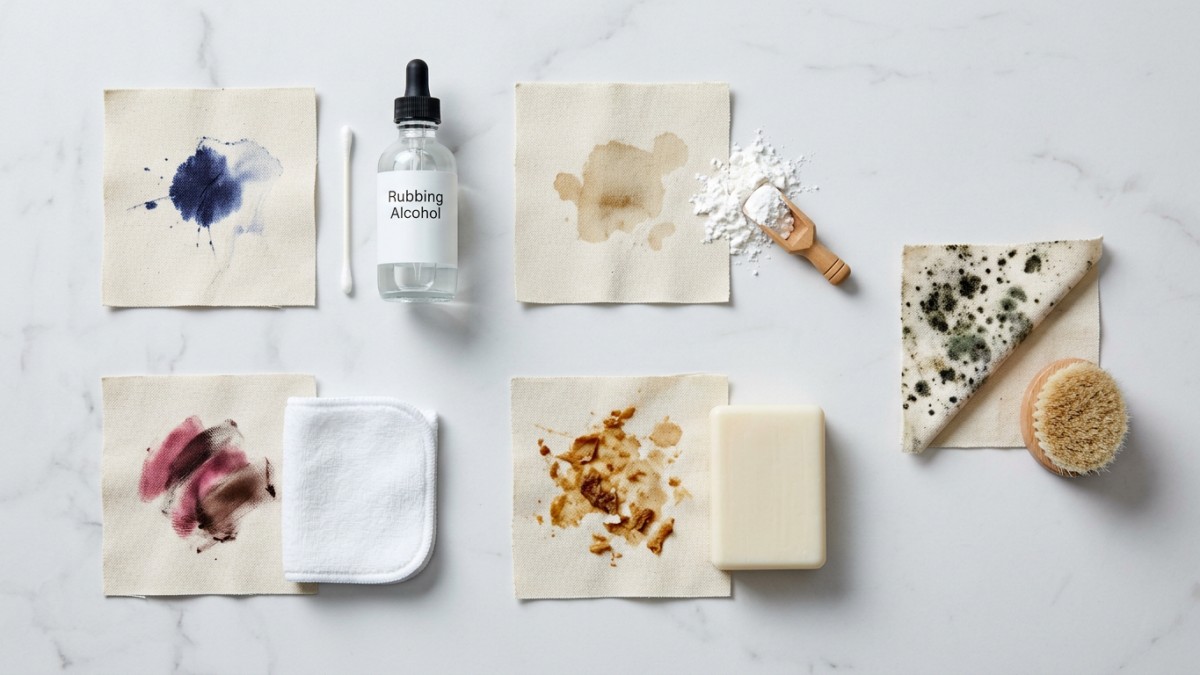
Each stain type demands its own agent — and its own no-go list.
Here's how to tackle the five most common offenders when you need to clean a canvas handbag:
Stain Removal Quick-Reference: Agent, Avoid & Canvas-Type Notes
| Stain Type | Agent to Use | Agent to Avoid | Coated Canvas | Uncoated Canvas |
|---|---|---|---|---|
| Ink | Isopropyl alcohol (70%) | Acetone | Act fast; surface limits spread | Blot only — no rubbing |
| Oil/Grease | Cornstarch + pH-neutral cleaner | Petroleum solvents | Easier to wipe clean | Treat within minutes |
| Makeup | Micellar water or diluted dish soap | Alcohol-heavy removers | Avoid dulling the finish | Prevents fiber weakening |
| Food | pH-neutral cleaner + warm water | Bleach | Resists staining well | May need a second pass |
| Mold/Mildew | Diluted white vinegar or mold remover | Bleach (on colored canvas) | Isolate bag first | Dry completely after treatment |
Knowing how to clean a canvas handbag properly means matching the method to both the stain and the canvas construction — one approach rarely fits all.
Some cleaning mistakes are minor. Others quietly destroy a bag's structure — and with premium canvas, the margin for error is much smaller.
Bleach breaks down the cellulose fibers in cotton canvas at a molecular level. Even diluted, it strips color, weakens the weave, and leaves the surface brittle over time. Vinegar, despite its reputation as a "natural cleaner," is acidic enough to degrade canvas coatings and cause dye bleeding — particularly on waxed or printed styles.
Machine washing is arguably the worst offender. The agitation cycle distorts bag shape, stresses stitching, and soaks hardware in prolonged moisture. Rust follows. So does warping. Heat drying compounds this: high temperatures shrink canvas fibers and crack any resin or lacquer finish applied to structured bags.
Finally, abrasive brushes — wire, stiff nylon, or anything marketed for scrubbing — scuff the surface grain and create micro-tears invisible to the naked eye. Those tears catch dirt faster and resist future cleaning.
The chemistry matters. Every one of these errors degrades surface integrity — and compromised surface integrity directly cuts the value, a real cost for retailers and private-label brands carrying premium inventory.
Avoiding the wrong cleaners protects the outside. The inside deserves the same discipline — and most people ignore it entirely.
The lining takes just as much daily abuse: receipts, crumbs, the occasional leaky lip balm. Treat it based on its material, not the canvas exterior.
One rule applies across all three: never soak the interior. Excess moisture trapped inside a closed bag encourages mildew, weakens stitching, and can warp structured panels. A targeted, minimal-moisture approach keeps the inside as presentable as the outside.
The best way to clean a canvas handbag is to rarely need a deep clean in the first place. Small, consistent habits do more than any scrubbing session ever could.
Build these four into your routine:
For coated or waxed canvas, periodic conditioning keeps the surface supple and prevents that telltale cracking along fold lines. A dry, neglected coating doesn't just look worn — it loses its water resistance entirely.
Cleaning a canvas bag correctly starts long before the first wipe-down — it starts at the construction stage. A tightly woven, properly finished canvas holds up to repeated cleaning. A poorly sourced one degrades after the second attempt.
At Milestone, our canvas handbags — including structured coated canvas tote bags — are engineered with maintainability in mind. That means consistent coating adhesion, colorfast dyes, and seam integrity that survives real-world care routines, not just showroom conditions. These aren't incidental features; they're built into our material specifications from the start.
If you're sourcing for retail, wholesale, or private label, the material spec sheet tells you more than any product photo ever will. Reach out to our canvas bag manufacturing team to request samples or full material documentation — and see the difference construction quality makes.
Ready to start your custom project?
Expert insights on care, styling, and manufacturing.
Most canvas bags can safely go in the washing machine, but success depends on the bag's construction. Use a gentle cycle with cold water and mild detergent. However, avoid machine washing if your bag has leather trim, metal hardware, or glued embellishments — hand washing is safer for those. Always air dry to prevent shrinkage or warping.
Rubbing alcohol applied with a cotton swab is your safest bet for ink stains on canvas. Dab gently—never rub—working from the stain's outer edge inward. Test on a hidden area first to check for color reaction. Follow with a mild soap rinse and air dry to preserve the fabric's original hue.
Harsh soaps can strip the waterproof coating from your canvas bag over time. Stick to mild, pH-neutral soap or a dedicated fabric cleaner, and avoid scrubbing aggressively. After cleaning, consider reapplying a canvas waterproofing spray to restore any lost protection and keep your bag weather-ready.
Use a damp cloth with a small amount of leather conditioner or mild soap to gently wipe the straps in circular motions. Finish by applying a dedicated leather conditioner to restore moisture and prevent cracking — the same care principles for luxury leather apply here. Avoid soaking or harsh cleaners.
Baking soda is your best fix for musty canvas. Sprinkle it inside the bag, leave it overnight, then shake it out. For the exterior, wipe with a diluted white vinegar solution and let the bag air dry completely in a well-ventilated spot — never sealed in a closet, which encourages mold growth.