Author: Ethan Publish Time: 2025-10-30 Origin: Milestone
1. What is the top 10 bag brand?
While "top" is subjective, in the luxury sector, it's defined by a combination of brand heritage, market value, and craftsmanship. This list is dominated by traditional European luxury houses.
Factually, the 10 most recognized and valuable heritage brands typically include:
Hermès
Chanel
Louis Vuitton
Gucci
Prada
Dior
Saint Laurent
Fendi
Celine
Goyard
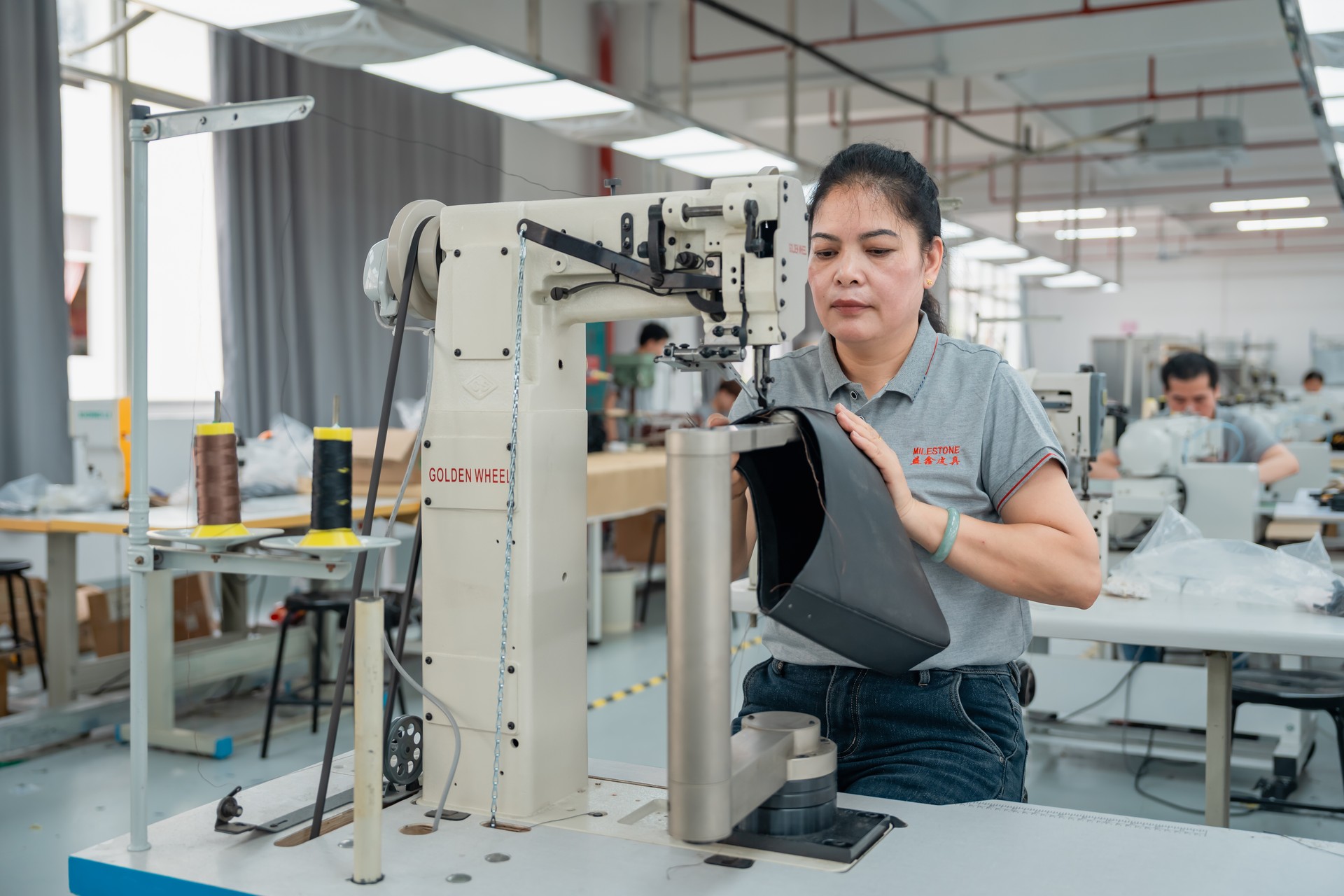
From a manufacturing standpoint, these brands' "top" status is maintained by their non-negotiable commitment to material quality and craftsmanship. They set the benchmark for stitching density, hardware finishing, and leather consistency that all premium brands—and their manufacturing partners—must strive for.
The most common alternative name, particularly in American English, is "purse."
However, in the design and manufacturing industry, "handbag" is a broad "umbrella term." We use more specific, functional names that describe the product's design, such as:
Tote: An open-top bag with two parallel handles.
Clutch: A strapless evening bag carried by hand.
Crossbody: A bag with a long strap worn across the body.
Satchel: A structured bag with a top handle and often a flap.
Hobo Bag: A crescent-shaped, soft-bodied shoulder bag.
"Best" is defined entirely by the customer's goal. The market is clearly segmented:
For Investment & Exclusivity: Hermès and Chanel are factually considered the "best" due to their scarcity and high resale value, driven by handmade craftsmanship.
For Accessible Luxury: Brands like Coach and Michael Kors are often considered "best" in this category. They offer a powerful combination of genuine leather, high-quality production, and attainable pricing.
For Trend-Setting Design: Newer brands like Telfar or Jacquemus might be called "best" by fashion-forward consumers.
The "best" brand is one that has a clear identity and a manufacturing partner capable of executing that vision flawlessly, whether it's a $15,000 exotic skin bag or a $300 high-grade leather tote.
The term is literal and historical. It originated in the late 19th and early 20th centuries. As women began to carry personal items (money, cosmetics) outside of clothing pockets, they needed portable containers. These items were specifically "carried by hand," which distinguished them from larger "luggage." The name "handbag" was adopted to describe these personal, portable bags.
The industry term for this category is "Accessible Luxury" or "Entry-Level Luxury." Brands in this category include Coach, Michael Kors, Tory Burch, and Kate Spade.
These brands are a case study in smart manufacturing. They leverage high-volume production capabilities and global sourcing (like our facilities) to produce items—often from genuine leather—at a price point that makes the "luxury" feel accessible to a wider market.
This must be answered in two parts:
By Type: Factually, the Crossbody Bag and the Tote Bag are consistently the most popular categories globally. They solve the two most common user needs: hands-free convenience (Crossbody) and high-capacity utility (Tote).
By Specific Model (Trend): This changes rapidly based on social media. In recent years, viral, trend-defining bags have included the Telfar Shopping Bag, the Lululemon Everywhere Belt Bag, and the Uniqlo Round Mini Shoulder Bag.
The most expensive handbag brand in the world, by a significant margin, is Hermès. The high prices are not just for the bag itself but are the result of a deliberate business model built on:
Extreme Scarcity: A controlled quota and waiting list system.
Handmade Craftsmanship: One artisan typically constructs one bag from start to finish.
Exotic Materials: The use of rare materials like crocodile or alligator skin, often combined with diamond or gold hardware.
As manufacturers, we don't spot "fakes"; we spot "poor quality control (QC)" and "inferior craftsmanship." These are the four key inspection points our own QC teams use, and they are exactly what you should check for:
Stitching (The #1 Sign): Look at the stitches per inch (SPI). A premium bag (like ours) has high-density, perfectly straight, and even stitches with no loose threads. Fakes have low SPI, crooked lines, and visible glue.
Hardware (Zippers, Clasps): Genuine hardware feels heavy, solid, and smooth. Zippers should glide effortlessly. Fake hardware is lightweight, hollow, scratches easily, and is often plated with a color that is too yellow or "brassy."
Material & Lining: Genuine leather (like the kinds we source) has a rich, natural smell and a supple, imperfect grain. Fakes have a strong chemical or plastic smell and a repeating, artificially uniform texture.
Logo Stamping (Hot Stamp/Foil): A real stamp is clean, crisp, and pressed evenly into the leather. A fake stamp is often blurry, too deep, or has foil "bleeding" at the edges.
The colors that "go with everything" are known in the industry as "Core Neutrals." These are the non-seasonal colors that brands order in the highest volumes every year because they have constant demand.
Black
Tan / Camel / Cognac (especially for genuine leather)
Beige / Nude / Taupe
Navy Blue
Grey (from light to charcoal)
This depends on the user's "everyday," but the market is overwhelmingly split between two functional sizes:
The Medium Tote: Defined as large enough to carry daily essentials (e.g., a 13-inch laptop, water bottle, wallet) without being bulky.
The Large Crossbody: Defined as large enough for all on-the-go items (phone, wallet, keys, sanitizer, lipstick) while keeping the user's hands free.