Author: Ethan Publish Time: 2025-12-01 Origin: Milestone Bag
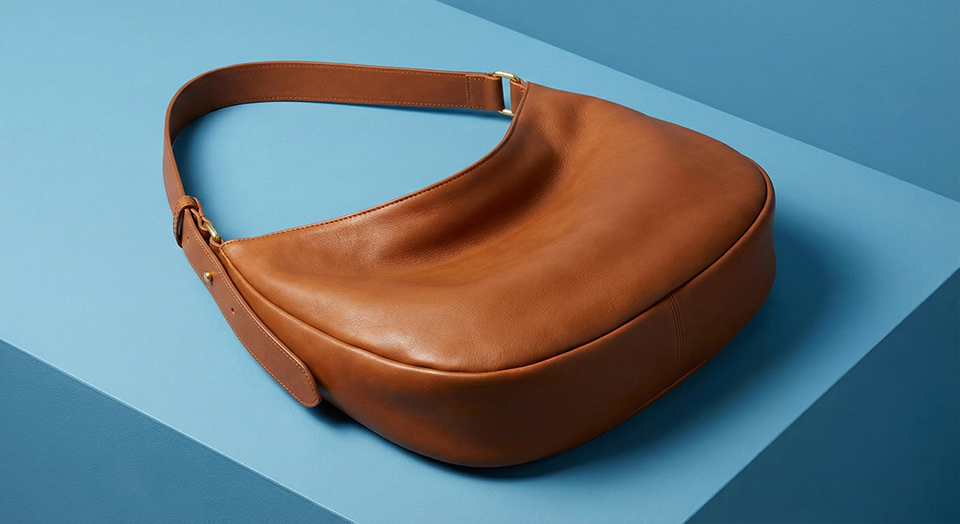
The hobo bag is one of the few handbag silhouettes that feels both nostalgic and modern. Its relaxed crescent shape, soft structure, and effortless slouch make it a recurring trend in women's accessories across decades. But a frequent question—especially from fashion enthusiasts and brand developers—is: Who actually created the original hobo bag?
The answer is more complex than a single designer or house. The hobo bag did not begin as a branded invention. Instead, it evolved from a cultural symbol, long before it entered the vocabulary of fashion.
The word hobo traces back to American laborers and travelers of the late 19th and early 20th centuries. Their belongings were often tied in fabric bundles and carried over the shoulder using a stick—creating a round, slouchy silhouette. While this makeshift bindle was not a handbag as we know it today, the crescent curve and natural drape strongly resembled the soft construction that would later define the hobo bag.
No single artisan or fashion house created this form. Instead, the "original hobo bag" was more of a visual reference:
A round, flexible sack
Soft and collapsible
Carried close to the body
Practical for daily movement
These attributes later became the foundation of modern hobo bag design.
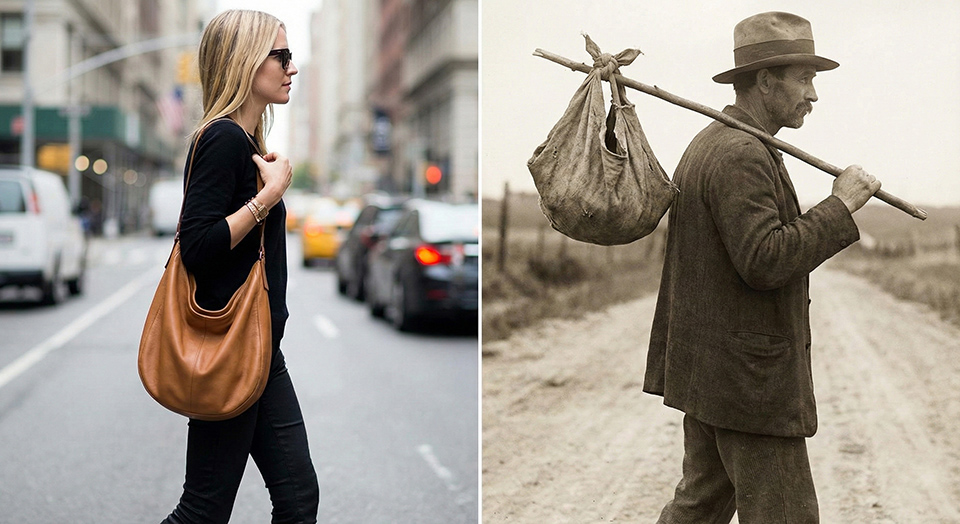
The hobo bag entered mainstream fashion in the 1950s–1970s, when American handbag manufacturers began exploring softer silhouettes. Many leather workshops across New York and the Northeast experimented with unstructured shoulder bags as a counterbalance to the rigid box bags dominating earlier eras.
At this stage:
There was no single credited "inventor."
Multiple manufacturers developed similar shapes independently.
The slouchy, crescent shoulder bag was marketed simply as a casual daily handbag.
These early versions were often constructed using lighter leather skins, suede, or fabric—materials that naturally produced a relaxed shape.
The term "hobo bag" became firmly established in the late 1990s and early 2000s as fashion magazines and department stores began standardizing product categories. During this era, brands like Coach, Michael Kors, and Dooney & Bourke popularized the slouchy shoulder bag silhouette, helping the name gain mass commercial recognition.
Still, none of these brands "invented" it—they simply amplified a structure that already existed in American accessories.
The rise of Y2K fashion, with its love for effortless, soft-shoulder styles, helped solidify the bag's place in pop culture. Even luxury houses released their own interpretations, from minimal crescent versions to more structured leather hobo bag designs that gave the silhouette a polished, premium feel.
If we trace the question strictly:
The origin is cultural, not designer-led.
The structure existed long before the fashion industry adopted it.
No single brand or maker is credited with creating the first "hobo bag."
Similar to how "tote bags" and "bucket bags" evolved from utility objects, the hobo bag grew from everyday life into a fashion staple. By the time designers began naming and marketing the silhouette, it was already part of collective visual culture.
Thus, the most accurate answer is:
The original hobo bag does not have a singular inventor. It originated from the slouchy, crescent-shaped bundles carried by early American travelers, and was later adopted and refined by mid-century handbag manufacturers.
While many modern silhouettes can be traced to specific designers, the hobo bag stands apart as a shape born from culture, practicality, and evolution. Its origin is collective, not individual—making it one of the most democratic bag styles in fashion history.