Author: Ethan Publish Time: 2026-03-10 Origin: Milestone

Metallic handbags sit at the crossroads of craftsmanship and surface innovation, defined not by loud patterns but by the specialized finishes—foiled, laminated, or metal‑infused—that give leather its mirrored sheen or soft, brushed glow. Their growing presence in both luxury boutiques and fast-moving mass retailers shows how quickly shoppers gravitate toward pieces that feel sculpted, almost jewel-like, yet still practical for daily use. As more brands explore this category, the need for dependable production partners becomes sharper, especially when the finish must hold up against bending edges, warm palms, and the friction of real life. Milestone supports that demand with deep experience in premium metallic treatment, guiding clients who want standout bags that look striking without compromising durability.
Metallic handbags begin with a base material—often leather, PU, or technical textiles—that is treated with specialized metallic finishes. These finishes aren't simple color washes. They involve foil transfers, vacuum metallization, shimmer coatings, or micro‑particle sprays that sit on the surface like a thin shell, catching light differently depending on the treatment. When someone picks up a metallic piece, the first thing they notice is the way the surface behaves under movement; the finish can flash like polished metal or glow softly like brushed hardware.

Color, sheen, and reflectivity each play a separate role in how these bags read on the shelf. Color establishes the visual temperature—silver feels cool, copper feels warm—while sheen determines whether the surface looks satin-smooth or mirror‑sharp. Reflectivity, the most technical layer of the trio, dictates how intensely the finish bounces back surrounding light. A small change here can shift a design from subtle shimmer to full spotlight.
Metallic gold anchors the entire category because it strikes the most universal balance of luxury, familiarity, and visual impact. Gold signals premium craftsmanship without requiring explanation, and shoppers tend to associate it with durability and status, making it a dependable choice for brands shaping a capsule line of metallic handbags. For manufacturers, gold also offers steady predictability in terms of materials and finishes, which helps maintain consistency from prototype to production.
Metallic finishes begin with the base material, and the choice between genuine leather and metallic PU shapes how the final surface looks and behaves. Genuine leather accepts metallic treatments with a natural depth that comes from its grain structure, giving foils and coatings a slightly textured sheen. Metallic PU, by contrast, offers a smoother and more predictable surface, which is why many brands use it when they want uniform shine or need high-volume consistency. Readers comparing substrate options often refer back to broader material basics, and a resource like the complete guide to handbag materials helps anchor those decisions.

Across both substrates, manufacturers rely on three primary techniques: foil embossing, laminated films, and spray coatings. Foil embossing bonds a thin metallic layer onto the material under heat and pressure, producing crisp highlights that catch light at sharp angles. Laminated films create a mirror-like effect, driven by the film's ability to reflect radiant energy; the shine comes from the material's reflectance, defined as its effectiveness in reflecting radiant energy, as noted in this explanation of the this explanation of reflectance. Spray coatings offer more subtle, diffused luster and allow for gradient or tonal metallic effects.
Each method ages differently. Foil tends to be durable but can show edge wear on high‑flex areas. Laminated films resist scratches yet may crease if folded repeatedly. Spray coatings provide versatility, though their longevity depends heavily on the quality of both the polymer binder and the underlying material's flexibility.
Metallic handbags appear in a wide spread of shapes, yet a few silhouettes consistently anchor the market. Compact clutches often carry the highest concentration of reflective surfaces, giving eveningwear brands a small but striking canvas. Totes and bucket bags use metallic panels more conservatively, letting the larger structure keep its everyday utility while still catching light as the wearer moves. Crossbody styles sit between the two, mixing practical proportions with a subtle flash that works in both retail and wholesale channels.
What separates these designs is not just the outer sheen but the structure beneath it. Some brands favor a rigid frame that prevents wrinkling along metallic coatings, especially when working with aluminum‑treated synthetics or foiled leathers. Others lean on soft body construction, where the surface develops gentle folds—an effect many buyers appreciate because it introduces a lived‑in texture without looking worn. Hardware integration becomes a crucial decision point: oversized chain straps or polished clasps must be engineered to avoid scratching the finish, and experienced manufacturers often reinforce anchor points with hidden patches or denser stitching to keep the bag from collapsing under its own shine.
Metallic gold handbags sit in a category of their own. Their warm glow naturally cues exclusivity, and shoppers often associate that color with special moments—holiday dinners, rooftop events, or milestone celebrations. For brands, this emotional instinct becomes powerful positioning. A well‑built gold piece allows a label to signal premium intent, even within an accessible price range, and it gives retailers a dependable style that consistently draws attention from both trend‑driven consumers and corporate buyers seeking standout seasonal inventory.
Metallic handbags rely on finishes that can withstand daily friction, pressure from hardware, and the subtle abrasion that comes from sliding across clothing. Scratch resistance depends on how well the metallic pigments bond to the surface during coating. When the adhesion is weak, the sheen begins to dull or flake long before the bag reaches its typical replacement cycle. Coating longevity, especially in high-shine foils, often hinges on careful curing and the thickness of the protective topcoat, which must shield the surface without muting its reflective quality.

Some risks remain inherent to metallic treatments. A tightly stretched foil can develop micro‑cracks along stress points, especially on gussets or curved panels that move repeatedly. Color transfer can occur when an over‑saturated finish rubs against light fabrics, leaving faint metallic smudges. Heat sensitivity is another concern; a hot car interior can soften certain coatings, causing imprint marks or a slightly tacky texture that attracts dust.
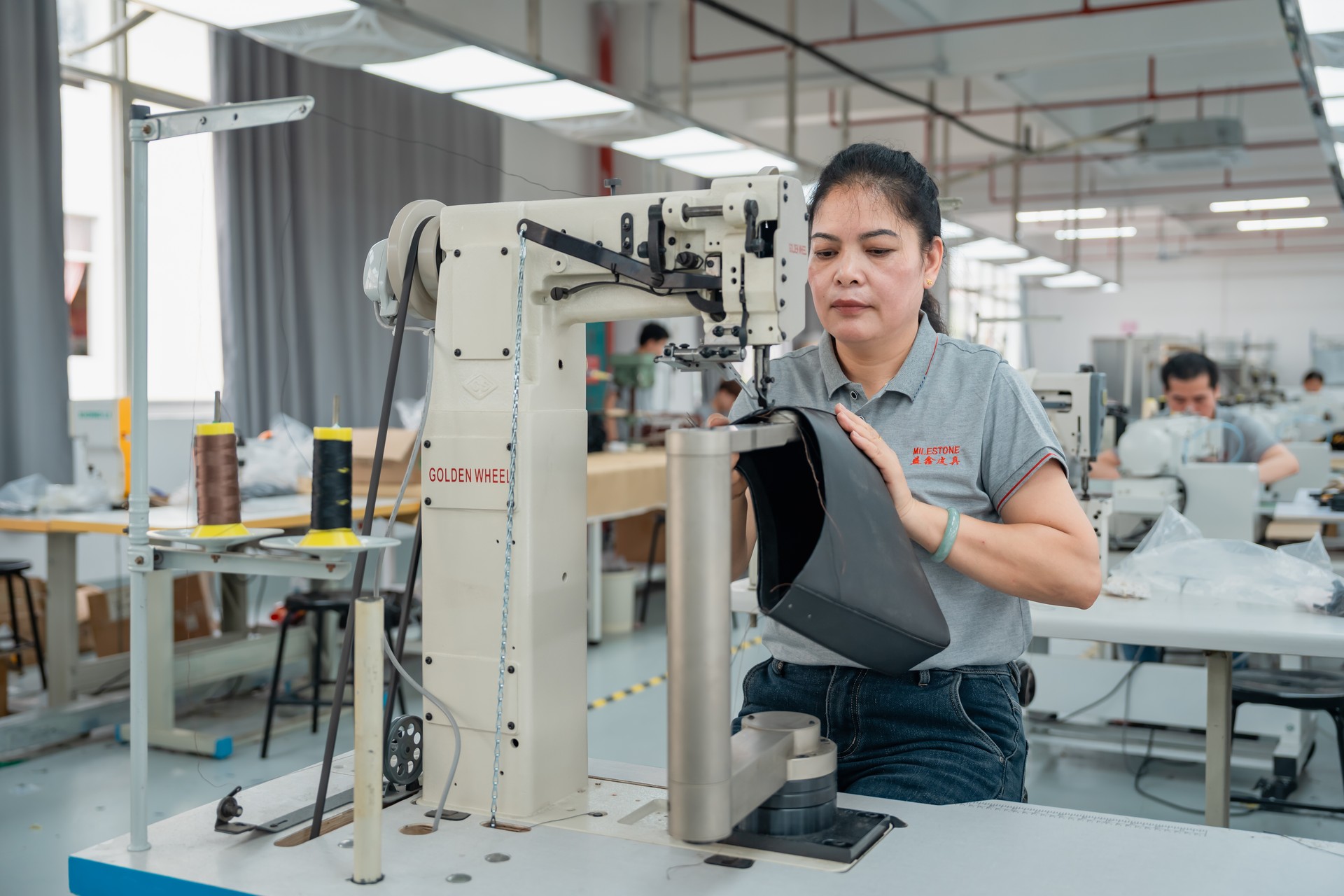
Milestone reduces these issues through manufacturing controls shaped by years of leather bag production. Pigment layering is calibrated to avoid oversaturation, and every batch goes through abrasion testing that simulates months of wear. Heat‑shock tests help flag finishes prone to softening, while our reinforced edge‑folding method prevents concentrated stress along seams. For brands exploring metallic ranges or seeking a sturdier foundation for new silhouettes, our approach integrates seamlessly with broader considerations around modern leather bag manufacturing.
Durability differences across metallic finishing techniques
| Finishing Method | Strengths | Common Risks | Mitigation Used by Milestone |
|---|---|---|---|
| Metallic Foil | High shine, uniform color | Cracking, heat sensitivity | Controlled curing, stress‑point testing |
| Metallic Coating | Good scratch resistance | Color transfer | Optimized pigment layering |
| Metallic Emboss | Strong texture retention | Edge wear | Reinforced edge folding, abrasion checks |
Metallic handbags need thoughtful care because coatings can shift in appearance depending on how light hits them; as noted earlier, most practical objects display both diffuse and specular reflections, so even a tiny scratch can change how a surface reads at a glance. Storing pieces in a dust‑free pouch with minimal pressure on the panels helps preserve that crisp sheen, while gentle wiping with a slightly damp, non‑abrasive cloth keeps residue from settling into the finish. Harsh solvents are the main culprit behind premature peeling, so teams should avoid alcohol-based cleaners during routine maintenance.
Sustainability remains a challenge in this category. Traditional metallic films often rely on layered plastics and vacuum‑metalized coatings, which can complicate recycling streams and increase a product's end‑of‑life footprint. Many brands exploring more responsible production turn to guidance rooted in broader practices around sustainable manufacturing, since the same principles apply to metallic surfaces.
For B2B buyers, viable eco-forward alternatives now include waterborne metallic coatings, low‑VOC polyurethane systems, and transfer foils engineered for easier material separation. These options maintain the reflective qualities that designers want while reducing chemical load, offering a path toward handbags that look modern without sacrificing environmental progress.
Metallic handbags hold their place in brand collections because they move effortlessly between quick seasonal trends and the slower, more deliberate cycles that shape long-term consumer taste. A single silver micro‑bag might surge during the holiday rush, while a burnished gold shoulder style keeps drawing attention months later, its surface catching light in a way that feels fresh even after repeated use. This dual relevance gives brands room to plan tight capsule drops while still anchoring their assortment with pieces that stay desirable.
There is also a clear commercial edge. Metallic finishes create instant differentiation on a shelf crowded with neutral leathers, and that visual pull often translates into higher margins. When shoppers reach for something that feels slightly daring yet still practical, these finishes offer that small spark of novelty without forcing a full design overhaul. For private‑label labels and established retailers alike, the category becomes a strategic lever: low risk, high visibility, and strong storytelling potential.
Brands exploring custom development can work with Milestone to shape metallic textures, hardware tones, and construction details that match their market position. A conversation with our team often reveals options that are difficult to source elsewhere, especially when a collection needs a signature metallic piece that feels intentionally crafted rather than off‑the‑rack.
Ready to start your custom project?
Expert insights on care, styling, and manufacturing.
Most metallic handbags use coated or foil‑finished fabrics rather than solid metal. Designers apply metallic films, laminations, or specialty paints to leather or synthetic materials to create a reflective effect. Some styles may include metal accents or hardware, but the bag's main structure is typically lightweight and fabric‑based.
High humidity can accelerate tarnishing on some metallic finishes, especially those made from untreated metals or low‑quality coatings. Moisture, heat, and exposure to skin oils contribute to dullness over time. Choosing bags with protective topcoats and storing them in breathable dust bags helps maintain shine, even in tropical climates.
Metallic handbags usually pass security without special screening, though metal hardware can occasionally trigger scanners and lead to a quick manual check. Keeping the bag organized and removing dense items helps the process move smoothly. Lightweight finishes or minimal hardware generally reduce the chance of extra inspection at busy checkpoints.
Reflective metallic finishes are fully achievable with high‑quality vegan materials, often using coated polyurethane or innovative plant‑based blends. Many brands create mirror‑like surfaces without animal leather, and discussions around modern vegan alternatives, such as those in recent sustainability insights, highlight how these materials balance shine, durability, and ethical production.
Many small‑batch manufacturers like Milestone do offer low MOQs for custom metallic shades, especially those specializing in boutique or emerging designer runs. Their flexibility allows experimentation with finishes like chrome, pearl, or brushed metallics without committing to large volumes. Lead times may be slightly longer, but the customization options are typically far more adaptable.