Author: Ethan Publish Time: 2026-05-22 Origin: Milestone

The elegant intersection of natural fibers and artisanal leather craftsmanship.
IN THIS ARTICLE
As temperatures climb, retail shelves and digital storefronts flood with organic textures, driven by an insatiable seasonal demand for premium accessories that evoke Mediterranean ease. Yet, buyers and consumers alike constantly conflate straw and wicker, blurring the lines between distinct manufacturing techniques. If you have ever wondered, is a straw handbag a good choice for summer, you are not alone in navigating this crowded seasonal market.
The core confusion lies in treating a raw material and a weaving method as the same thing. While a lightweight straw weave relies on pliable, sun-dried agricultural fibers, a structured wicker crossbody bag utilizes rigid, interlaced reeds, canes, or synthetic resins to maintain its distinct, hollow silhouette. This material composition directly dictates both the aesthetic value and the product lifespan of popular crossbody purses for summer. Cheap, poorly sourced fibers will quickly crack and fray under humid conditions, whereas high-grade rattan or willow resists splitting, ensuring the finished piece survives the rigors of daily transit and maintains its premium tactile appeal. However, selecting these high-grade components requires looking beyond mere aesthetics to resolve a deeper, technical confusion.
This confusion often stems from conflating raw materials with specific weaving methods, a common misstep that leads to costly procurement errors. Specifically, buyers must understand that wicker is not a plant species harvested from the earth. As detailed in Wikipedia's entry on the technique, wicker is actually a method of weaving used to make products like furniture and baskets, as well as a descriptor to classify them. Historically utilizing tough, rigid materials like willow, rattan, reed, or even synthetic resins, this process yields a self-supporting, firm shell. When manufacturing a premium wicker crossbody bag, we rely on these stiff, interlocking elements to construct a defined, architectural silhouette that holds its shape even when completely empty.
Conversely, straw represents the actual raw material—specifically, the pliable, natural stalks of cereal crops like wheat, rye, or specialty palms like raffia and toquilla. These fibers are inherently soft, hollow, and highly flexible. Weaving a straw crossbody bag involves braiding or crocheting these delicate strands into a supple, yielding textile. The resulting material feels organic, warm, and highly texturized.
This material divergence dictates how each bag behaves under daily wear. A wicker piece acts like a protective cage; its rigid framework offers exceptional load-bearing capacity, ensuring heavy items like smartphones and brass clasps won't cause the bottom to sag or warp. Straw, while remarkably lightweight and packable, lacks this structural skeleton. Under heavy weight, a straw weave stretches and conforms to its contents, offering a relaxed, bohemian drape rather than a crisp, formal contour. For B2B buyers, choosing between them is a strategic decision balancing structural durability against casual, lightweight packability. Once you determine the structural needs of your collection, the next critical step is selecting the exact raw fiber that matches your production budget.
This choice of foundational fiber for a high-end wicker crossbody bag dictates not just the aesthetic appeal but the entire manufacturing overhead. While wicker is traditionally made of plant-based materials like willow, rattan, reed, and bamboo—though the term also applies to synthetic weaves—each natural fiber behaves differently on the factory floor. Choosing the wrong raw material can lead to cracking grain during the stitching phase or warped frames during overseas transit, directly eating into your profit margins.

Sourcing raw, premium-grade natural fibers for luxury summer collections.
Heavy and exceptionally durable, rattan boasts unmatched tensile strength but resists tight bending. Because it resists warping, it is the premier choice for structured, hard-cased luxury bags that must maintain their silhouette under pressure.
Lightweight and naturally resilient against light moisture, willow offers moderate flexibility. It yields a classic, heritage aesthetic; however, its tendency to snap during tight machine-weaving means it requires slower, artisanal hand-weaving that drives up labor costs.
Sourced from palm leaves, raffia is remarkably soft, pliable, and lightweight. Although it lacks water resistance, its high tensile strength prevents fraying, making it ideal for relaxed, packable summer totes and mid-tier bohemian designs.
An eco-friendly, glazed rice paper yarn, Toyo paper provides uniform consistency without the risk of splintering. It lacks natural water resistance but offers superb flexibility and low material costs, making it a favorite for high-volume, budget-friendly retail lines.
To optimize your sourcing strategy, align your fiber selection directly with your target retail price point. For high-volume, fast-fashion lines, Toyo paper and raffia minimize upfront material expenses while maintaining an organic aesthetic. Conversely, if your brand targets the luxury tier where consumers demand heirloom quality, investing in genuine rattan or willow justifies the higher wholesale cost by delivering structural integrity that lasts for seasons. Do not cut corners here; a cheap fiber choice inevitably leads to high return rates from dissatisfied buyers—especially when paired with subpar trim materials.
Comparative Material Matrix: Weight, Flexibility, and Durability
| Material | Weight | Flexibility | Water Resistance | Tensile Strength | Target Price Point |
|---|---|---|---|---|---|
| Rattan | Heavy | Low | Moderate | High | Premium / Luxury |
| Willow | Medium | Moderate | Moderate-High | Medium | Mid-to-High |
| Raffia | Light | High | Low | High | Entry-to-Mid |
| Toyo Paper | Light | Very High | Low | Medium | Budget / Mass Market |
Indeed, just as cheap fibers fail, low-grade synthetic PU trims quickly betray a brand's promise by cracking at the seams and peeling under the sun. Contrast this with premium full-grain leather, which develops a rich patina over years of use while retaining its structural integrity. When sourcing a genuine leather crossbody bag, B2B buyers must prioritize materials that withstand daily wear rather than settling for cheap, fibrous scraps that degrade within a single season. Investing in high-grade hides ensures the product smells of rich, authentic leather rather than harsh chemicals.

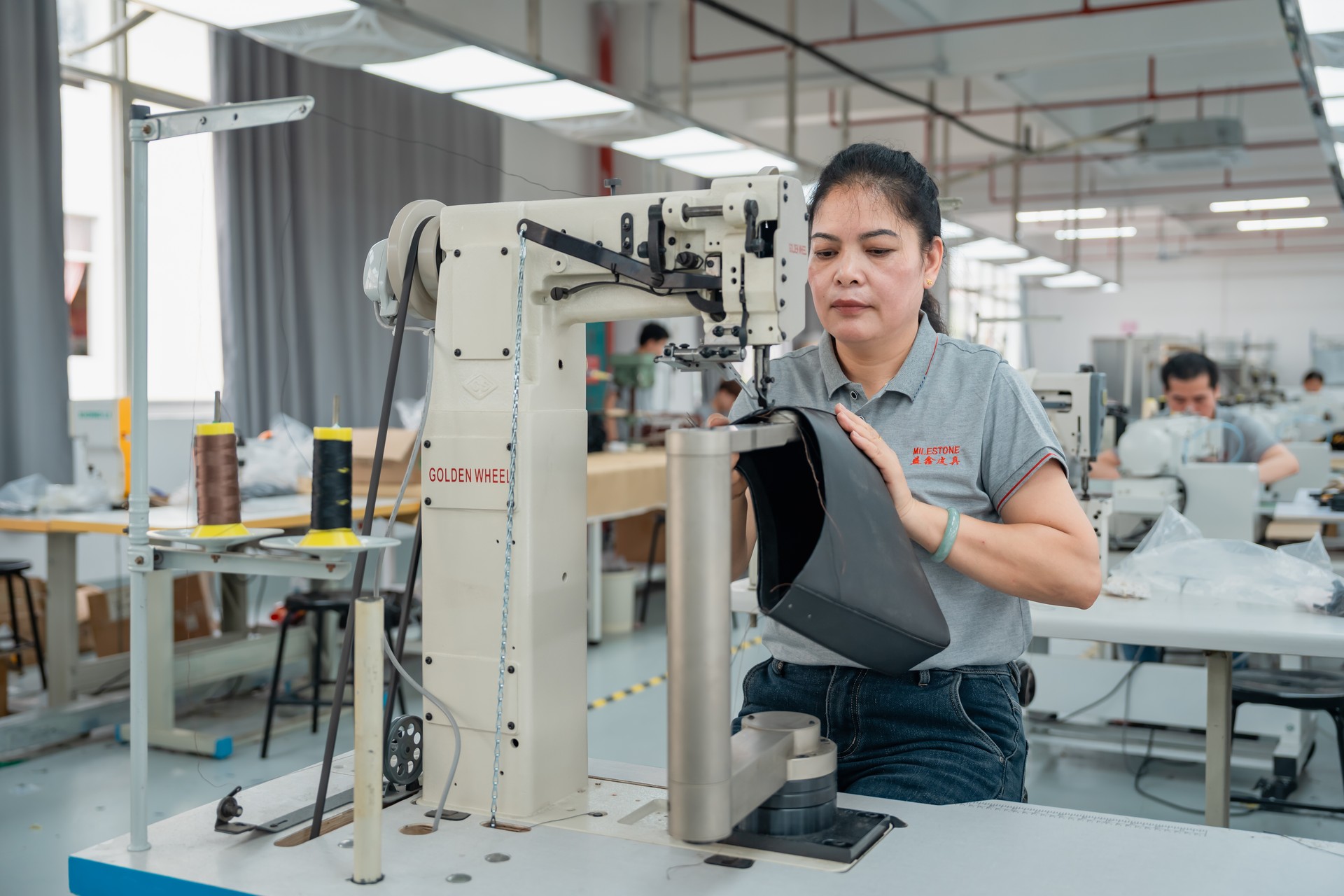
Precision hand-stitching reinforces stress points on premium woven bags.
Woven straw and wicker are inherently delicate materials, prone to fraying whenever they rub against clothing or experience heavy load tension. By anchoring stress points—such as strap attachments, base corners, and flap closures—with robust leather reinforcements, we structurally lock the loose natural fibers in place. This integration is particularly crucial for a small leather crossbody bag, where compact dimensions concentrate physical strain on just a few critical attachment points. Without these protective leather barriers, the constant friction of daily use would quickly unravel the delicate weave.
At Milestone, our artisans master this delicate interface through high-density stitching that securely binds the hide to the woven body. To manufacture a flawless brown leather crossbody bag, we calibrate our sewing tension to match the variable density of the hand-woven wicker, ensuring the needle pierces cleanly without snapping the delicate straw reeds. This meticulous assembly process guarantees that the finished product transitions smoothly from a beachside boutique to high-end urban retail shelves without losing its shape. Every stitch line is hand-guided. This creates a seamless, ultra-durable boundary where rugged organic texture meets polished luxury, protecting both the weave and the wearer.
While this blend of luxury and natural texture is highly desirable, raw woven surfaces introduce a distinct practical challenge: fabric snagging. Rough, untreated fibers can easily ruin delicate silks or fine knits. To mitigate this in high-end manufacturing, we often design hybrid silhouettes where the back panel—the side constantly rubbing against delicate clothing—is crafted from ultra-smooth calfskin, effectively turning the piece into a highly durable leather crossbody purse.
When wear and tear inevitably happens, the repairability of these materials diverges sharply. Frayed straw strands are notoriously difficult to mend once they split, often requiring messy adhesives or complete panel replacements that look patched-up. Wicker, however, offers a more resilient alternative. Wikipedia notes that natural wicker is well known for its strength and durability, as well as the high level of beauty and comfort that an expert craftsman can create. Because of this structural integrity, a cracked wicker cane can actually be spliced and replaced by a skilled artisan, restoring the bag's original form.
To prevent both snagging and breakage before the product ever hits retail shelves, premium manufacturers apply advanced protective treatments. We coat the raw woven fibers with flexible polymer seals and light, eco-friendly acrylic varnishes. This microscopic barrier binds loose splinters, prevents moisture absorption, and creates a smooth-to-the-touch finish without stripping the material of its natural, earthy character. Armed with these technical insights, designers can confidently select the right material profile for their target audience.
For brands balancing these material dynamics, the final decision often comes down to lifestyle alignment: choose straw for relaxed, packable resort wear, or opt for a structured wicker crossbody bag if your line demands a rigid, sculptural silhouette that withstands daily wear while retaining its polished, high-end appeal. Ultimately, your choice hinges on whether your customers prioritize casual, lightweight flexibility or durable, architectural elegance. Both materials possess distinct market advantages, but flawless execution is everything.
At Milestone, we bridge the gap between raw, fibrous weaves and refined luxury by pairing premium rattan and raffia with our expert leather bag manufacturing capabilities. We specialize in securing robust frames, hand-stitching vegetable-tanned leather trims, and finishing each piece with heavy-duty custom hardware that speaks to discerning global consumers. Our facility handles everything from initial material sourcing to rigorous stress-testing, ensuring your designs transition seamlessly from sandy beaches to metropolitan streets.
Ready to scale your upcoming line? Contact our design team today to develop a custom summer collection that balances raw artisanal warmth with market-ready construction.
Ready to start your custom project?
Expert insights on care, styling, and manufacturing.
High-quality, lacquered wicker is less likely to snag on delicate fabrics like silk or knits. Its rigid, coated exterior prevents loose fibers from catching on fine threads. In contrast, raw straw bags often have exposed, fibrous ends that easily trap garments, though finely woven synthetic straw is also a safe, smooth alternative.
Straw crossbody bags are significantly more prone to mold and warping. Made from delicate, highly porous natural grasses, straw absorbs water rapidly and loses its shape easily. Conversely, wicker is woven from tougher, sturdier materials like rattan or willow, which handle moisture much better and retain their structural integrity once dried.
Wicker bags incur significantly higher bulk shipping costs because their rigid, non-collapsible structure prevents flat-packing. Unlike malleable straw bags that can be compressed, wicker's fixed shape occupies substantial dimensional volume in cargo containers, which directly drives up freight fees and warehousing expenses for retailers.
Natural straw is much easier to dye, while wicker holds paint far better. Straw's highly porous fibers readily absorb liquid dyes for a rich, saturated finish. Conversely, the rigid, woody reeds of wicker provide a stable, solid surface that prevents acrylics or spray paints from cracking over time.
Wicker crossbody bags hold up significantly better under heavy daily use due to their rigid, structured construction. Unlike flexible woven straw, which easily sags, stretches, or frays over time, sturdy materials like rattan or willow retain their firm silhouette. Choose wicker if you want an everyday bag that maintains its pristine shape.