Author: Ethan Publish Time: 2026-03-06 Origin: Milestone

A well‑made handbag can last for years, but only if it's stored with the same care that went into crafting it. Many owners discover too late that a favorite piece can lose its structure—slouching at the base or developing small creases along the grain—simply because it was left on a hook or tucked into a crowded closet. The challenge is simple to name yet easy to mishandle: how do you keep a handbag in optimal condition when daily routines and limited space work against you? This guide offers practical steps that consumers can follow at home, while also giving retailers, resellers, and procurement teams a clearer view of the storage standards that protect inventory value and support long-term product performance.
A well‑made handbag may feel sturdy in the hand, but the materials that give it character—supple full‑grain leather, structured cowhide, or soft suedes—can shift, sag, or discolor when left in poor conditions. Sunlight slowly pulls pigment from the surface until the color looks washed out. Humidity seeps into the lining, inviting mildew that leaves a sour smell and faint spotting. And when a bag sits collapsed on a shelf for months, the walls begin to buckle in ways that are hard to reverse. Most shape distortion starts quietly, showing up first as a soft corner or a slight lean before turning into a permanent crease.
Each leather type reacts differently, which is why thoughtful storage matters. Vegetable‑tanned hides tend to darken and stiffen when exposed to dry air. Nappa leather, luxurious as it is, marks easily and benefits from gentle stuffing to keep the grain from folding onto itself. Even coated materials can warp under uneven pressure. A simple habit—keeping bags upright, supported, and away from erratic temperatures—helps preserve the original silhouette that designers intend.
For B2B buyers, the way handbags are stored after production or during retail display carries real weight. A collection that arrives misshapen or faintly faded doesn't just require markdowns; it chips away at brand trust, suggesting shortcuts in handling or oversight. Consistent storage standards protect inventory value and signal professionalism to distributors and end customers alike. Proper care behind the scenes, whether in a warehouse or a boutique stockroom, becomes part of the story a manufacturer or retailer tells about quality.
Maintaining a handbag's original shape and feel starts with controlling its environment. Leather reacts quickly to temperature swings, and excessive humidity can cause fibers to swell or weaken. Researchers found that prolonged heat and moisture exposure destroyed the orientation and structural integrity of collagen fibers during artificial aging, a reminder that stable, moderate conditions are non‑negotiable. Aim for a space around room temperature with balanced humidity, avoiding basements, attics, or any area prone to dampness or hot drafts.

How a bag sits on the shelf matters just as much. Storing a structured silhouette on its handles can pull the leather out of alignment over time, while letting a soft tote collapse into itself encourages creasing. Position bags upright, give each one enough breathing room, and use gentle internal stuffing to support the interior without stretching the seams. These habits seem simple, but they have an outsized effect on long-term durability—and they make routine care, such as the steps outlined in our guide on cleaning and preserving luxury leather bags, far more effective.
Natural leathers also need space to breathe. Sealing a handbag inside a non‑porous plastic bin traps residual moisture, which can dull the surface or create odors that cling to the grain. Opt for breathable dust bags made from cotton or similar materials, and leave a bit of airflow around each piece. This gentle exchange of air helps the leather settle, prevents unnecessary stress on the finish, and supports the slow, even aging that high-quality materials are designed to achieve.
Different handbag materials respond to storage conditions in their own way, and the wrong environment can distort a bag's structure long before visible damage appears. Leather, for example, prefers a cool setting with gentle airflow; when it's packed too tightly or left unconditioned, the grain can stiffen and form creases that never fully relax. Suede demands even more care because its nap traps dust and oils, and a single brush of the wrong cloth can leave fibrous marks. Patent bags behave differently: the glossy coating can cling to nearby surfaces, so they must be stored away from darker materials to prevent color transfer, a problem that tends to appear slowly, often after months in storage. Exotic skins—python, crocodile, lizard—respond poorly to rapid humidity shifts, and their scales may lift if the environment dries out.

Readers who need a refresher on the unique properties of these materials can refer to a helpful overview in the guide to different handbag materials.
Before long-term storage, most natural materials benefit from light conditioning. A minimal layer of pH‑appropriate leather cream prevents oxidation and keeps the surface supple, while suede should be gently cleaned and brushed rather than moisturized. Patent and exotic skins rarely need creams, but they do require hardware protection since metal components can tarnish when exposed to moisture or residual oils; wrapping hardware in soft, dye-free tissue helps slow the reaction.
Separating light and dark colors, storing each bag in breathable dust bags, and keeping structured silhouettes supported with inert stuffing all contribute to maintaining shape and preventing accidental dye migration.
Storage considerations across common handbag materials
| Material | Key Needs | Risks | Prep Before Long Storage |
|---|---|---|---|
| Leather | Cool airflow, conditioning | Creasing, oxidation | Light conditioning, dust bag |
| Suede | Dry space, gentle handling | Nap damage, staining | Clean and brush only |
| Patent | Isolation from dark items | Color transfer | Wipe surface, wrap hardware |
| Exotic Skins | Stable humidity | Scale lifting | Gentle cleaning, protect hardware |
Keeping a handbag's silhouette intact starts with what goes inside it. Many brands and bag owners reach for whatever is nearby, but using acid‑free tissue, muslin scraps, or clean microfiber bundles provides far better long-term support. These materials hold their loft without bleeding dyes or leaving a dusty residue inside the lining, which matters greatly for pale interiors or suedes that pick up every mark.
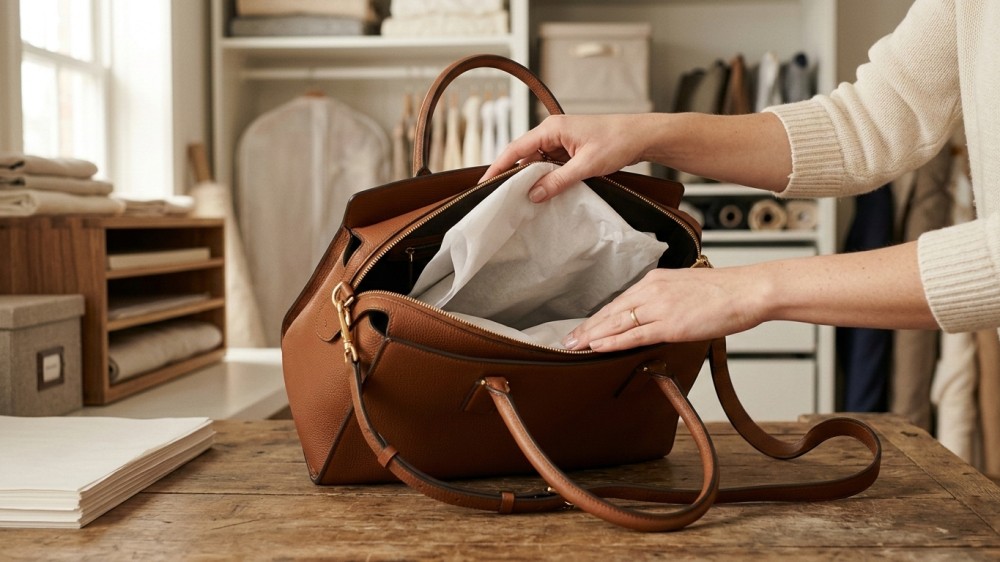
Some fillers can quietly ruin a bag from the inside out. Newspaper remains the most common culprit. The ink transfers under pressure, especially in humid storage rooms, and the paper itself breaks down into fibrous crumbs that settle into corners and attract moisture. Plastic grocery bags cause a different issue: they trap humidity, creating a clammy environment that encourages mold growth and softens leather panels over time.
A well-stuffed bag doesn't need to be packed tight. It should feel supported, almost like a pillow with just enough give to mimic the natural three-dimensional form of the design. This gentle structure prevents the outer leather from collapsing, which is often the first step toward creasing or permanent buckling.
Strap positioning finishes the job. Leaving a shoulder strap draped across the body of a stored bag can press faint grooves into the leather, and over months those lines deepen. Looping the strap loosely, or laying it beside the bag instead of on top, keeps weight and pressure off the exterior. These small habits help preserve clean surfaces, crisp edges, and the overall architecture that buyers—retail and wholesale—expect from a well-made handbag.
Shelves, cubbies, bins, and vertical systems each shape how a handbag ages, and choosing between them depends on whether you're managing a personal wardrobe or a retail backroom with active turnover. Open shelves give you a clear line of sight and make it easy to keep structured bags upright, though they work best when items are spaced out rather than pressed together. Cubbies create a more contained environment, useful for boutiques that need consistent presentation and quick SKU retrieval. Bins, especially those made from breathable materials, help corral softer silhouettes, yet they require careful labeling so inventory teams aren't digging through piles and risking scuffs. Vertical hanging solutions save space, but they can pull at straps if weight isn't balanced, so they're better suited for lightweight, unstructured pieces.
Protective layers matter just as much as the furniture around them. Dust bags and breathable covers prevent surface grime, dye transfer, and fading from overhead lighting. Many teams debate open shelving versus closed protection, and a quick comparison like this one on handbag dust bags versus open display can help clarify when each approach works best. In a climate‑controlled stockroom, breathable protection dramatically slows the slow stiffening that happens when leather sits exposed for months.
For B2B environments, storage is also a merchandising tool. A well-organized system allows staff to rotate seasonal collections without crushing delicate shapes, while also speeding up fulfillment for wholesale orders. When handbags remain upright, protected, and easy to access, the result is fewer damages, tighter operations, and inventory that stays in sellable condition far longer.
A thoughtful seasonal rotation plan keeps handbags in healthier condition by reducing stress on any single piece. Many retailers cycle core silhouettes every three to four months, placing frequently used bags on accessible shelves while moving off‑season designs into protected storage. Before a premium leather bag goes into long-term rest, prepare it carefully: remove contents, brush away dust, condition the surface lightly if the material allows, and stuff the interior with soft, acid‑free fillers to help the structure hold its original curves.
Humidity control becomes essential once bags are stored for months at a time. Research referenced by ScienceDirect notes that mimosa‑tanned leather deteriorated when exposed to 80 degrees Celsius and 60 percent relative humidity for extended periods, a reminder of how quickly heat and moisture can break down natural fibers. To maintain safer conditions, many storage rooms rely on silica gel canisters, dehumidifiers, or smart humidity monitors to keep the environment stable.
Air circulation completes the system. Closed bins and cramped closets trap moisture, so leaving space around each bag—along with occasional gentle airflow—helps prevent musty odors and surface warping. Together, these small steps give both personal collections and inventory-level stock a longer, more dependable life.
Retail environments place handbags under constant display pressure, so the safest approach is to support each piece from the inside without distorting its silhouette. Many teams rely on neutral, acid‑free fillers that keep the panels lifted while preventing the slow collapse that occurs when a bag sits empty for weeks. Light straps should be clipped or laid gently to the side rather than pulled taut across a hook, since that tension can leave faint creases that never fully relax. In high-traffic showrooms, rotating stock every few days helps distribute weight and reduces the chance of long-term strain on one model.
Bulk storage brings a different set of concerns. Shelving should allow for upright positioning, breathable dust covers, and enough space between units so leather surfaces never rub. When cartons are necessary for transport or seasonal warehousing, structured bags should never be nested; soft-bodied designs can be stacked only if their fillings remain intact and the exterior isn't compressed.
Milestone supports partners with detailed guidelines drawn from its own practices in professional leather bag manufacturing, offering material-specific storage standards that protect grain texture, color stability, and long-term structural integrity.
Keeping handbags pristine comes down to a few steady habits: protect the shape with gentle stuffing, shield the surface from dust or humidity, and store each piece where the leather can breathe rather than warp. These small steps pay off over the long run, especially when a bag's structure is the detail customers notice first and the one that quietly signals quality. Proper storage isn't simply a maintenance routine; it safeguards the investment and reduces preventable wear. If you're sourcing premium styles or developing your next collection, Milestone welcomes partnerships that value durability, thoughtful construction, and the craft behind every well‑kept bag.
Ready to start your custom project?
Expert insights on care, styling, and manufacturing.
Store suede bags upright with structured support by filling them with acid‑free tissue or a soft insert to maintain shape. Use a breathable dust bag, never plastic, to prevent moisture buildup. Keep them away from direct light and humidity, and avoid stacking so the nap stays smooth and uncrushed.
Keeping handbags supported with structured fillers is the most reliable way to maintain their shape in long‑term storage. Use soft materials like acid‑free tissue, sweater inserts, or purse pillows to gently fill the interior. Store each bag upright, inside a breathable dust bag, and avoid stacking to prevent distortion over time.
Keep metal hardware covered and cushioned to avoid tarnish and marks. Wrap the hardware in soft, acid‑free tissue before storing, then place the bag upright in its dust bag with ample space around it. Avoid humidity, direct sunlight, and overcrowding, which can cause metal imprinting or oxidation on the leather.
It's generally not safe to hang handbags by their straps, as prolonged tension can stretch leather, weaken stitching, and distort the bag's shape. A better option is storing them upright on a shelf with supportive stuffing and optional dust bags. This preserves structure, prevents strain, and extends the bag's lifespan.
Use breathable dust bags, individual covers, or soft cotton pillowcases to block contact with darker items and prevent dye transfer. Keep each bag stuffed so surfaces don't crease, then store them upright with enough space between pieces. Avoid plastic, which can trap moisture and cause discoloration over time.